
This article was written by Simon Ingram and Sarah Gibbens, and was published in the National Geographic on October 29, 2021. Photographs by Ciril Jazbec.
Melting ice, wildfires, heat waves, floods: These images show life in a warming world, and solutions to address it.
A huge ice cone, called a conical ice stupa, towers over a man in the north Indian territory of Ladakh. As snow dwindles and glaciers recede, these stupas are being constructed to store water in frozen form. This 110-foot structure (33.5 meters), located near the village…Show more
As the UN’s global climate change conference—COP26—approaches, ever-more-extreme weather has shown us climate change is here. Yet COVID-19 and the actions taken to control it have also shown us that cooperation can prompt dramatic global change.
Sometimes, all it takes is one photo to spark that action. Sometimes, it’s a collection of vignettes that show us what is at stake, and more importantly, inspire ideas of what we can do about it. In short, pictures can change the world. And as our world comes to terms with the reality of climate change, never has that been more needed.
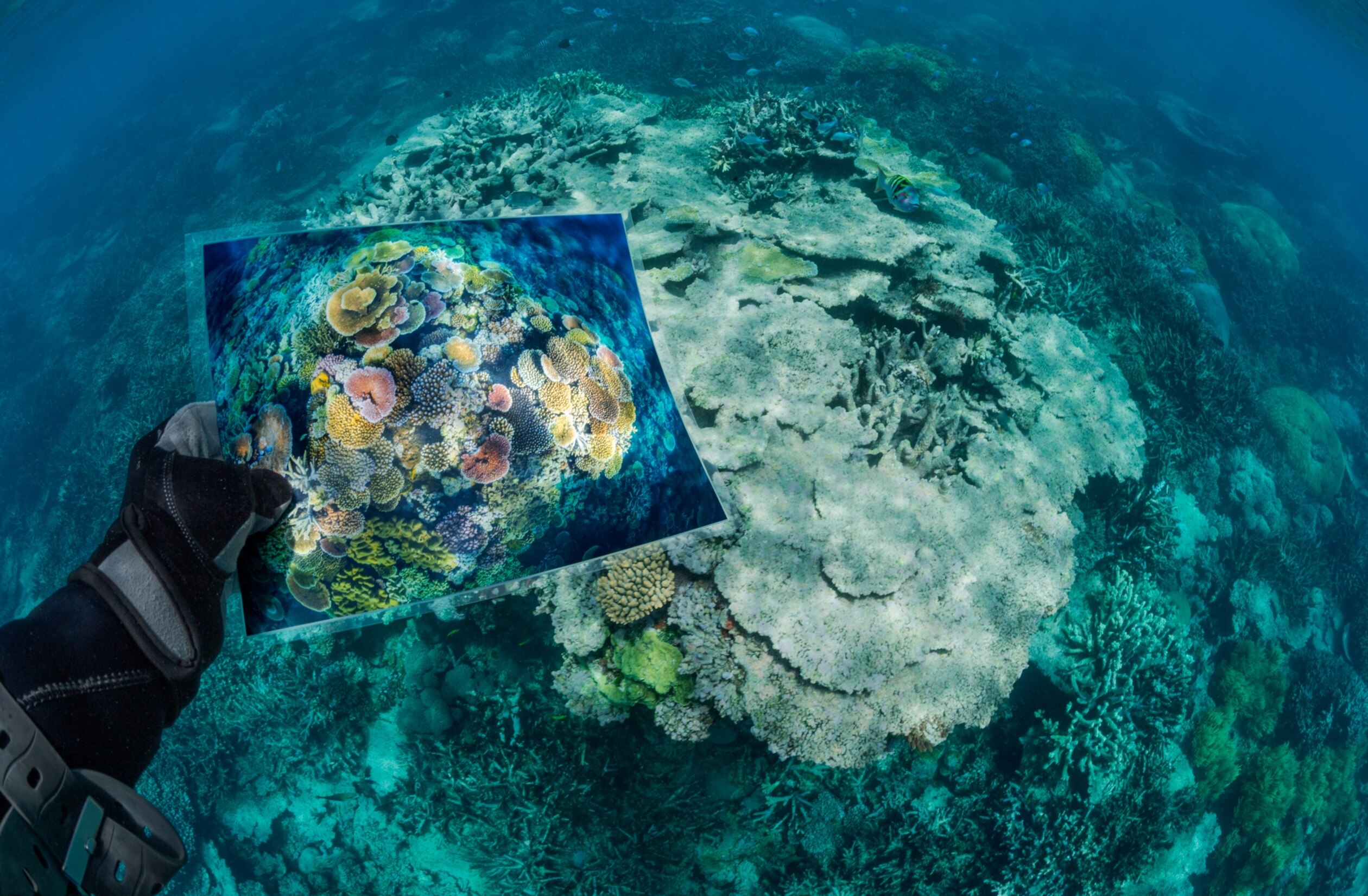
Some of these images offer an instant visual punch to the gut: a dying coral outcrop on the Great Barrier Reef, for instance, juxtaposed with an older photo of how vibrant coral can be. Some of the images inspire in their ability to show that change is not only possible, it is happening—and that we have the ingenuity and the skill to make a real difference.
But amidst these odds, there is hope. Nature is resilient, and given the chance, it can recover, if we have the courage to make it happen.


Left: A humpback whale mother and her calf swim past Reunion Island in the Indian Ocean. The humpback whale population was decimated by commercial whaling in the first half of the 20th century. Commercial whaling ended in the early 1970s, and the humpback population has rebounded, in some places to near pre-whaling numbers.
PHOTOGRAPH BY GABRIEL BARATHIEU, BIOSPHOTO, MINDEN PICTURES
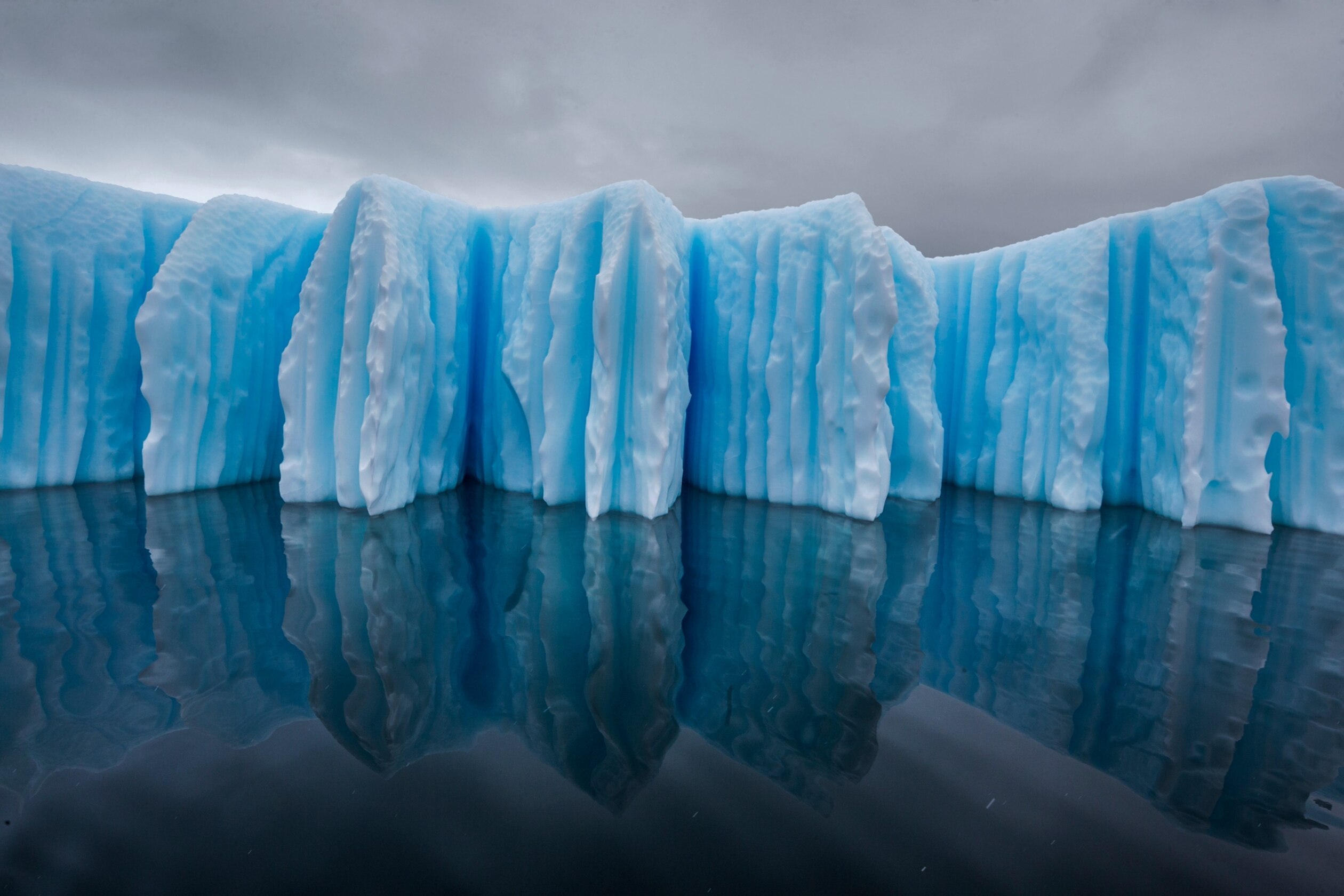
Right: Melting water carves grooves into an iceberg in Antarctica. Icebergs have always been melting, but the Antarctic Peninsula is one of the fastest warming regions on Earth. The region is expected to warm more than 2 degrees Fahrenheit (1.1 degrees Celsius) in the next 20 years.
PHOTOGRAPH BY PAUL NICKLEN, NATIONAL GEOGRAPHIC

Left: The Carlen family has been managing an ice cave in Switzerland’s Rhône Glacier since 1988, but when rising temperatures began melting the ice, they came up with a novel idea—for eight years they’ve covered part of the glacier in fleece blankets that reflect sunlight. Th…Read More
PHOTOGRAPH BY CIRIL JAZBEC, NATIONAL GEOGRAPHIC
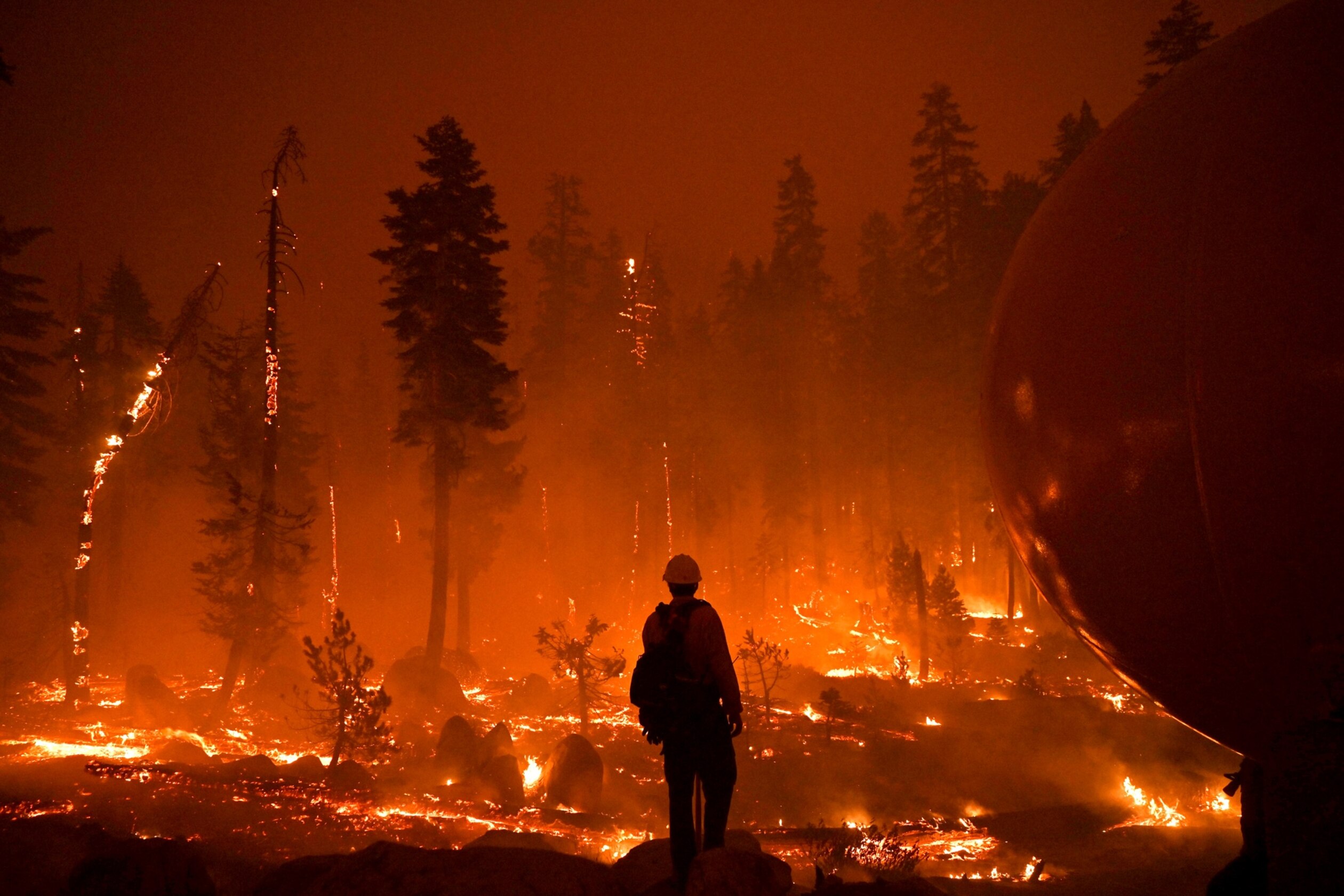
Right: In August, the Caldor Fire blazed toward California’s Lake Tahoe Basin. Firefighters with CAL FIRE and other fire departments tried to protect homes and shelters. About 1,000 structures, more than 700 of which were homes, were destroyed.
PHOTOGRAPH BY LYNSEY ADDARIO, NATIONAL GEOGRAPHIC
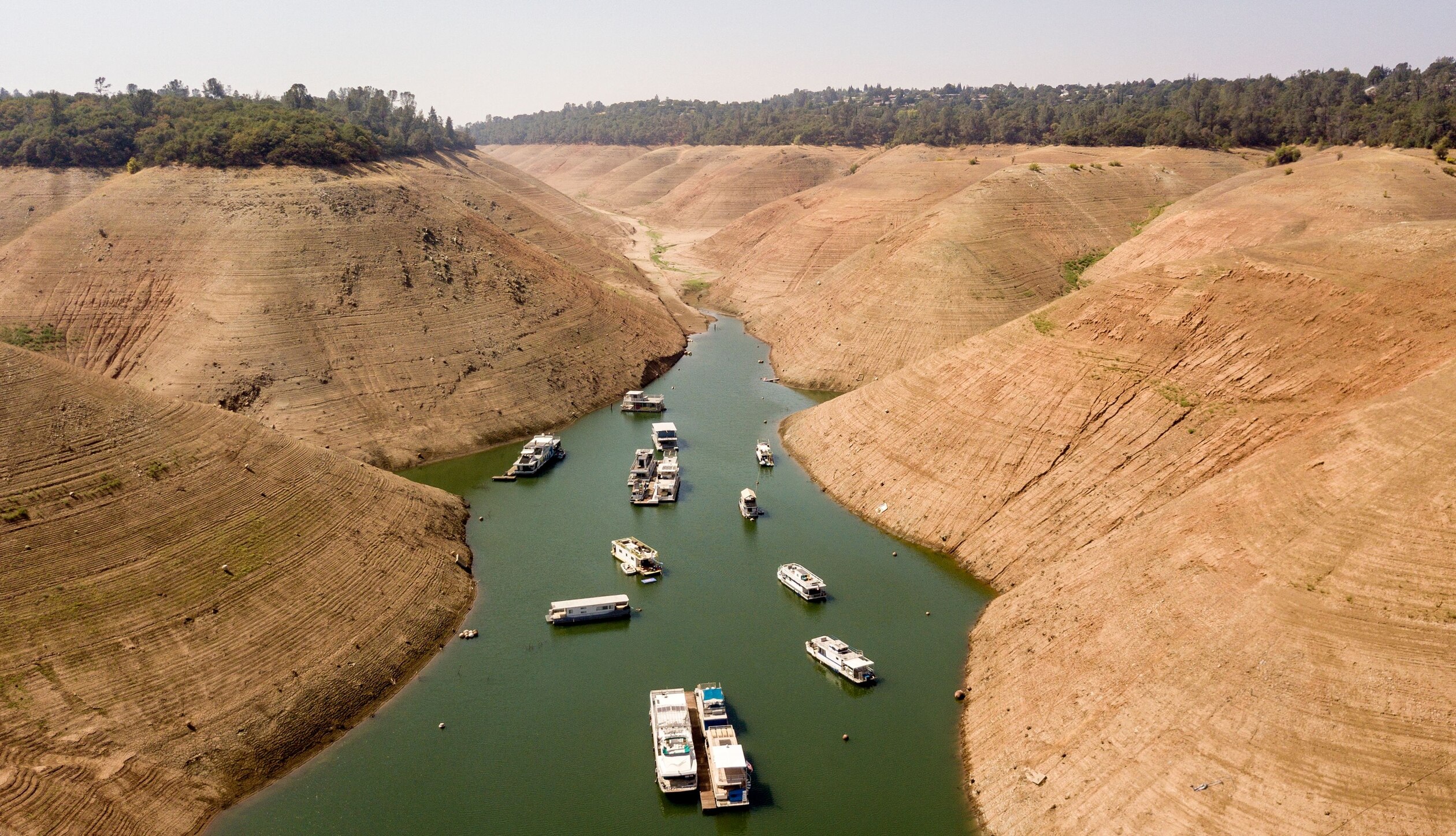
Left: In September, houseboats sit in a narrow strip of water in California’s Lake Oroville. At the time, the lake was at just 23 percent of its capacity as extreme drought struck the region. Over the summer, the Western U.S. was gripped by deadly heat, severe drought, and massive wildfires.
PHOTOGRAPH BY JOSH EDELSON, AFP/GETTY IMAGES
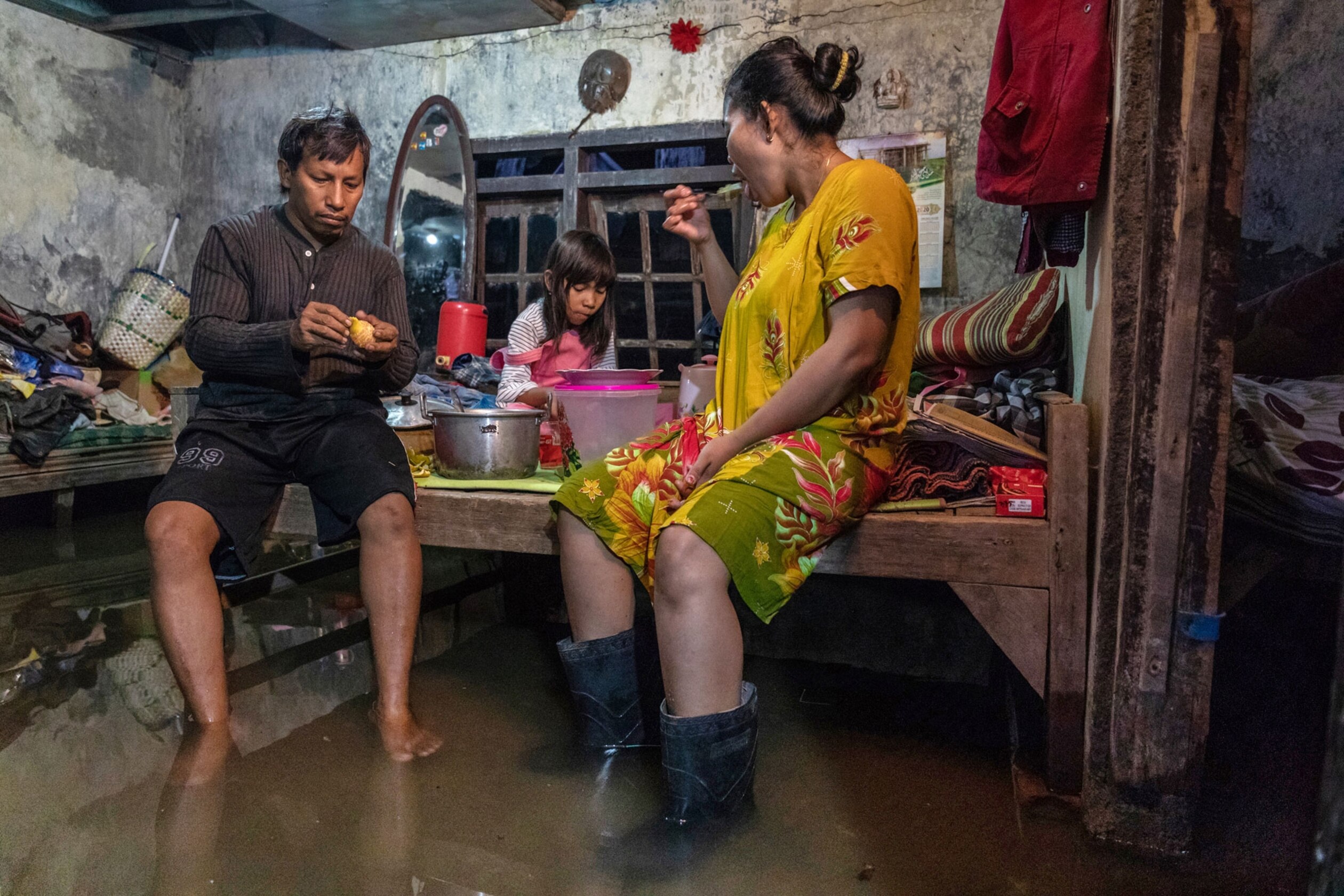
Right: A family has dinner in their flooded home in Central Java, Indonesia. For over 40 years, they watched as their productive farmland slowly disappeared under the sea. They have physically raised everything in their home to cope.
PHOTOGRAPH BY AJI STYAWAN, NATIONAL GEOGRAPHIC
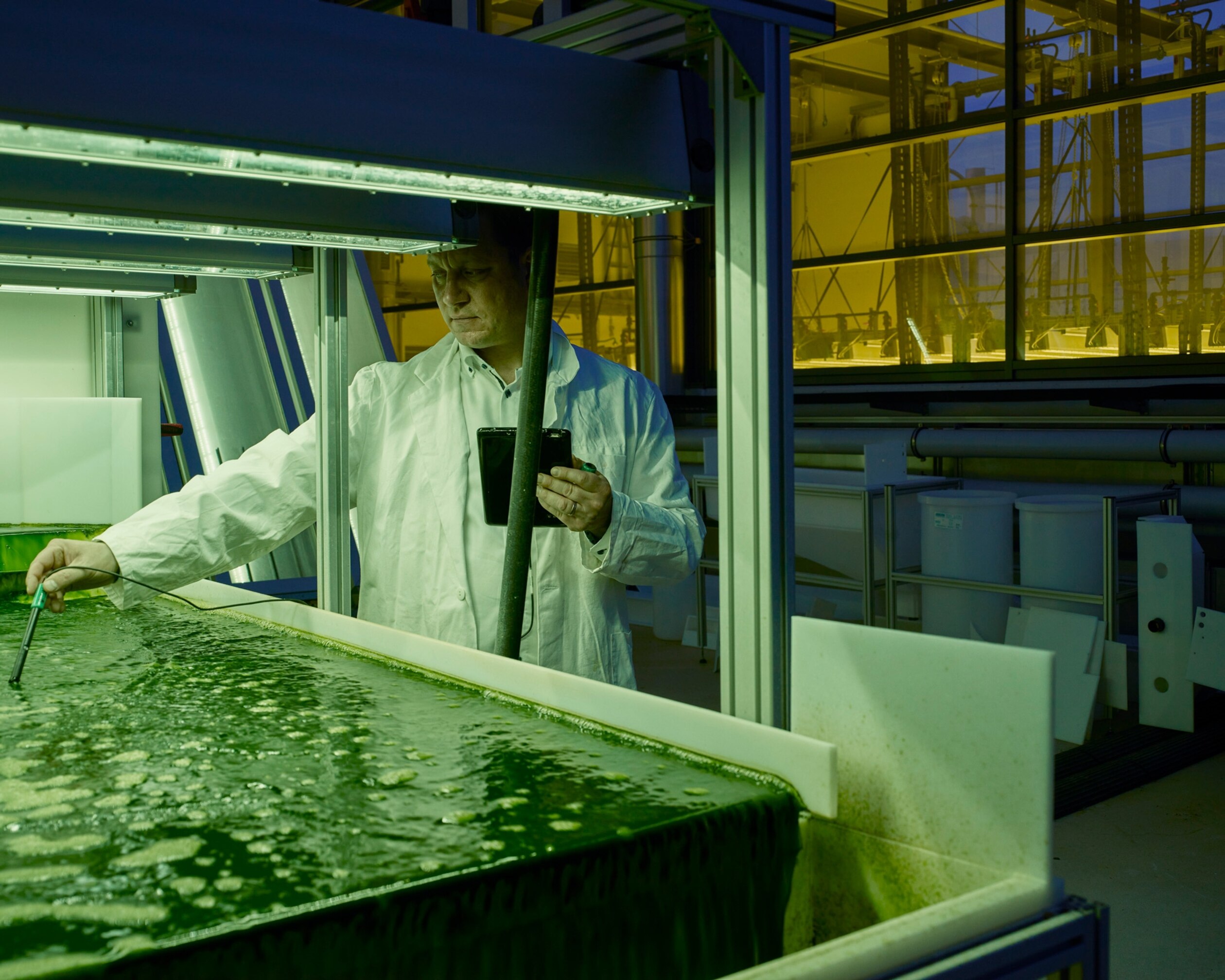
Left: The Algae Cultivation Center, a 16,00-square-foot building inside the Technical University of Munich, is focused on using algae to create biokerosene and other chemicals. With highly-efficient LED lights and transparent glass, scientists can recreate the climate conditions of any location on Earth, in turn simulating algae’s growth cycle. Results here will be used to create lighter fuels and construction material for the aviation industry.
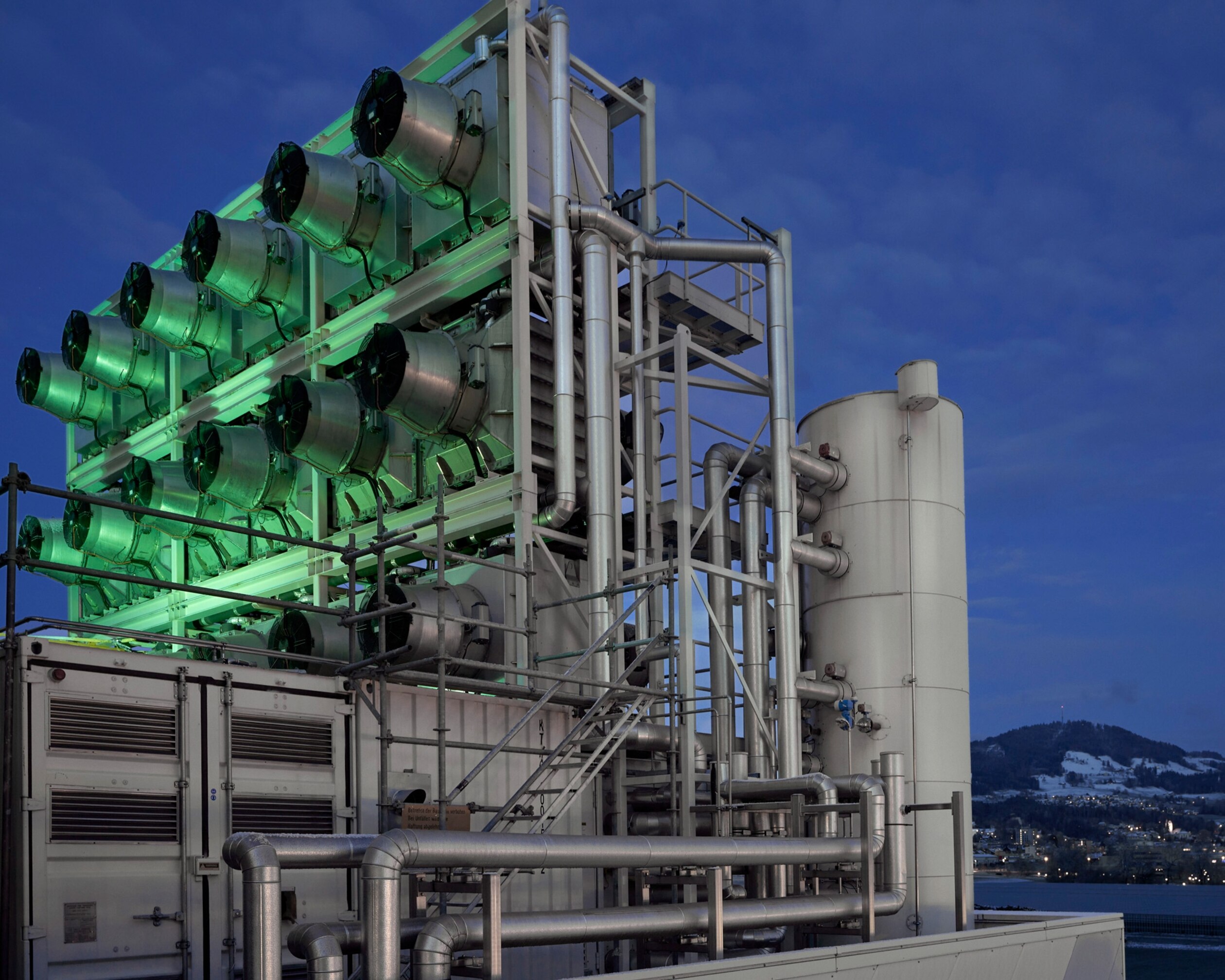
Right: In Zurich, Switzerland, a machine made by the Climeworks company is directly capturing carbon dioxide from the air, an effort to mitigate climate change. First, air is drawn into the collector with a fan and a filter captures the CO2. Then, the gas is heated, which highly concentrates it, after which it can be collected and recycled or stored.
PHOTOGRAPHS BY DAVIDE MONTELEONE, NATIONAL GEOGRAPHIC

Left: Moving passengers through the skies without fossil fuels is enormously challenging, especially for long-haul flights. For shorter flights, many companies, including Wisk, a California start-up, are designing electric planes. Wisk’s plane, which flies without a pilot, can take off and land vertically, eliminating the need for a runway.
PHOTOGRAPH BY CRAIG CUTLER, NATIONAL GEOGRAPHIC
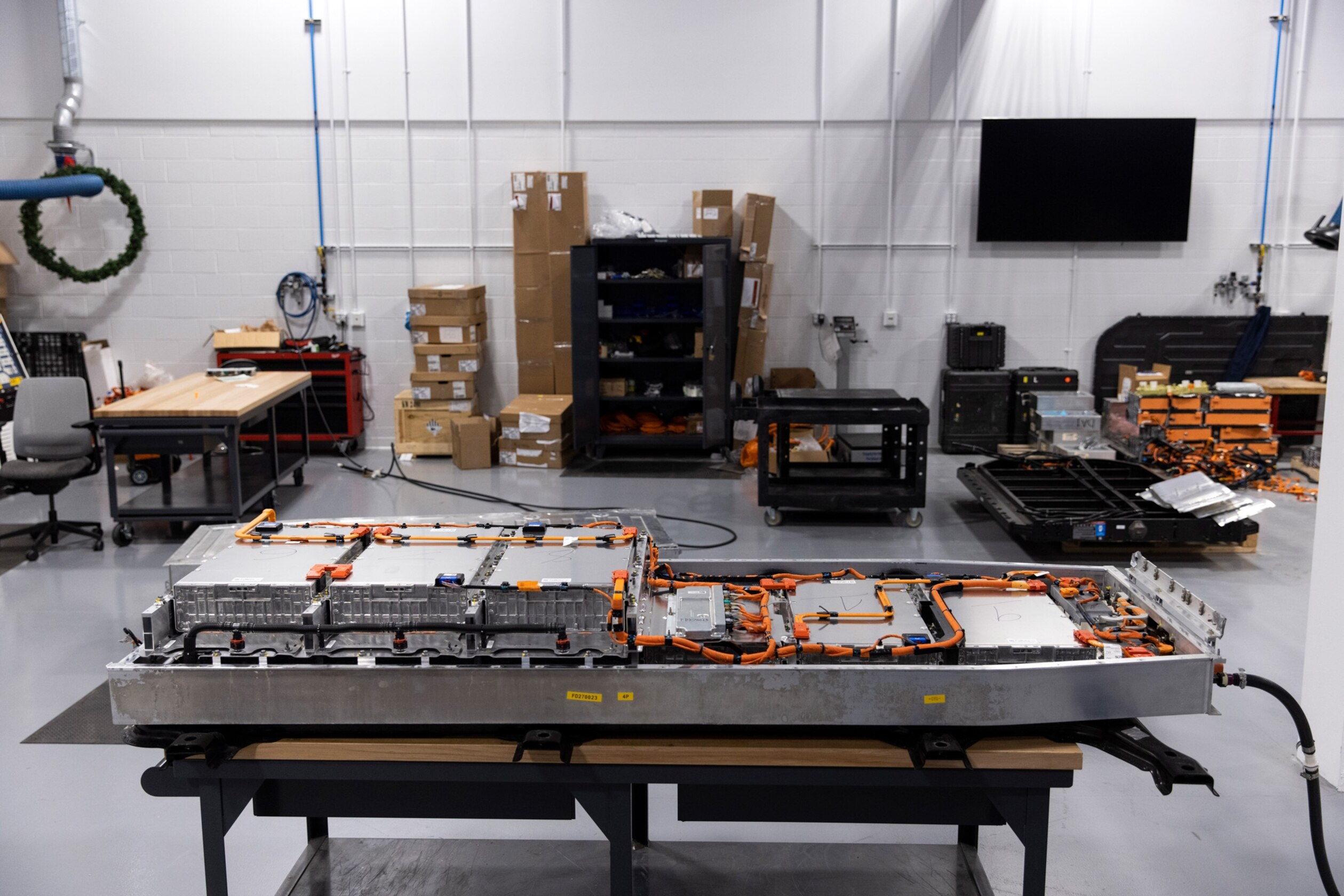
Right: At the Ford Ion Park in Allen Park, Michigan, batteries are researched and tested. Batteries are the heart of electric vehicles, and automakers are trying to make them lighter, faster charging, and longer lasting.
PHOTOGRAPH BY DAVID GUTTENFELDER, NATIONAL GEOGRAPHIC

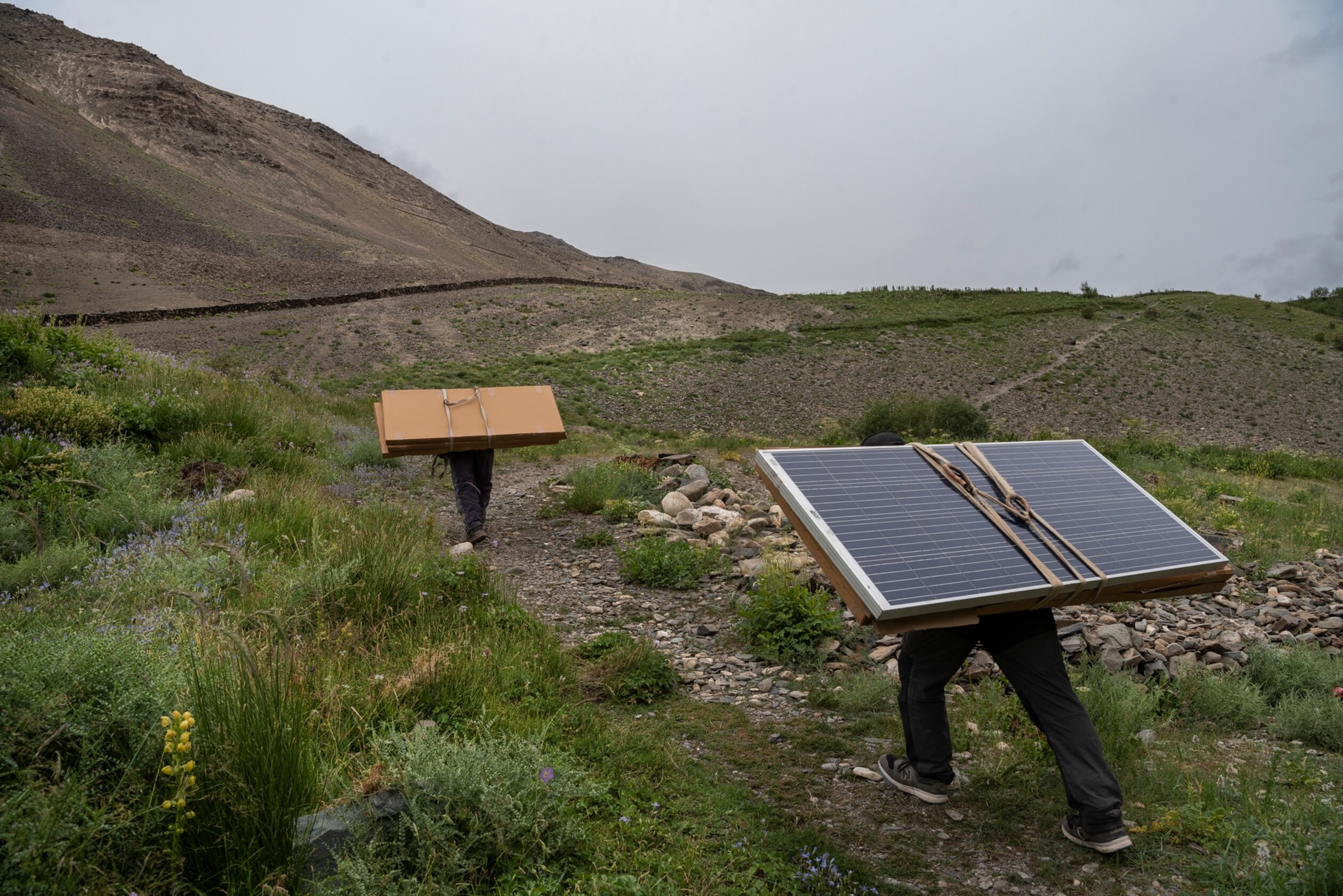
Left: The Global Himalayan Expedition is a project to bring solar energy to remote villages around the world. Here, expedition team members and residents of the Yal Village trek with solar panels, batteries, and other installation paraphernalia. The journey took two days of driving over treacherous roads and eventually finishing on foot.
PHOTOGRAPH BY SAUMYA KHANDELWAL, NATIONAL GEOGRAPHIC
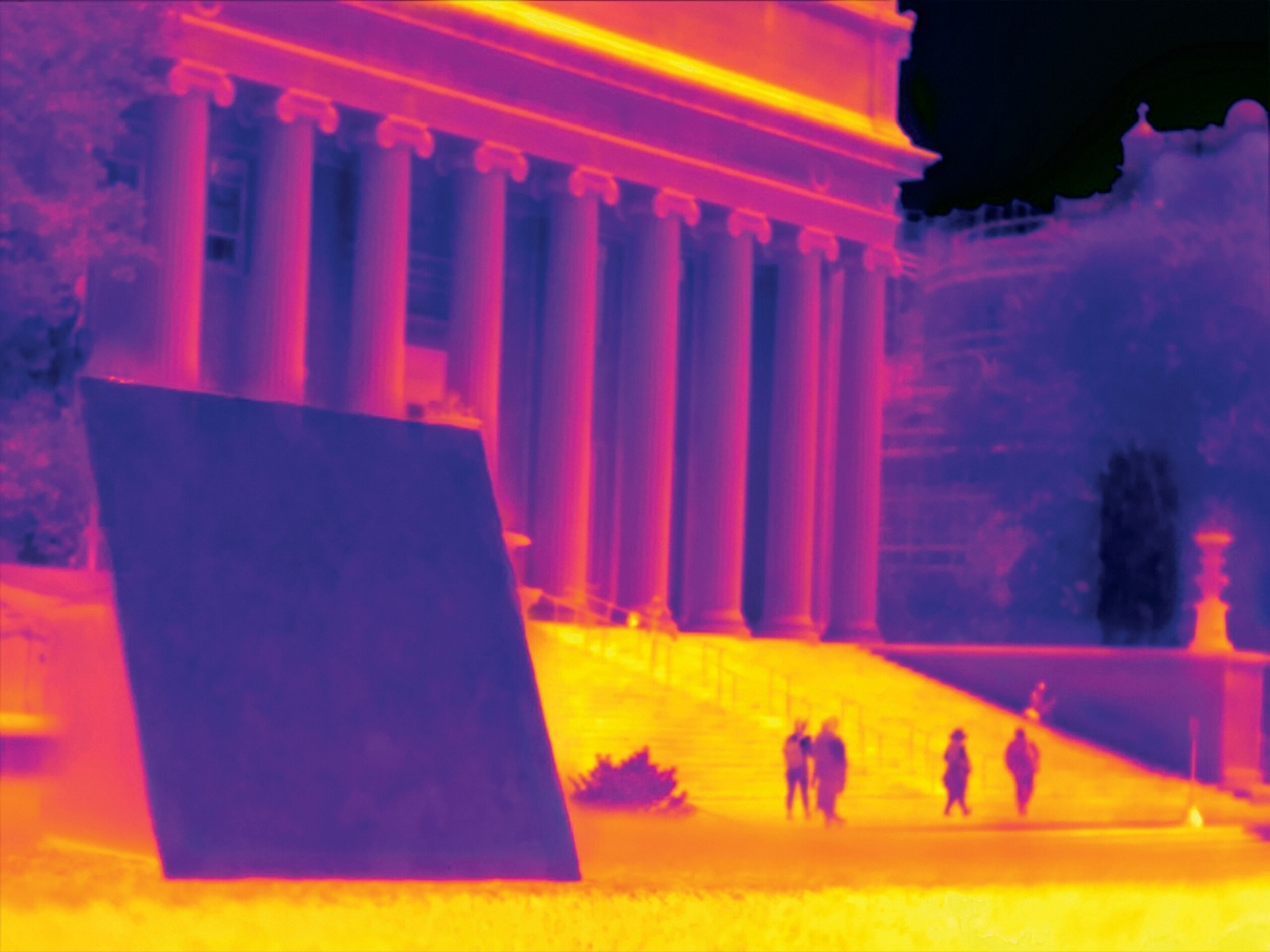
Right: At Columbia University, a panel coated with a novel polymer film radiates heat through the atmosphere to outer space, making it dramatically cooler than its surroundings. Panels like this one could reduce the need for air conditioning.
PHOTOGRAPH BY JYOTIRMOY MANDAL

 Mobilize, Canada!