Unknown's avatar

About Ray Nakano

Ray is a retired, third generation Japanese Canadian born and raised in Hamilton, Ontario. He resides in Toronto where he worked for the Ontario Government for 28 years. Ray was ordained by Thich Nhat Hanh in 2011 and practises in the Plum Village tradition, supporting sanghas in their mindfulness practice. Ray is very concerned about our climate crisis. He has been actively involved with the ClimateFast group (https://climatefast.ca) for the past 7 years. He works to bring awareness of our climate crisis to others and motivate them to take action. He has taken the Climate Reality leadership training with Al Gore. He has created the myclimatechange.home.blog website, for tracking climate-related news articles, reports, and organizations. He has created mobilizecanada.ca to focus on what you can do to address the climate crisis. He is always looking for opportunities to reach out to communities, politicians, and governments to communicate about our climate crisis and what we need to do. He says: “Our world is in dire straits. We have to bend the curve on our heat-trapping pollutants in the next few years if we hope to avoid the most serious impacts of human-caused global warming. Doing nothing is not an option. We must do everything we can to create a livable future for our children, our grandchildren, and all future generations.”

Demand for fossil fuels to peak this decade, energy agency says

This article was written by Emma Graney and was published in the Globe & Mail on October 24, 2023.

Phillips 66 Company’s Los Angeles Refinery is seen in Carson, Calif., last year. Oil demand for petrochemicals, aviation and shipping will continue to increase through to 2050, the International Energy Agency reports.

Demand for oil, coal and natural gas will peak this decade, as the share of fossil fuels in the global energy supply drops because of a “phenomenal rise” in the use of clean energy technologies, according to the International Energy Agency.

The shift toward clean fuels is well under way, the Paris-based energy watchdog said in its 2023 World Energy Outlook, released Tuesday. It says current climate policies around the world will help drive down the share of energy produced by fossil fuels to 73 per cent from 80 per cent by 2030. The IEA also said it expects energy-related carbon dioxide emissions to peak by 2025.

The report describes an energy system in 2030 in which clean technologies play a significantly greater role than they do today, with almost 10 times as many electric cars on the road worldwide, solar panels generating more electricity than the entire U.S. power system does currently and renewables accounting for almost half of the global electricity mix.

Heat pumps and other electric heating systems are set to outsell fossil fuel boilers globally.

Along with electric heating systems, the analysis says three times as much investment will go into new offshore wind projects as new coal- and gas-fired power plants.

“The phenomenal rise of clean energy technologies such as solar, wind, electric cars and heat pumps is reshaping how we power everything from factories and vehicles to home appliances and heating systems,” IEA executive director Fatih Birol said in a statement.

“The transition to clean energy is happening worldwide and it’s unstoppable. It’s not a question of ‘if’, it’s just a matter of ‘how soon’ – and the sooner the better for all of us,” Dr. Birol said.

The 2023 outlook is the first time the agency has forecast a peak for all three fossil-fuel groups occurring this decade. The change in its projections highlights how quickly the energy system is transforming, though recent forecasts by the IEA have been dismissed by major players in the oil sector.

That includes Amin Nasser, the chief executive of Saudi Aramco, and Saudi Arabia’s Energy Minister, Prince Abdulaziz bin Salman. At this year’s World Petroleum Congress in Calgary, for example, Prince Abdulaziz said the agency had morphed from “a forecaster and assessor of the market to one practising political advocacy.”

The state-owned oil companies of Kuwait, Brazil and Angola also took issue with various IEA forecasts and road maps to net zero during the congress, while Alberta Premier Danielle Smith vowed that the oil and gas industry would in fact increase production.

Dr. Birol acknowledged that there would be a rise in demand for fossil fuels in some sectors, but said in the report that “claims that oil and gas represent safe or secure choices for the world’s energy and climate future look weaker than ever.”

Oil demand for petrochemicals, aviation and shipping will continue to increase through to 2050, but the report notes that it won’t be enough to offset reductions in demand from road transport, and the power and buildings sectors.

“Governments, companies and investors need to get behind clean-energy transitions rather than hindering them. There are immense benefits on offer, including new industrial opportunities and jobs, greater energy security, cleaner air, universal energy access and a safer climate for everyone,” Dr. Birol wrote in the report.

“Ultimately, what is required is not just to diversify away from a single energy commodity but to change the energy system itself, and to do so while maintaining the affordable and secure provision of energy services.”

Still, the report notes that the looming peaks in demand do not remove the need for investment in oil and gas supply, given how steep the natural declines from existing fields often are. At the same time, however, it underscores the economicand financial risks of major new oil and gas projects, on top of their climate risks.

The outlook also repeated a call made often by the IEA: Governments must work together to address major common challenges around climate and emissions, because a patchwork of individual efforts will fall short.

“We need to co-ordinate and co-operate – those in the lead and with greater resources need to help those further behind who have less. Each country must find its own path, but it still needs some signposts along the way,” Dr. Birol wrote.

Despite the forecast drop in demand for fossil fuels, it’s likely still too high to limit the rise in average global temperatures to 1.5 C, per the Paris Agreement. Global warming will worsen climate impact and undermine the security of the energy system, which was built for a cooler world with less extreme-weather events, the report warns.

“Bending the emissions curve onto a path consistent with 1.5 C remains possible but very difficult. But the costs of inaction could be enormous,” Mr. Birol said.
Provinces have climate powers – and duties

This editorial was written and published by the Globe & Mail on October 19, 2023.

Climate change is a global problem. Canada has a national goal to slash emissions. But it depends a lot on provincial actions – which too often these days is inaction.

The Paris Agreement’s goal to limit global warming to 1.5 degrees Celsius depends on countries taking major actions sooner than later. Canada first pledged to cut emissions by 30 per cent by 2030 from 2005 levels. In 2021, as part of the climate treaty’s expectation of escalating ambition, the promise was upped to an emissions cut of at least 40 per cent.

Canada’s emissions in 2022 were 685 megatonnes, according to an unofficial estimate last month from the Canadian Climate Institute think tank. That’s down just 6 per cent from 731 MT in 2005. There’s a long way to go.

Cutting global emissions depends on the actions of individual countries, each with their own motivations. Cutting emissions in Canada faces the same issue. The country is a federation where provinces have considerable say over what takes place within their own borders. Ottawa’s constitutional powers include signing Canada’s name to treaties such as the Paris Agreement and, as was confirmed at the Supreme Court in 2021, the right to put a price on greenhouse gas emissions – even as such treaty powers and carbon pricing bump up against the provinces’ right to develop their resources.

Last week, however, the Supreme Court ruled Ottawa had overstepped its constitutional bounds in the Impact Assessment Act, federal rules to conduct environmental assessments of proposed industrial projects. Ottawa is now busy rewriting one of its signature pieces of legislation. How it all turns out is unclear but as the court reaffirmed provincial rights, the decision put a brighter spotlight on what the provinces are – and are not – doing on climate.

The goal of net zero by 2050 – a quarter century from now – is widely embraced, in concept at least. As scientists make clear, getting there requires specific short-term goals. That’s why the Paris Agreement focuses on 2030. Every year matters: delaying the push to net zero could see more than double the emissions between now and 2050 compared with immediate action.

Yet the provinces are failing to help get Canada closer to its Paris Agreement pledge. The provinces’ promises add up to less than half of Ottawa’s goal for the country, the Climate Institute calculates. Three provinces – Alberta, Saskatchewan and Manitoba – have no interim targets. Others, like Ontario, have maintained the older goal of a 30-per-cent cut by 2030. (Ontario is close, with emissions down 26 per cent. About half of the reductions came from getting off coal power.)

There are leaders, too. Nova Scotia is out in front – with plans to more than halve emissions by 2030 across its economy, one that is still dependent on coal power. The province’s emissions are down 36 per cent since 2005.

Emissions in Alberta are up 9 per cent since 2005, despite the province’s swift move off coal power, an Alberta NDP policy. More recently Premier Danielle Smith of the United Conservative Party has been intransigent about federal plans to further reduce emissions from power generation and the oil and gas industry but has offered little of her own ideas or targets. In fact, Alberta is going backward, as it shut down the booming renewable power business for a lengthy review.

UCP MLAs recently visited Germany, which one described as being in the “vanguard” of the shift to renewable power. Germany aims to cut its overall emissions by 65 per cent by 2030, in part by producing 80 per cent of its power from renewables by that year. Australia, whose power grid is comparable to Alberta’s, has a 2030 goal to reach 80 per cent renewable power, up from about 30 per cent. Australia’s government is spending billions to make it happen, much like the money Ottawa has offered to push clean power in Canada. Australia’s clean power goal is part of its overall target to cut emissions by 43 per cent. It is about halfway there.

As Alberta and Ottawa continue talks about climate policies, Ms. Smith has said the province needs “some kind of interim steps so that people can see progress.” Alberta insists Ottawa is being inflexible. If Alberta or other provinces can detail their concrete climate plans, with interim targets, Ottawa should be more flexible – but federal-provincial co-operation, as the Supreme Court said last week, should run two ways.

Meanwhile, there is still a big role for Ottawa to drive change. More on this, next week.

Why Ontario should embrace renewables and close down gas plants

Every resident — especially those in the business community — should urge Ottawa to stop Ontario’s gas-plant build out and require winding down of fossils on the grid, writes Gideon Forman.

This article was written by Gideon Forman and was published in the Toronto Star on October 21, 2023.

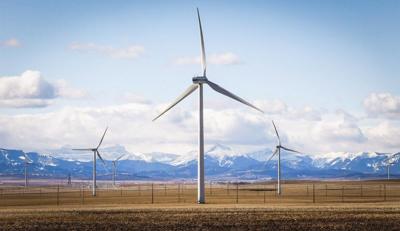
alta wind
Renewable energy such as solar and wind power have never been cheaper, writes Gideon Forman, and make great business sense. Jeff McIntosh / THE CANADIAN PRESS file photo

This is an extraordinary moment for renewable electricity.

Solar and wind power have never been cheaper, they’re enjoying technological breakthroughs that greatly boost their efficiency and their worldwide growth is astounding. Smart money in Ontario and around the globe is abandoning fossil fuels not just because of the climate crisis but because renewables make so much business sense.

The Pembina Institute says that, in many places in Canada, clean energy (including wind, solar, demand-side management, energy efficiency and storage) is now less expensive than gas-fired. In Alberta, for example, the cost of power at a combined-cycle gas plant is $57 per MWh, while the cost for clean energy is just $48.

These findings are consistent with data from other experts. The think tank Clean Energy Canada found that, “In Alberta and Ontario, wind can now produce electricity at lower costs than natural-gas-fired power …” In a statement released in May, The Atmospheric Fund said that in Ontario wind and solar are “the cheapest sources of new supply.”

Not surprisingly, solar cells are becoming more efficient. A recent article in the Guardian says scientists working in the field have just made an important breakthrough. Stefaan De Wolf of Saudi Arabia’s King Abdullah University of Science and Technology calls 2023 a “revolutionary year.”

The Guardian explains the advance in solar efficiency this way: “The breakthrough is adding a layer of perovskite, another semiconductor, on top of the silicon layer. This captures blue light from the visible spectrum, while the silicon captures red light, boosting the total light captured overall. With more energy absorbed per cell, the cost of solar electricity is even cheaper, and deployment can proceed faster…”

In a report tracking progress in 2022, the International Energy Agency found renewables just keep breaking growth records: “Renewable electricity capacity additions rose to 340 gigawatts (GW), their largest ever deployment … Investment in clean energy reached a record USD 1.6 trillion in 2022…”

And the IEA’s “Electricity Market Report,” released in July, proclaimed that, “depending on weather conditions, 2024 could well become the first year in which more electricity is generated worldwide from renewables than from coal.” What an extraordinary milestone that would be!

Oil giants’ climate-change cheap talk is why we need a hard cap on their emissions

This article was written by Catherine McKenna and was published in the Globe & Mail on September 19, 2023.

A flare stack burns off excess gas at a processing facility near Crossfield, Alta., on June 13. Most Albertans would support some kind of national cap on carbon emissions from the oil and gas sector, two new polls suggest.JEFF MCINTOSH/THE CANADIAN PRESS

Catherine McKenna is a former federal minister of environment and climate change. Ms. McKenna is CEO of Climate and Nature Solutions and chair of the United Nations Secretary-General’s expert group on net-zero emissions. She is participating in the UN Climate Ambition Summit in New York on Wednesday.

This summer scorched the Earth, breaking heat records globally and setting off wildfires that choked North American cities. And Suncor chief executive officer Rich Kruger? He chose this moment to announce that his company will double down on oil sands production and sideline its renewables strategy.

Regrettably, Suncor SU-T +4.41%increase is not a rogue producer. Recently, Shell RYDAF +2.54%increase and BP BP-N +0.81%increaseannounced plans to slow-walk clean energy and pump more fossil fuels – the main cause of the climate crisis. They chose to spend the vast majority of their record profits on shareholder dividends and executive compensation while investing a small fraction in the clean energy transition. Incredibly, at the same time, oil sands companies demand that Canadian taxpayers spend even more to subsidize their carbon capture projects. This contravenes the basic principle that polluters should pay for the damage they cause.

These announcements are shameful, but at least we know what we’re dealing with. After years of pious corporate announcements and feel-good advertising, it’s magical thinking to believe the oil and gas sector has anything but its own profits at heart. Especially after ExxonMobil – where Mr. Kruger was a 40-year veteran – spent decades hiding, denying and downplaying the climate risks posed by fossil fuels. This is why it’s time to do what a majority of Canadians – including in Alberta – believe is necessary and put a hard cap on emissions from Canada’s oil and gas industry.

We need to get serious about net zero and not let bad actors make the Paris agreement goal of limiting global warming to 1.5 degrees – and averting the worst effects of climate change – meaningless.

We must reduce global emissions in half by 2030 if we are to achieve net zero by 2050. That requires far more ambitious efforts to reduce emissions now while scaling up clean-energy investments. Bogus plans to reach net zero at the 11th hour exacerbate the climate crisis and amount to nothing more than greenwashing.

Last year, at COP27, the United Nations released a report, Integrity Matters, produced by its High-Level Expert Group, which I chaired. The report establishes clear criteria for net-zero commitments: Any company or region setting net-zero targets cannot continue to build or invest in new fossil fuel supply. Companies cannot defer real emissions reductions by buying carbon credits. Nor can they privately lobby against climate action while claiming to be climate champions. Progress on net-zero commitments must be publicly reported and independently verified. These are tangible, specific standards that combined can move the world in the right direction.

But one year later, while other industries have started to step up, many oil and gas producers are making things worse while hiding behind trade associations such as the Pathways Alliance – a consortium that includes Suncor – and which is currently being investigated by Canada’s Competition Bureau for misleading advertising.

How bad is it? A 2021 report found that several Pathways member companies – Suncor, Cenovus, Canadian Natural Resources – have no plans to stop approving new extraction projects or exploration. Investigative reporting found that the Pathways Alliance lobbied to delay and weaken the proposed federal cap on oil and gas emissions.

On top of this, a report released last week found that Canada is poised to be the world’s second largest developer of new oil and gas extraction to 2050. The associated emissions generated would be equivalent to opening 117 new coal-fired power plants. This is wrong and wrongheaded for both the climate and for the economy.

UN Secretary-General António Guterres said it best: “Investing in new fossil fuels infrastructure is moral and economic madness. Such investments will soon be stranded assets – a blot on the landscape and a blight on investment portfolios. But, it doesn’t have to be this way.”

Indeed, Canada’s oil and gas sector could be part of the solution to the climate crisis instead of a significant contributor. They could be leaders not laggards by making Canada a clean energy powerhouse that creates good jobs for workers and helps Canada win in the trillion-dollar clean economy.

Instead, Suncor and fronts like the Pathways Alliance remind us why talk is cheap. Canadians aren’t fools. They can see through the spin. But time is running out. Absolute emissions from oil and gas are rising. Real action – and a hard cap on oil and gas emissions – is needed now.