False promises and the dirty truth

Featured

Oilsands companies have been taking us for fools, Catherine McKenna writes

This article was written by Catherine McKenna and was published in the Toronto Star on December 7, 2024.

CATHERINE MCKENNA IS A FORMER FEDERAL MINISTER OF ENVIRONMENT AND CLIMATE CHANGE AND INFRASTRUCTURE. SHE IS CEO OF CLIMATE AND NATURE SOLUTIONS AND CHAIR OF THE UNITED NATIONS EXPERT GROUP ON NETZERO.

Catherine McKenna says she worked for years with the oilsands industry — epitomized by facilities such this one seen near Fort McMurray, Alta., in 2014 — on plans that she now says were a mirage.

“ It became increasingly obvious to me that the oilsands sector, along with their cheerleaders in the Alberta government and the federal Conservative party, have no intention of making the fundamental changes required to align with the global shift toward a lowcarbon economy

In May 2016, I was leading intense negotiations between the federal government and the provinces and territories to secure Canada’s first national climate plan. Suddenly, the news was everywhere: wildfires were raging out of control in Alberta, and headed straight for Fort McMurray — the heart of Canada’s oilsands production. The news was devastating: flames jumping rivers, homes and businesses incinerated, and more than 80,000 residents forced to evacuate. Firefighters and other emergency responders did everything they could but were soon outmatched. Fort McMurray would be engulfed — at once causing immense hardship and also showing Canadians the visceral and unpredictable danger of our dependency on fossil fuels.

In that moment, it felt like an unlikely consensus had emerged. The federal government, most provinces and even oilsands companies had seemingly come to understand that Canada had for too long been a laggard on climate and that for both environmental and economic reasons we needed to make meaningful promises on reducing our greenhouse gas emissions and to actually meet them.

In 2015, at COP 21 in Paris, I could already see the world changing as Rachel Notley’s government put forward Alberta’s first credible climate plan. Standing with environmentalists and First Nations leaders, as well as oilsands companies, premier Notley announced a provincial cap on oilsands emissions, a tax on carbon, a phase out of coalfired power and a methanereduction strategy. She was clear that these measures were key to Alberta’s doing its part to tackle climate change while creating the incentive for the oilsands to innovate and be more competitive globally.

Amazingly, the chairman of Canadian Natural Resources Limited, Murray Edwards, spoke enthusiastically on behalf of the oilsands industry at the press conference: “(w)e applaud Premier Notley for giving us … the position of leadership on climate policy.”

Over the next four years, I worked very hard to collaborate with the oilsands sector. I really believed that the environment and the economy could go handinhand and include a vibrant oil and gas sector. I was convinced that we could reduce emissions from the oilsands as part of an ambitious climate plan, finally showing to the world that Canada was committed to meeting our targets and doing our part to tackle the climate crisis.

It turns out the consensus was a mirage. Or, more accurately, a sham. Maybe it shouldn’t have surprised me that our industry partners were working against us from the inside. After all, oil is their business, their bottom line. It was only after I left politics that I came to understand the truth: The oilsands sector and the politicians they sponsor aren’t just greenwashing a product. They are working to brainwash Canadians into buying a version of reality that no longer exists. One where oil will forever be the hero of the Canadian economy rather than an impediment to Canada’s future prosperity in a low carbon, climatesafe world.

Perhaps this sham was never clearer to me than on a Saturday morning in the fall of 2022. I was doing what I always do on weekends, reading the newspaper and enjoying a cup of coffee. But what I saw that morning nearly made me spit out my drink: a fullpage advertisement from the Pathways Alliance, a coalition of the country’s six largest oilsands producers.

The ad boldly claimed that these companies were making “clear strides to netzero” and would “help our country achieve a sustainable future.” Soon, I started seeing a version of this ad everywhere: on my Air Canada flight, on bus shelters, on YouTube, and even during the Super Bowl. Whenever I Googled “net zero,” the Pathways Alliance popped up.

Let’s be clear about the facts. Unlike other sectors in Canada that are reducing their emissions as part of a national effort to decarbonize our economy and become more competitive, emissions from oil and gas are only increasing. This is a massive problem. Oil and gas is by far Canada’s most polluting sector, at 30 per cent of our overall emissions while making up only 1/20th of our GDP. Emissions from the oilsands specifically rose by a whopping 142 per cent since 2005. There is no chance that Canada can live up to our international obligations under the Paris Agreement — the world’s best chance of avoiding catastrophic climate change — without the oilsands finally delivering significant emissions reductions like everyone else.

The irony of this ad campaign was not lost on me. After leaving politics, I was asked by the United Nations secretarygeneral to chair an international expert group to combat greenwashing — companies promoting false solutions to the climate crisis that distract from and delay action. As the secretarygeneral stated, “We cannot afford slow movers, fake movers or any form of greenwashing.” Our report, Integrity Matters, presented at COP 27 in Egypt, established clear global standards for netzero pledges and drew a red line around greenwashing.

And yet, here I was, staring at the Pathways Alliance’s blatant greenwashing campaign.

You would have thought that when the oilsands industry made historic profits over the past few years they would have reinvested that windfall in clean energy solutions. After all, their product is not only carbonintensive, but also expensive to produce. You’d think they’d have seen the need to clean up their act to compete in a lowcarbon future. But you would be wrong. Sure, oilsands companies invested a small fraction of their money in clean technology — enough to say they had — but mostly they chose business as usual, returning the vast majority of their historic profits to shareholders largely outside of Canada, rewarding their CEOs with bonuses of $10 million or more, and ramping up production while increasing their emissions.

Worse still, they continue to demand that governments cough up even more taxpayerfunded subsidies to “clean up” their pollution.

Oilsands companies are taking us for fools.

Only now, and much too late, are they starting to be held to account for their greenwashing. Greenpeace and other environmental groups have called out the Pathways Alliance to the Competition Bureau, which is investigating their misleading claims.

This June, the federal government passed new antigreenwashing rules, which resulted in the Pathways Alliance and oilsands companies preemptively removing their climate claims from their websites and social media. It seems they couldn’t handle the new truth in advertising rules.

I understand how persuasive these companies can be. As environment minister, I bought into the idea that tighter regulations and technological advances like carbon capture and storage (CCS) would allow us to continue developing the oilsands while being serious about climate action. I also believed that working with Alberta to help diversify their economy would require compromise.

Yes, I found the government’s decision to buy the Trans Mountain pipeline a bitter pill to swallow. But I rationalized it by telling myself that it was in the national interest and was the price of bringing Albertans onside with Canada’s climate plan.

Over time I started to have serious doubts, about both the pipeline and our conciliatory approach to the oilsands sector more broadly. They started when I learned that Conser

vative politicians and oilsands companies were spreading rumours that we bought the pipeline in order to kill it. Give me a break. (Today I wish we hadn’t bought it at all. As I watched the $4.5billion purchase price balloon to the $34 billion spent to date, as I came to realize that not only will taxpayer dollars probably never be recouped, but also that Canadians will likely be left with a very expensive stranded asset, I came to regret not pushing back harder.)

It’s also come to light recently that the epic fight led by the Conservatives to kill carbon pricing that I found myself embroiled in, especially online, was supported and significantly underwritten by oil and gas companies. The campaign to discredit carbon pricing by falsely claiming it raised the cost of living — when, in fact, it benefits most Canadians — was amplified by ragefarming outlets, bots and social media algorithms.

It became increasingly obvious to me that the oilsands sector, along with their cheerleaders in the Alberta government and the federal Conservative party, have no intention of making the fundamental changes required to align with the global shift toward a lowcarbon economy.

Unlike Progressive Conservatives like Brian Mulroney, and even recent Conservative leader Erin O’Toole, who understood the need for an economically sound strategy to protect the environment for future generations, today’s Conservative politicians are at war with the very idea of meaningful climate action. Their opposition isn’t scientific or even economic: it is pure ideology.

It was only after I finished my time in government and was able to step back that I could see the balance we were trying to strike couldn’t hold. As painful — and criticized — as the compromises we struck were, I was convinced that in a diverse federation such as ours it was crucial to keep everyone in the tent. But compromise has to go both ways. And you can’t find productive compromise with ideologues hellbent on trying to preserve the status quo while the world moves on.

The sham of cooperation has delivered great fortune to the oilsands and come at a great cost to the rest of us.

The urgency of the climate crisis has never been clearer and at the same time the world is undergoing a rapid transition to clean energy.

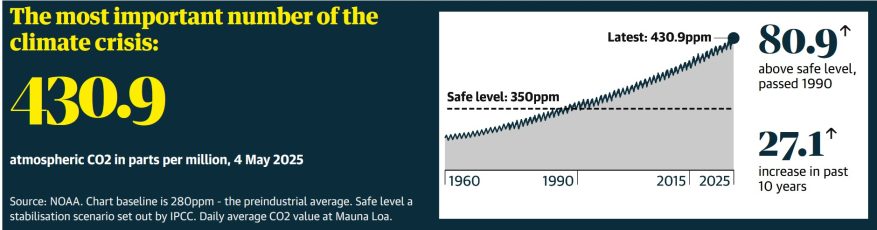
Global CO2 emissions are set to hit a record high this year, with the bulk of the emissions from the burning of fossil fuels. The UN’s Emissions Gap Report shows that if we continue on our current path, global temperatures will rise by more than 3 C or more by the end of the century, leading to catastrophic consequences.

This is a particular disaster for Canada, which is warming at nearly twice the global average. We are on track for temperature increases of 5 to 6 C — an unthinkable outcome. Imagine endless summers of boreal fires threatening communities and filling our air with smoke, torrential rainfalls that wash away buildings and cars, punishing heatwaves that kill our most vulnerable, huge chunks of our coastline falling into the sea, an icefree Arctic.

We’ve already seen the devastating impacts of climate change: extreme drought in Alberta, catastrophic wildfires in British Columbia, historic flooding in Eastern Canada and deadly heat waves. In 2023 alone, Canada experienced more than $3 billion in insured losses due to extreme weather events. These are not anomalies — they are the new normal. And they are happening because of our continued reliance on fossil fuels.

The good news is that the world is undergoing a massive trilliondollar clean energy revolution that is quickly reducing our reliance on fossil fuels. The International Energy Agency projects that global oil demand will peak by 2030 largely due to the exponential growth in electric vehicles, as well as the growth in renewable energy and government policies.

China, the world’s largest emitter, has likely already peaked its emissions and is leading the world in renewable energy investment. In fact, China is building the equivalent of a large solar farm every day, and half of all electric vehicles sold globally are now produced there. Meanwhile, the United States, through the Inflation Reduction Act, is investing billions into clean energy solutions, leaving Canada lagging far behind.

The shift to a global “age of electricity,” as the executive director of the International Energy Agency, Fatih Birol, calls it, is a huge opportunity for Canada with our vast natural resources in hydro, solar and wind. Canada also has an opportunity to leverage our manufacturing and technological expertise to meet the demand for clean, efficient technologies. Our vast reserves of critical minerals are essential to new electric vehicles, batteries and renewable energy infrastructure. And then there are the jobs: Clean Energy Canada estimates that by 2030, the clean energy transition could create up to 400,000 new jobs, far surpassing existing positions in the oil and gas sector.

But the energy transition also presents a huge risk to Canada’s economy if we don’t change. With an oversupply of oil driving prices down, the first barrels to go will be those that are the most costly to produce and the most polluting — the oilsands fall into that category. Oilsands defenders tell us that the proposed federal cap on oil and gas will bring nothing but economic ruin. But the opposite is true. Without taking serious action now to decarbonize and invest in the clean transition, it is likely that Canadians will be saddled with billions in stranded oilsands assets, a hugely expensive cleanup operation, lost jobs and devastated communities.

Of course, the Alberta government, federal Conservative politicians and big business lobbyists are already taking the second Trump presidency as proof that, yet again, this isn’t the right time to reduce emissions in the oil and gas sector. That is the exact wrong lesson to take. The fact that Trump is committed to doubling down on fossil fuels in the face of an accelerating climate crisis is all the more reason for Canada to work urgently with likeminded countries committed to climate action. Plus, the world has changed since the first Trump presidency: the global economic landscape has shifted drastically. It’s worth remembering that when Trump was elected the first time, he promised to revive coal in the U.S. But he couldn’t fight the economics of clean energy and his plan went nowhere. Canada’s longterm prosperity hinges on moving away from fossil fuels and shifting to clean energy, regardless of who occupies the White House.

There’s no getting around it: Canada is going to have to change. The market will insist on it. The question is whether we get dragged into the future saddled with stranded assets and unfunded liabilities or whether we lead, working together to make the transition as painless — and lucrative — as possible.

The oilsands sector has been lying to us for years. They are not getting cleaner. They are not part of the solution. As I tell my kids all the time, life is about choices. Canada can choose to be on the right side of history. We can act with the urgency the climate crisis requires and the economic case makes clear. Or, we can double down on the oilsands, abandon the Paris Agreement, ignore the economic opportunities of clean energy and leave our children a deadly and unsustainable future.

Without taking serious action now to decarbonize and invest in the clean transition, it is likely that Canadians will be saddled with billions in stranded oilsands assets, a hugely expensive cleanup operation, lost jobs and devastated communities


David Suzuki, Peter Mansbridge, and other prominent ex-broadcasters are calling out CBC. Here’s why

Featured

Here’s what David Suzuki says needs to be done to address an escalating crisis that affects us all. 

cbc climate.JPG
Five eminent CBC alumni are making public their letter urging the CBC to deepen its climate coverage. Andrew Francis Wallace/Toronto Star

Five eminent CBC alumni are urging the public broadcaster to deepen its coverage of the climate crisis in the face of an escalating “civilizational threat.”

Kevin-Jiang

This article was written by Kevin Jiang and was published in the Toronto Star on October 5, 2024.


“While CBC is ramping up more climate programs, it’s just not enough. It’s not proportional to the degree of the threat that we now confront with climate,” David Suzuki told the Star in a recent interview.

“As journalists, members of the CBC family and as Canadians concerned about our future, we ask that the CBC treat the climate breakdown as the existential crisis and civilizational threat that it is,” reads a copy of the letter obtained by the Star.

Drafted by former broadcasters David Suzuki, Peter Mansbridge, Adrienne Clarkson, Paul Kennedy and Linden MacIntyre, the call to action was delivered to Brodie Fenlon, head of CBC news, on May 1, 2023. Attached were a raft of recommendations, including a “daily climate emergency report” for the broadcaster’s flagship news and current affairs shows.

While the authors say they received a respectful response at the time, their request to meet was declined. Now, two scorching summers of extreme weather events later, the CBC’s climate coverage remains inadequate, they say.

“Things are getting more and more urgent,” Suzuki, longtime host of The Nature of Things, said in an interview with the Star. The ex-broadcasters’ full letter has been made public and is available on this website.

In a statement to the Star, a spokesperson for CBC noted the broadcaster recently “redoubled our focus on climate journalism,” citing a blog post by Fenlon in 2021.

In an update earlier this year, Fenlon provided an update on the broadcaster’s climate initiatives, including a new special project called “overheated,” establishing a national climate unit, launching the CBC’s News Climate Dashboard and creating a dedicated space on its website and news app for climate coverage.

“While CBC is ramping up more climate programs, it’s just not enough. It’s not proportional to the degree of the threat that we now confront with climate,” Suzuki said.

The climate crisis infuses all aspects of our lives and societies, he said, “whether it’s business, whether it’s sports, whether it’s celebrity.” He believes it should be represented as such — not limited to one topic page, but suffused into all aspects of reporting.

“It’s the interconnectivity of everything. Issues of hunger and poverty are every bit as relevant as the fossil fuel industry, because people who are struggling to survive, they can’t pay attention to these other environmental issues which are not as immediate as putting food on the table,” Suzuki said. “We’ve got to link the fact that these issues are absolutely vital to dealing with climate and species extinction.”

Kennedy, the long-time host of CBC radio’s Ideas, added that it’s not enough to just report on the symptoms of the climate crisis, but its causes: “That the overuse of carbon energy and oil, these fluids that run economies around the globe, are killing us.”

Despite the CBC’s recent investments in climate coverage, the 2023 letter notes: “We need more. Much more.

“Decades of under-reporting on the climate and ecological crisis by all Canadian media have left the Canadian public poorly informed about the causes of, solutions to, and urgency to act on the climate crisis.”

“Canadians need to understand the severity of the crisis, but also hear about credible solutions to confront it to stave off climate fatalism, as well as an interrogation of unproven solutions that could delay climate mitigation,” the letter reads.

To this end, the letter outlined six recommendations:

■ Develop a daily climate emergency report to be embedded in CBC’s flagship local, national and current affairs shows, including all local morning radio programs and national shows.

■ Develop and implement climate and environment-specific standards and language to be enshrined within CBC’s Journalistic Standards and Practices, similar to recent actions taken by the Guardian.

■ Provide training on basic climate science, policy and best practices for climate communication to every journalist across beats.

■ Join Covering Climate Now, an international consortium of reputable media outlets committed to rigorous climate reporting.

■ Provide more international coverage of global efforts to mitigate climate change and how the climate crisis disproportionately impacts the Global South and Indigenous and marginalized communities everywhere.

■ Report annually about CBC’s climate reporting, to demonstrate it is following through on its commitments.

In their letter, the authors write: “We know the CBC is under attack. We know that public broadcasting is significantly underfunded in Canada to fulfil this critical purpose. But we also know that Canadians who depend on the CBC, including ourselves, will defend it — especially if you give people what they need and continue to adapt to our changing planet.”

Here is the press release.

Here is the letter to the CBC Editor-in-Chief, Brodie Fenlon.

Global oil demand to peak before 2030 amid shift to electrification, IEA says

This article was written by Jeffrey Jones and was published in the Globe & Mail on October 17, 2024.

The International Energy Agency says demand for crude oil will hit a tipping point before 2030, leading to stiffer competition among producing countries and falling prices, while cleaner energy sources will keep expanding their reach.

Global oil demand is projected to peak by the end of the decade, as climate and energy-security risks push countries to accelerate electrifying their economies to meet surging demand, the International Energy Agency said on Wednesday.

Demand for crude oil will hit a tipping point before 2030, leading to stiffer competition among producing countries and falling prices, the Paris-based agency said in its annual World Energy Outlook, while cleaner energy sources keep expanding their reach in transport and power generation.

After the peak, the IEA said, the reduction in oil demand will be gradual through the subsequent decade, based on countries’ current stated policies.

That makes achieving the goal of netzero carbon emissions all the more difficult. But it should provide a “buffer” against risks of energy-market disruption, as technology such as electric vehicles, computer-chip manufacturing, data centres and artificial intelligence soak up increasing amounts of power, it said.

The energy-security watchdog’s report, which examined a range of potential future scenarios, highlights the difficulties in balancing the need to slash emissions and provide affordable and reliable energy, all against the backdrop of global conflict and climate-driven disasters.

“After the Age of Coal & Age of Oil, the world is moving rapidly into the Age of Electricity,” IEA executive director Fatih Birol wrote in a social-media post.

Electricity supplies grew at double the rate of total energy demand from 2010 to 2023, and that is projected to increase to six times as fast between now and 2035, he said.

Much of the expected increase will be fed by renewables, with solar energy supplying the most by 2035, followed by wind, the agency predicted. Coal-fired generation is projected to peak in 2026, then fall by 36 per cent by 2035.

Despite this, based on current policies, the world will miss the target of limiting the rise in temperatures to 1.5 C above preindustrial levels by 2100, the amount by which scientists say will prevent the worst effects of climate change, the IEA said. Current policies suggest global warming of 2.4 C.

Military conflict in Ukraine and in the Middle East have not inflamed oil prices as would have been expected historically, when threats of supply disruptions loomed.

U.S. benchmark West Texas Intermediate crude sold for about US$70.50 a barrel on Wednesday, well off this year’s highs.

Still, the IEA said it rates the potential for disruption as high, pointing to the fact that a fifth of the world’s oil and supplies of liquefied natural gas flows through the Strait of Hormuz, where maritime security is a major concern.

The hostilities underscore the need to diversify energy sources that emphasize clean alternatives. Yet even that comes with its own risks, including the concentration of market power within clean-energy supply chains, the agency said.

Rory Johnston, founder of Toronto-based market research firm Commodity Context, said the oil-demand peak forecast is not as remarkable as the near plateau that follows it. The forecast shows that, absent of some dramatic change in policies aimed at slashing emissions, oil consumption will linger, especially in emerging markets and for petrochemical manufacturing.

“There will be further growth in biofuels et cetera, so you see some substitution and pressure on petroleum products specifically,” Mr. Johnston said. Under a net-zero scenario, the reduction would be far steeper, but the stated policy projection suggests “a small-c conservative view” of energy transition.

With the stated policies, output peaks at about 102 million barrels a day in 2029, and remains above 98 million beyond at least 2035. Like oil, demand for coal and natural gas will also peak before 2030, but the IEA stressed that trends vary across countries that are at different stages of energy and economic development.

Mr. Johnston said Alberta’s oil sands could survive such a future, given the long-term investment horizon and variety of nonfuel products derived from the supplies.

“In that scenario, crude prices are kind of level around the mid US$70s a barrel in real terms to 2050. That’s a scenario where the oil sands kind of thrive in, particularly if it is relative to slower growth from the U.S.”

Under a more stringent set of net-zero policies, he said, that would not be the case.

The economics that power renewables

This editorial was written and published by the Globe & Mail on October 17, 2024.

The potential of solar and wind to become a pillar of power systems around the world was, for many years, technically feasible but seemed to be economically unlikely. Evidence has mounted over the past several years that strongly suggests the dominance of renewable power is now inevitable, based on market economics. After years of needing lots of money from taxpayers, to establish a foothold, the technology – especially solar paired with battery storage – is morphing into an economic force to compete and win against rival sources of electricity.

This does not mean power grids will transform overnight. It does not mean there are not many challenges. And it doesn’t mean there isn’t a big role for governments to speed change. Climate action is more urgent than ever.

In early October, the International Energy Agency – the long-standing advisory group to wealthy countries – reported that renewables are “on course to meet almost half of global electricity demand” within six years. By 2030, the IEA projects that of all the world’s electricity, solar and wind will double to 30 per cent from today’s level.

It is a big declaration. The key factor is cost. Most people have little interest in why and how a light turns on when they flip a switch. What we care about most is price and reliability. The local power grid is not going to be, tomorrow, 100 per cent renewable energy. But change is moving fast and, according to IEA executive director Fatih Birol, solar and wind “offer the cheapest option to add new power plants in almost all countries around the world.”

By contrast, the IEA sees the beginning of the end of fossil fuels’ dominance. The urgency to cut back on the bonfire of fossil fuels is high.

On Wednesday, in the IEA’s annual World Energy Outlook, it forecasts global demand for fossil fuels peaking by 2030, in part because issues of energy security and climate risks will propel greater use of electricity. That makes for a double challenge: renewables need to replace fossil fuels and help meet surging demand.

Human ingenuity and resolve got us to this moment. Lots more will be needed. New transmission lines, in Canada and everywhere, are essential, as well as speeding up approvals to build them. The IEA estimates countries need to soon build and modernize 25-million kilometres of power lines.

And, breaking news, it is true the sun does not shine at night. But demand for electricity is low overnight and gridscale battery storage could carry a big load in the evening hours. The IEA argues that upward of 1,500 gigawatts of storage is needed by 2030 (about 10 times Canada’s entire grid).

This all does sound – perhaps like the goal of people walking on the Moon did in 1962 – a little fantastical. Consider, however, that turning sand into glass to harness sunlight to produce electricity is in the same remarkable scientific-engineering arena as refining crude oil into rocket fuel to fly into space. Humans have a history of marshalling elements and overcoming adversity.

But, yes, politics.

If Donald Trump lives in the White House come late January, his presidency would attempt to slow the advance of clean power in the United States. But the power of the market won’t disappear in the U.S. or anywhere else.

Opposition is less extreme in Canada, yet Conservative Leader Pierre Poilievre does not often speak about, and certainly doesn’t extol, solar. He should celebrate the market’s embrace of renewables. In Alberta, Premier Danielle Smith has worked to promote fossil fuels and slow solar and wind – in part squandering Alberta’s national leadership, powered by a free market, in renewables.

In the end, the power of prices will win. Look at the free market of Texas. The state where the oil gusher at Spindletop in 1901 launched the 20th century is the No. 1 state for wind and utility-scale solar.

Clean technology keeps getting better and cheaper. The price of solar fell 90 per cent in the past decade. The price of batteries fell by more than that. One can guess the technology of today will be outclassed by the technology of 2030 and beyond.

Climate action is essential. But the real payoff for everyone – beyond a viable climate for human life – is affordable energy in abundance that could accelerate economic growth for decades to come.

UPFRONT PRICES CAN BE A BARRIER TO ENTRY TO ELECTRIFYING A HOME

This opinion was written by Rachel Doran and Jana Elbrecht, and was published in the Toronto Star on October 16, 2024.

RACHEL DORAN IS THE VICE PRESIDENT OF POLICY AT STRATEGY AT CLEAN ENERGY CANADA. JANA ELBRECHT IS A POLICY ADVISER AT CLEAN ENERGY CANADA.

Over the last two years, Canadian households have been getting on board with the energy transition. The Greener Homes Grant helped Canadians from coast to coast to coast install heat pumps and retrofit their homes, while EV sales have risen rapidly thanks to growing model availability and purchase incentives.

Accordingly, thousands of Canadians have made a shift away from fossil fuels, reaping the affordability benefits. In fact, our latest analysis finds that a household in Toronto that switched out its gas cars for electric versions, ditched its natural gas appliances, installed a heat pump and made some modest energy efficiency upgrades would cut $550 off its monthly bill, even taking into account upfront costs.

And no wonder, Canadians’ continued reliance on fossil fuels is costing them. In fact, a recent study found that energy prices are the most volatile component of inflation in the country.

But despite the savings benefits of clean technologies, upfront price can be a barrier to entry for many middle-income Canadians. And in many cases, these costs have been moving in the wrong direction — particularly for Ontarians who receive comparatively little provincial support.

Over the past year, the federal government’s Greener Homes Grant (that offered up to $5,000 off the price of a heat pump and other energy-saving measures) was discontinued in favour of a program for lower income households.

Also, many of the most affordable and bestselling EVs in Canada have either increased in price or disappeared. Production of both the sub-$45,000 Chevrolet Bolt and the Kia Soul EV has been paused or discontinued, leaving gaps in the more affordable end of the market. And now the cheapest Tesla will no longer be available in Canada following new tariffs imposed on Chinese-made EVs.

Our evidence is clear: switching your fossil fuel-powered car for an EV saves money in every scenario, in every region of the country — even when upfront costs are included and even in Ontario. A driver opting for an electric Volkswagen ID.4 instead of a gas-powered Honda CR-V would save over $2,400 a year over the lifetime of the car. The problem is that not everyone can finance a pricier car that will start saving them money in the future.

Indeed, despite clear upsides, upfront cost remains the No. 1 concern for prospective EV buyers, despite EV sticker prices dropping in recent years. It needn’t be the case.

Europeans can choose from at least 12 different fully electric options with a purchase price of less than $45,000, compared to just three in Canada. And the playing field isn’t level across the country, either. Most provinces and territories offer some kind of rebate for buying a new or used EV. But Ontario isn’t one of them.

The implications are written in the sales numbers: Ontario continues to trail the national average and has now even fallen behind the Yukon on electric market share. In fact, EVs now make up 32 per cent of new vehicle sales in Montreal and 25 per cent in Vancouver, compared to just nine per cent in Toronto. Ontarians are missing out on EV options. The new Ontario-made electric Dodge Charger, for instance, will initially only be available in B.C. and Quebec.

This points to the critical importance of government policy, to both help cut the upfront cost via purchase incentives and encourage automakers to make more affordable models. But rebates are not universal and some key policies are at risk.

In fact, another recent report found that the federal Electric Vehicle Availability Standard (which requires automakers to make an increasing portion of EVs available for sale) will be key to incenting automakers to bring more affordable EVs to market. And yet, the future of the policy remains uncertain with the official opposition publicly stating they would repeal it if elected.

When it comes to home upgrades, many provinces stepped up after the federal government dropped its program earlier this year, retaining or expanding support for heat pumps and energy retrofits. But the result is a geographically unequal transition.

A median-income family in B.C. can receive up to $12,000 in government subsidies to switch from natural gas to a heat pump, while that same family in Ontario would receive no government support (and only up to $2,000 from the utility).

We are at a critical time in the energy transition. We have the solutions to lower energy bills and fight climate change, but it is vital that every Canadian can benefit. To that end, all levels of government must take action, offering rebates to cut upfront costs, improving charging access, simplifying financing and improving electricity rates to further incentivize cleaner options.

Anyone considering a clean energy shift can visit Clean Energy Canada’s new online calculator, mycleanbill.ca, to get a better sense of potential savings based on your location, vehicle type and home.

After all, the door to cleaner homes and lower bills must be open to all Canadians.

Canada’s two largest cities are cracking down on fossil fuel ads. What’s next?

@OilsandsAction posted this TTC streetcar ad on the social media platform X. Such ads now need to be reviewed to make sure they follow the Canadian Code of Advertising Standards.

This article was written by Benjamin Shingler and was published by CBC News on October 10, 2024.

Montreal and Toronto have both taken steps to limit advertising for oil and gas on their subways, buses and streetcars. Toronto city council is also considering a motion to restrict fossil fuel advertising on city property.

These are first but “significant” steps toward tighter restrictions countrywide, according to Melissa Lem, president of the Canadian Association of Physicians for the Environment (CAPE).

“We want to take a stand and — even if it’s a lonely stand at first — show the rest of the country that we don’t want more harmful advertising driven by fossil fuel companies,” said Lem, a family doctor in Vancouver.

Lem’s group, which represents 700,000 health-care workers in Canada, has been pushing for advertising restrictions similar to those on tobacco products, arguing the burning of fossil fuels has significant impacts on health, from polluting to the broader impacts of climate change.

The Montreal transit authority, known as the Société de transport de Montréal (STM) has new guidelines that will limit — but not outright ban — oil and gas-related advertisements on its metros and buses. The ads must be reviewed to ensure they are evidence-based, and don’t amount to greenwashing — a blanket term for misleading statements about an industry or product’s environmental record.

“We wish to contribute to the financing of public transit in a responsible manner, which is why it is so important to establish clear guidelines against greenwashing practices in advertising,” Charles Gratton, a representative from Transgesco, which handles advertising for STM, said in an emailed statement.

Similarly, the Toronto Transit Commission (TTC) adopted a motion last month banning “misleading” fossil fuel advocacy advertising.

The motion singles out Pathways Alliance, which represents major oilsands producers, and Canada Action, another fossil fuel lobby group — both of which have run advertisements on Toronto streetcars. Greenpeace filed a complaint with the Competition Bureau over the Pathways ad, which proclaimed its “net-zero plan is in motion.”

Going forward, any proposed advertising by these groups will be put to a review to make sure they follow the Canadian Code of Advertising Standards, which states that “advertisements must not distort the true meaning of statements made by professionals or scientific authorities.”

Dianne Saxe, a Toronto city councillor who introduced the TTC motion, said the changes are an attempt to put an end to greenwashing, which is especially harmful when the message is conveyed on public transit.

“It undermines the brand of the transit agency itself,” Saxe told the National Observer.

Fossil fuel groups were quick to denounce the TTC motion.

Cody Battershill, founder of Canada Action, said the motion was an attempt to “further divide the public on important issues of public interest around Canada’s natural resource abundance.”

Kendall Dilling, president of Pathways Alliance, said his group wants to take part in “important conversations about the environment and resource development.” 

“We remain committed to communicating, including use of advertising,” he said.

Streetcars, buses and subways aren’t the only spaces where fossil fuel groups are being subjected to greater restrictions. 

The Liberal government introduced new rules aimed at cracking down on greenwashing earlier this year, prompting pushback from fossil fuel industry groups — and some of them to strip their websites of their environmental commitments. The NDP wants to go further, banning misleading fossil fuel advertising altogether.

United Nations Secretary General Antonio Guterres put the issue in the international spotlight this summer, in a major speech that gave ammunition to critics who have been calling for tighter restrictions.

“Many in the fossil fuel industry have shamelessly greenwashed, even as they have sought to delay climate action — with lobbying, legal threats and massive ad campaigns,” Guterres said.

Here is the campaign being currently run by the Canadian Association of Physicians for the Environment: Demand a ban on fossil fuel advertising. Please click on the link and support it!

Opinion | Canadians are saving money with EVs and heat pumps. But only if they can afford the upfront cost

Ford and Trudeau
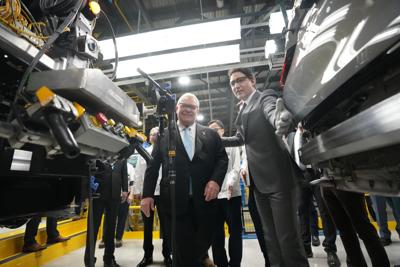
Premier Doug Ford and Prime Minister Justin Trudeau look over a vehicle along an assembly line at an event announcing plans for a Honda electric vehicle battery plant in Alliston in April 2024.  Nathan Denette/The Canadian Press

This opinion was written by Rachel Doran and Jana Elbrecht, and was published in the Toronto Star on October 16, 2024. Rachel Doran is the vice president of policy at strategy at Clean Energy Canada. Jana Elbecht is a policy advisor at Clean Energy Canada.

Over the last two years, Canadian households have been getting on board with the energy transition. The Greener Homes Grant helped Canadians from coast to coast to coast install heat pumps and retrofit their homes, while EV sales have risen rapidly thanks to growing model availability and purchase incentives.

Accordingly, thousands of Canadians have made a shift away from fossil fuels, reaping the affordability benefits. In fact, our latest analysis finds that a household in Toronto that switched out its gas cars for electric versions, ditched its natural gas appliances, installed a heat pump and made some modest energy efficiency upgrades would cut $550 off its monthly bill, even taking into account upfront costs.

And no wonder, Canadians’ continued reliance on fossil fuels is costing them. In fact, a recent study found that energy prices are the most volatile component of inflation in the country.

But despite the savings benefits of clean technologies, upfront price can be a barrier to entry for many middle-income Canadians. And in many cases, these costs have been moving in the wrong direction — particularly for Ontarians who receive comparatively little provincial support.

Over the past year, the federal government’s Greener Homes Grant (that offered up to $5,000 off the price of a heat pump and other energy-saving measures) was discontinued in favour of a program for lower income households.

Also, many of the most affordable and bestselling EVs in Canada have either increased in price or disappeared. Production of both the sub-$45,000 Chevrolet Bolt and the Kia Soul EV has been paused or discontinued, leaving gaps in the more affordable end of the market. And now the cheapest Tesla will no longer be available in Canada following new tariffs imposed on Chinese-made EVs.

Our evidence is clear: switching your fossil fuel-powered car for an EV saves money in every scenario, in every region of the country — even when upfront costs are included and even in Ontario. A driver opting for an electric Volkswagen ID.4 instead of a gas-powered Honda CR-V would save over $2,400 a year over the lifetime of the car. The problem is that not everyone can finance a pricier car that will start saving them money in the future.

Indeed, despite clear upsides, upfront cost remains the No. 1 concern for prospective EV buyers, despite EV sticker prices dropping in recent years. It needn’t be the case.

ARTICLE CONTINUES BELOW

Europeans can choose from at least 12 different fully electric options with a purchase price of less than $45,000, compared to just three in Canada. And the playing field isn’t level across the country, either. Most provinces and territories offer some kind of rebate for buying a new or used EV. But Ontario isn’t one of them.

The implications are written in the sales numbers: Ontario continues to trail the national average and has now even fallen behind the Yukon on electric market share. In fact, EVs now make up 32 per cent of new vehicle sales in Montreal and 25 per cent in Vancouver, compared to just 9 per cent in Toronto. Ontarians are missing out on EV options. The new Ontario-made electric Dodge Charger, for instance, will initially only be available in B.C. and Quebec.

This points to the critical importance of government policy, to both help cut the upfront cost via purchase incentives and encourage automakers to make more affordable models. But rebates are not universal and some key policies are at risk.

In fact, another recent report found that the federal Electric Vehicle Availability Standard (which requires automakers to make an increasing portion of EVs available for sale) will be key to incenting automakers to bring more affordable EVs to market. And yet, the future of the policy remains uncertain with the official opposition publicly stating they would repeal it if elected.

When it comes to home upgrades, many provinces stepped up after the federal government dropped its program earlier this year, retaining or expanding support for heat pumps and energy retrofits. But the result is a geographically unequal transition.

A median-income family in B.C. can receive up to $12,000 in government subsidies to switch from natural gas to a heat pump, while that same family in Ontario would receive no government support (and only up to $2,000 from the utility).

We are at a critical time in the energy transition. We have the solutions to lower energy bills and fight climate change, but it is vital that every Canadian can benefit. To that end, all levels of government must take action, offering rebates to cut upfront costs, improving charging access, simplifying financing and improving electricity rates to further incentivize cleaner options.

Anyone considering a clean energy shift can visit Clean Energy Canada’s new online calculator, mycleanbill.ca, to get a better sense of potential savings based on your location, vehicle type, and home.

After all, the door to cleaner homes and lower bills must be open to all Canadians.

Here is Clean Energy Canada’s Opening the Door, October, 2024 report.

Switching to EVs and ditching gas could save Canadians more than $500 a month, report says

A family that ditches natural gas-burning appliances and gas-powered cars would save between $550 and $777 per month, a new report from Clean Energy Canada finds. 

EVs.JPG
A family that electrifies all aspects of their home — including switching to an electric vehicle — would save between $550 and $777 per month, depending on where they live, according to a new report from Clean Energy Canada.   Mario Tama/Getty Images
Marco-Chown-Oved

This article was written by Marco Chown Oved and was published in the Toronto Star on October 15, 2024.

Burning fossil fuels is costing Canadians, not only by exacerbating climate change for their kids and grandkids, but also by increasing direct, out-of-pocket expenses now.

This is the conclusion of a new study published by Clean Energy Canada on Wednesday that quantifies just how much cheaper life is for Canadians who switch to non-combusting technologies such as electric vehicles (EVs) and heat pumps.

A family that electrifies all aspects of their home — ditching natural gas-burning appliances and gasoline-powered cars — would save between $550 and $777 per month, depending on where they live, it finds.

“We’re trying to combat some misperceptions about how much things actually cost,” said Rachel Doran, director of policy & strategy at Clean Energy Canada, a Vancouver-based think-tank. 

“Yes, electric vehicles in many cases may cost you more upfront when you just compare the sticker price. But by the time you start looking at the fact that there’s rebates available in most parts of the country and just how much you’re saving fuelling your vehicle and the maintenance, it was clear from our analysis, switching your fossil fuel powered car for an EV saves money in every scenario in every region of the country, even when upfront costs are included.”

The reports’ findings corroborate an investigation published in the Star and Corporate Knights Magazine last year that found people who decarbonize also save significant amounts of money. The customizable calculator published on the Star’s website is still available and allows people to figure out approximately how much money they’ll save by making each of the four low-carbon investments: EVheat pump, heat pump water heater and induction stove.

These four changes to your home can save you lots of cash. Use our tools to see how much

Clean Energy Canada offers a similar calculator at mycleanbill.ca.

“We often don’t think about the costs of doing things the same way we’ve always done them (i.e.: with fossil fuels). But when you actually add up how much of your income is going toward paying at the gas tank or other pieces, that’s actually a substantial amount of money,” said Doran. “So I do think this is a bit of an educational tool.”

Since the start of the pandemic, fossil fuels have been one of the most volatile expenses for Canadian families and their spike in prices after the Russian invasion of Ukraine has driven inflation in virtually every sector across the economy.

While retail gasoline and natural gas prices ride the international markets when they go up, they’re far slower to go back down when the global price wanes. This underscores the “freedom” aspect of reducing your reliance on fossil fuels. No longer will you be paying for Russia’s aggression every time you fill up.

It also means that switching your car, furnace, hot water heater and stove from fossil fuels to electricity will almost always be cheaper to operate.

The issue is the upfront cost of the switch, with EVs and heat pumps costing more than their fossil-fuel burning equivalents. The Clean Energy Canada study, however, includes that upfront cost spread out over the lifetime of the appliance and shows that even with the higher sticker price included, the electrical appliances are significantly cheaper.

A family with two cars, living in a detached house in Toronto, for example, would spend nearly $2,000 a month in energy bills, gasoline and car/furnace payments. That same family would spend just over $1,400 a month if they switched to electric alternatives, the report found.

At the same time, they would lower their carbon emissions by 94 per cent.

In a condo, the results are similar. A Toronto family with a single car is expected to spend $838 per month on bills and leasing payments. This drops to $613 after electrification.

The results vary by province — where electricity and gas prices are different — and on the size of the rebate. While Quebec tops up the federal $5,000 EV rebate with $7,000 more, Ontario does not. But Ontarians can get $5,000 off the purchase price of a heat pump through the provincial Home Energy Rebate program administered by Enbridge. 

In a section on EVs, the report compared a gas-powered Honda CR-V to the electric SUV Volkswagen ID. 4 and found the Honda would cost 44 per cent more to finance and operate.

It also priced out common road-trips to show how much cheaper charging is than gassing up.

A drive from Toronto to Ottawa, for example, would cost only $16 in electricity but $54 in gas — more than three times more.

The report calls for more government rebates to lower upfront costs that are still the biggest barrier to adoption of green technology — especially for lower-income households.

“Rebates are still really important,” said Doran. “If we can help people access these solutions, they’re going to be saving money over time. So for families that have a harder time paying their energy bills or hydro bills, having those all be reduced over time is going to be really helpful in trying to make ends meet.”

Here is Clean Energy Canada’s Opening the Door, October, 2024 report.