Rapid reduction in fossil fuel burning urgently needed to preserve liveable conditions, say scientists, as climate damage deepens
This article was written by Damian Carrington and was published in The Guardian on January 9, 2024.
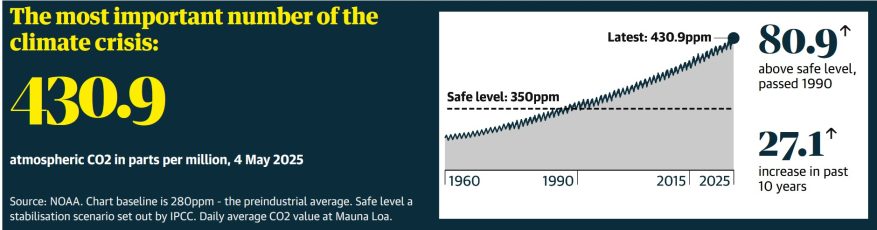
This article was written by Damian Carrington and was published in The Guardian on January 9, 2024.
This article was written by Kate Abnett of Reuters News and was published by CTV News on January 9, 2024.
This article was written by Olive Milman and was published in The Guardian on January 8, 2024.

Melting ice, wildfires, heat waves, floods: These images show life in a warming world, and solutions to address it.
A huge ice cone, called a conical ice stupa, towers over a man in the north Indian territory of Ladakh. As snow dwindles and glaciers recede, these stupas are being constructed to store water in frozen form. This 110-foot structure (33.5 meters), located near the village…Show more
As the UN’s global climate change conference—COP26—approaches, ever-more-extreme weather has shown us climate change is here. Yet COVID-19 and the actions taken to control it have also shown us that cooperation can prompt dramatic global change.
Sometimes, all it takes is one photo to spark that action. Sometimes, it’s a collection of vignettes that show us what is at stake, and more importantly, inspire ideas of what we can do about it. In short, pictures can change the world. And as our world comes to terms with the reality of climate change, never has that been more needed.
Some of these images offer an instant visual punch to the gut: a dying coral outcrop on the Great Barrier Reef, for instance, juxtaposed with an older photo of how vibrant coral can be. Some of the images inspire in their ability to show that change is not only possible, it is happening—and that we have the ingenuity and the skill to make a real difference.
But amidst these odds, there is hope. Nature is resilient, and given the chance, it can recover, if we have the courage to make it happen.



Left: A humpback whale mother and her calf swim past Reunion Island in the Indian Ocean. The humpback whale population was decimated by commercial whaling in the first half of the 20th century. Commercial whaling ended in the early 1970s, and the humpback population has rebounded, in some places to near pre-whaling numbers.
PHOTOGRAPH BY GABRIEL BARATHIEU, BIOSPHOTO, MINDEN PICTURES
Right: Melting water carves grooves into an iceberg in Antarctica. Icebergs have always been melting, but the Antarctic Peninsula is one of the fastest warming regions on Earth. The region is expected to warm more than 2 degrees Fahrenheit (1.1 degrees Celsius) in the next 20 years.
PHOTOGRAPH BY PAUL NICKLEN, NATIONAL GEOGRAPHIC



Left: The Carlen family has been managing an ice cave in Switzerland’s Rhône Glacier since 1988, but when rising temperatures began melting the ice, they came up with a novel idea—for eight years they’ve covered part of the glacier in fleece blankets that reflect sunlight. Th…Read More
PHOTOGRAPH BY CIRIL JAZBEC, NATIONAL GEOGRAPHIC
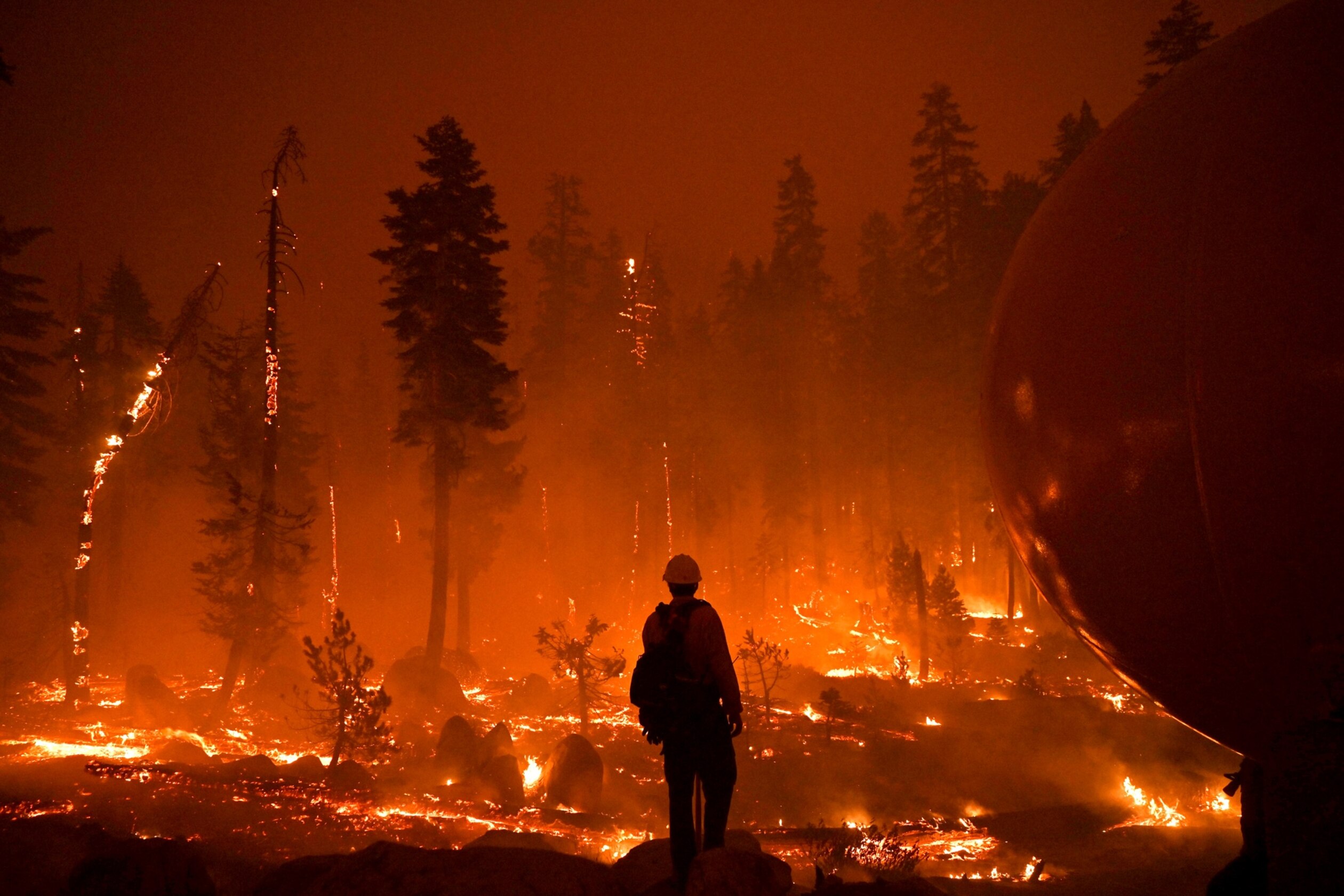
Right: In August, the Caldor Fire blazed toward California’s Lake Tahoe Basin. Firefighters with CAL FIRE and other fire departments tried to protect homes and shelters. About 1,000 structures, more than 700 of which were homes, were destroyed.
PHOTOGRAPH BY LYNSEY ADDARIO, NATIONAL GEOGRAPHIC

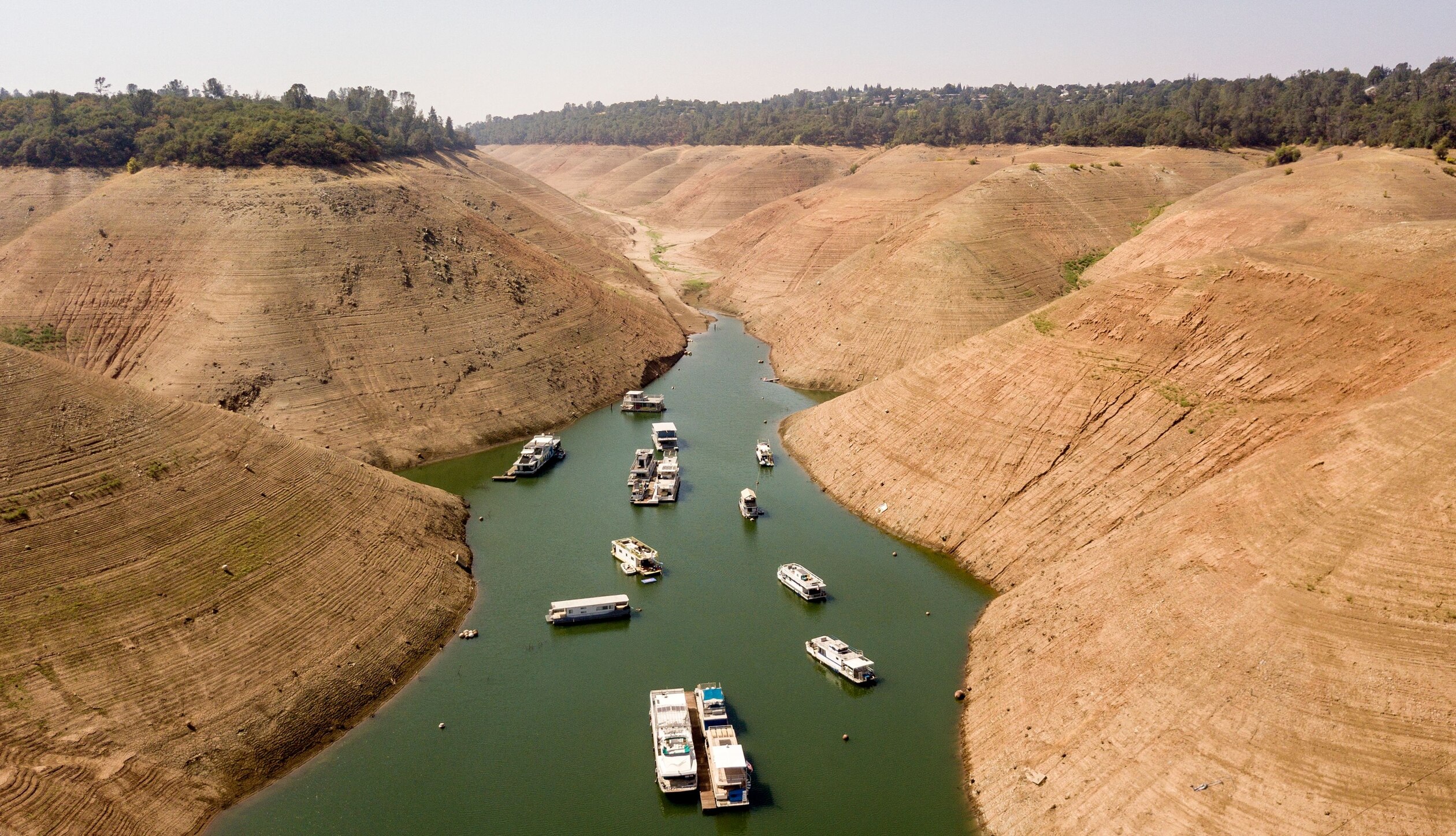

Left: In September, houseboats sit in a narrow strip of water in California’s Lake Oroville. At the time, the lake was at just 23 percent of its capacity as extreme drought struck the region. Over the summer, the Western U.S. was gripped by deadly heat, severe drought, and massive wildfires.
PHOTOGRAPH BY JOSH EDELSON, AFP/GETTY IMAGES
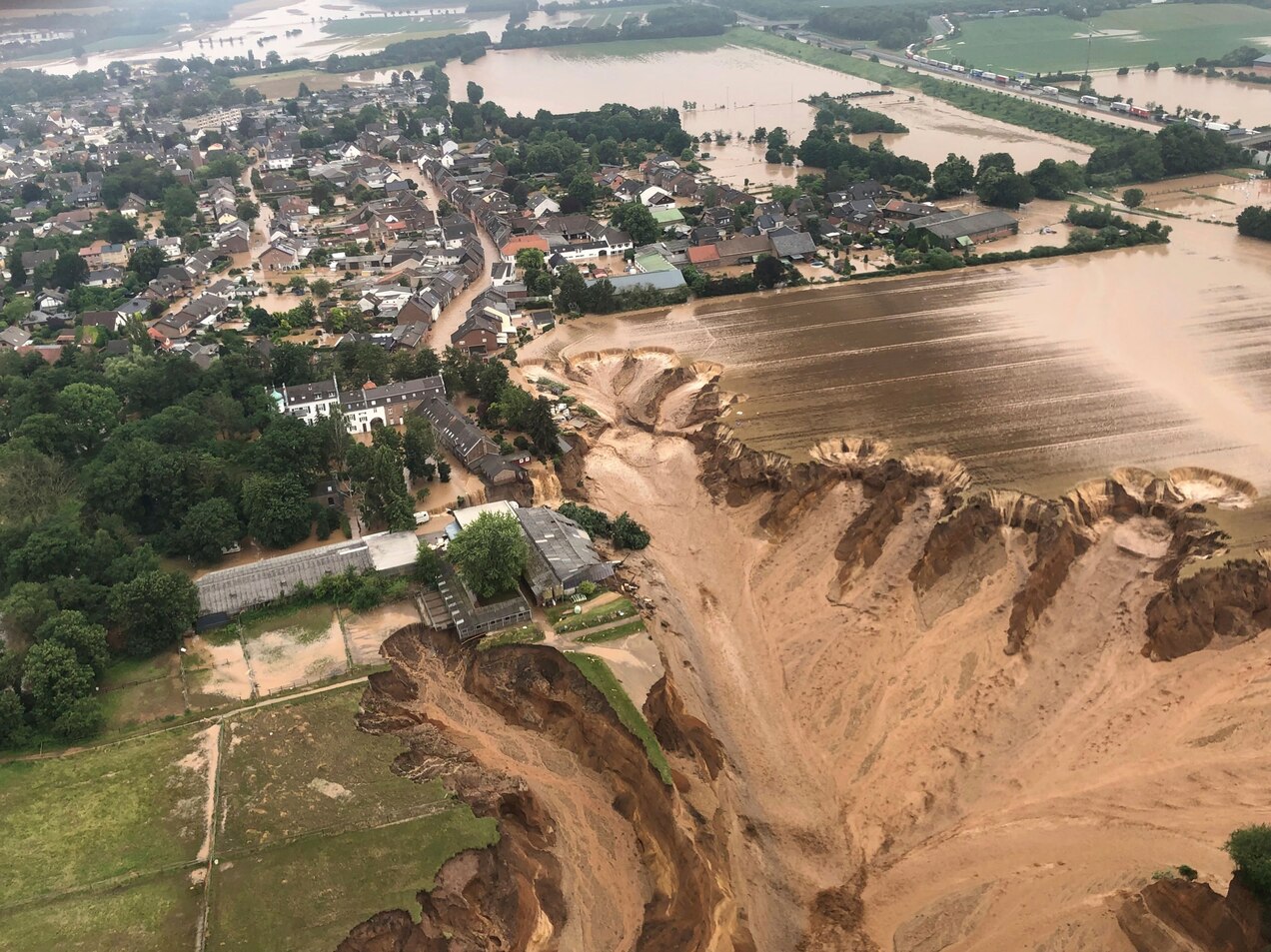
Right: A family has dinner in their flooded home in Central Java, Indonesia. For over 40 years, they watched as their productive farmland slowly disappeared under the sea. They have physically raised everything in their home to cope.
PHOTOGRAPH BY AJI STYAWAN, NATIONAL GEOGRAPHIC
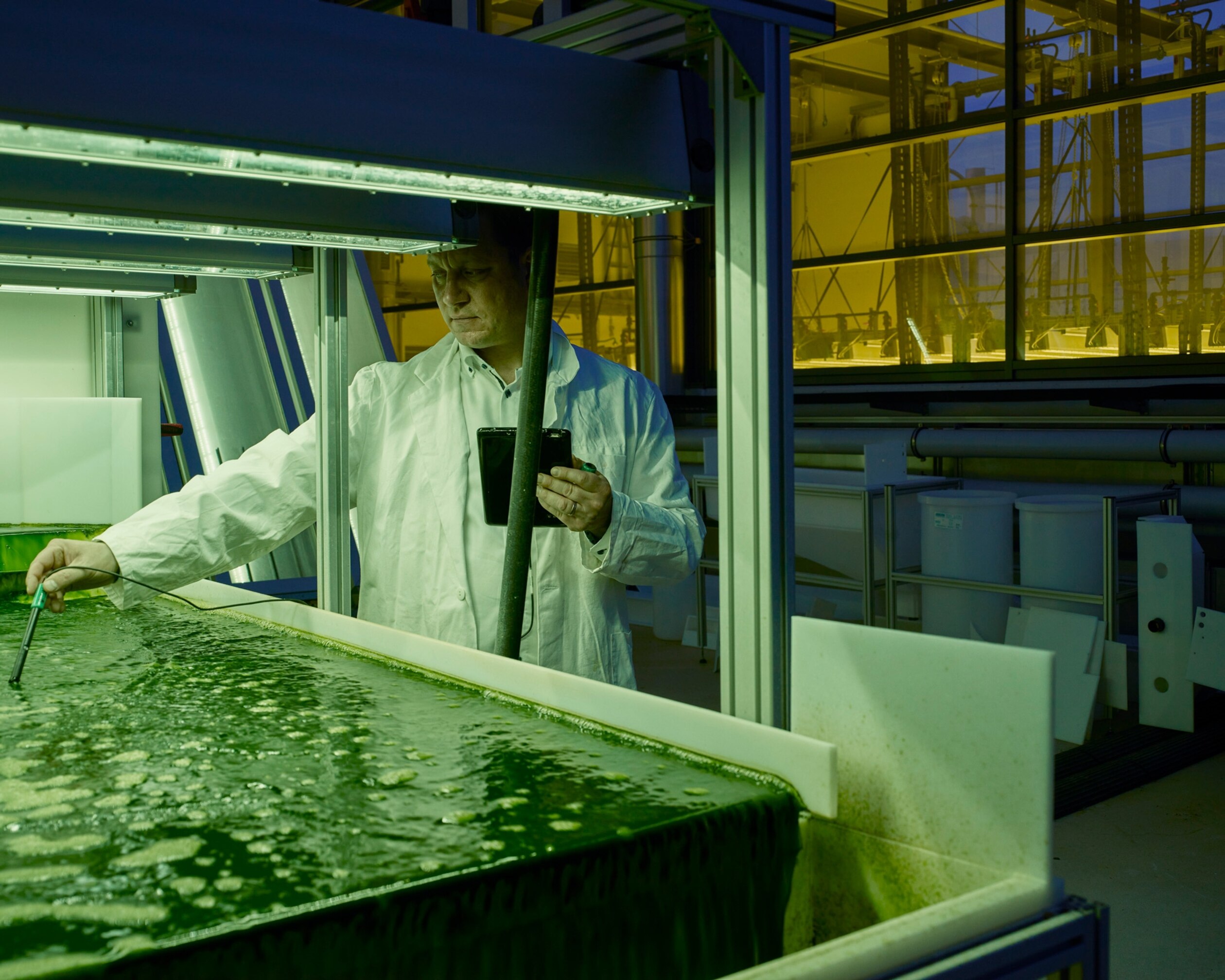
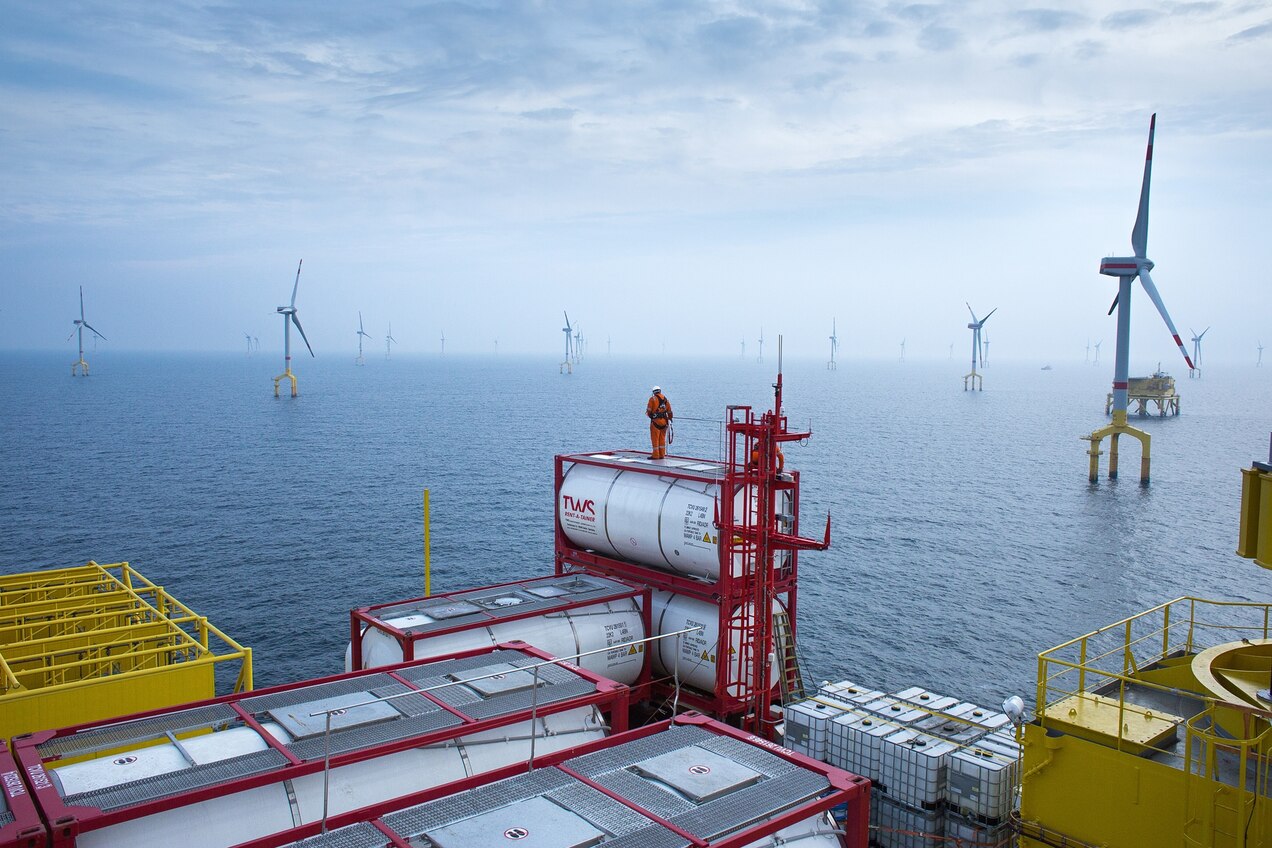
Left: The Algae Cultivation Center, a 16,00-square-foot building inside the Technical University of Munich, is focused on using algae to create biokerosene and other chemicals. With highly-efficient LED lights and transparent glass, scientists can recreate the climate conditions of any location on Earth, in turn simulating algae’s growth cycle. Results here will be used to create lighter fuels and construction material for the aviation industry.
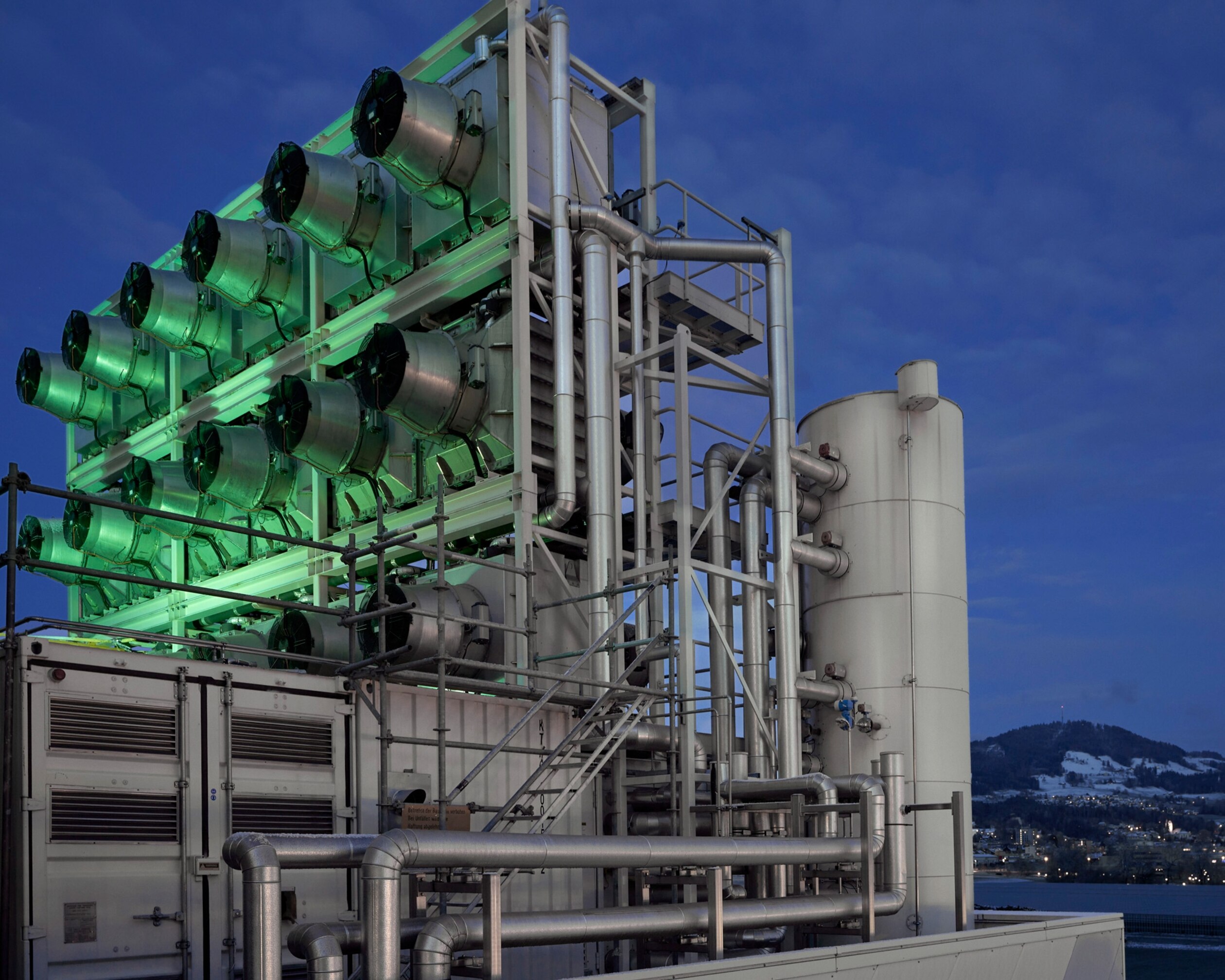
Right: In Zurich, Switzerland, a machine made by the Climeworks company is directly capturing carbon dioxide from the air, an effort to mitigate climate change. First, air is drawn into the collector with a fan and a filter captures the CO2. Then, the gas is heated, which highly concentrates it, after which it can be collected and recycled or stored.
PHOTOGRAPHS BY DAVIDE MONTELEONE, NATIONAL GEOGRAPHIC


Left: Moving passengers through the skies without fossil fuels is enormously challenging, especially for long-haul flights. For shorter flights, many companies, including Wisk, a California start-up, are designing electric planes. Wisk’s plane, which flies without a pilot, can take off and land vertically, eliminating the need for a runway.
PHOTOGRAPH BY CRAIG CUTLER, NATIONAL GEOGRAPHIC
Right: At the Ford Ion Park in Allen Park, Michigan, batteries are researched and tested. Batteries are the heart of electric vehicles, and automakers are trying to make them lighter, faster charging, and longer lasting.
PHOTOGRAPH BY DAVID GUTTENFELDER, NATIONAL GEOGRAPHIC

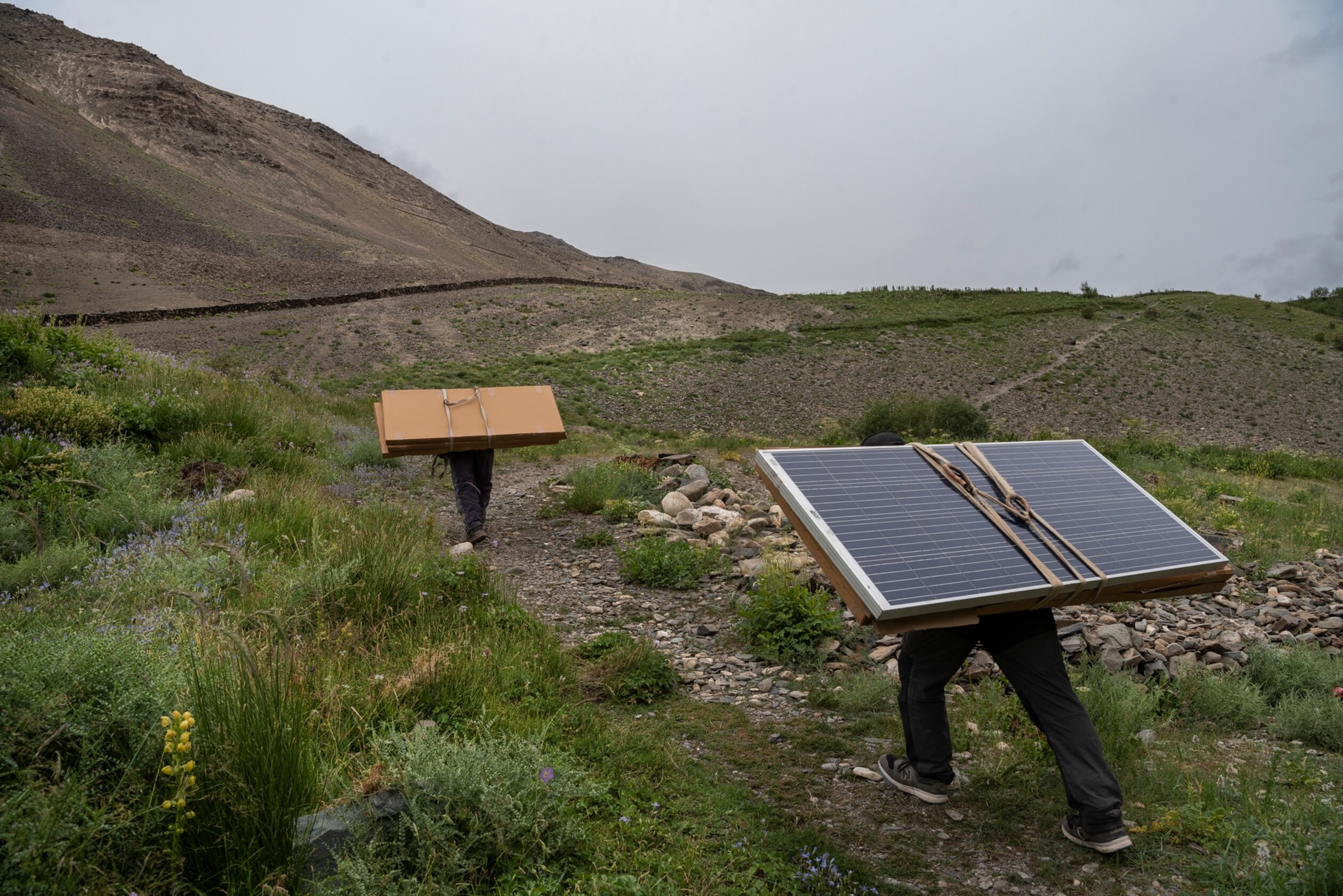

Left: The Global Himalayan Expedition is a project to bring solar energy to remote villages around the world. Here, expedition team members and residents of the Yal Village trek with solar panels, batteries, and other installation paraphernalia. The journey took two days of driving over treacherous roads and eventually finishing on foot.
PHOTOGRAPH BY SAUMYA KHANDELWAL, NATIONAL GEOGRAPHIC
Right: At Columbia University, a panel coated with a novel polymer film radiates heat through the atmosphere to outer space, making it dramatically cooler than its surroundings. Panels like this one could reduce the need for air conditioning.
PHOTOGRAPH BY JYOTIRMOY MANDAL



Climate change is rapidly reshaping life on Earth—but our efforts to combat it also reached important milestones this year.
This article was written by Bykieran Mulvaney and was published in National Geographic on December 15, 2023.
Increasing temperatures, a melting Arctic, cataclysmic Canadian wildfires: in 2023, the effects of climate change and environmental threats to wildlife set records.
But not all the environmental milestones of 2023 were negative. Amid these causes for concern were signs of hope.
A trend away from fossil fuels and toward renewable energy continues apace, even if not at quite the rate of change that many would like to see. While some species were declared extinct, other showed themselves for the first time in decades. And the 50th anniversary of the Endangered Species Act highlighted that some species that had seemed destined to disappear are now, relatively speaking, thriving.
Both the good and the bad, here are six environmental milestones from the past year.
With just two weeks remaining, 2023 appears destined to be the warmest year on record, with average temperatures approximately 2.5°F higher than they were before the industrial revolution. This year, we saw the hottest July, August, September, and October on record. July was the hottest month ever recorded, and July 4 was the warmest single day ever documented—possibly one of the warmest days in the past 125,000 years.
Global carbon emissions from fossil fuels, the primary driver behind such temperature increases, also reached a new high in 2023, having increased by 1.1 percent since 2022.
This extreme heat has also been fueled by a strong El Niño event, which emerged this past spring in the Northern Hemisphere and developed rapidly during summer. According to the World Meteorological Organization, this weather pattern will likely lead to even higher temperatures in 2024.
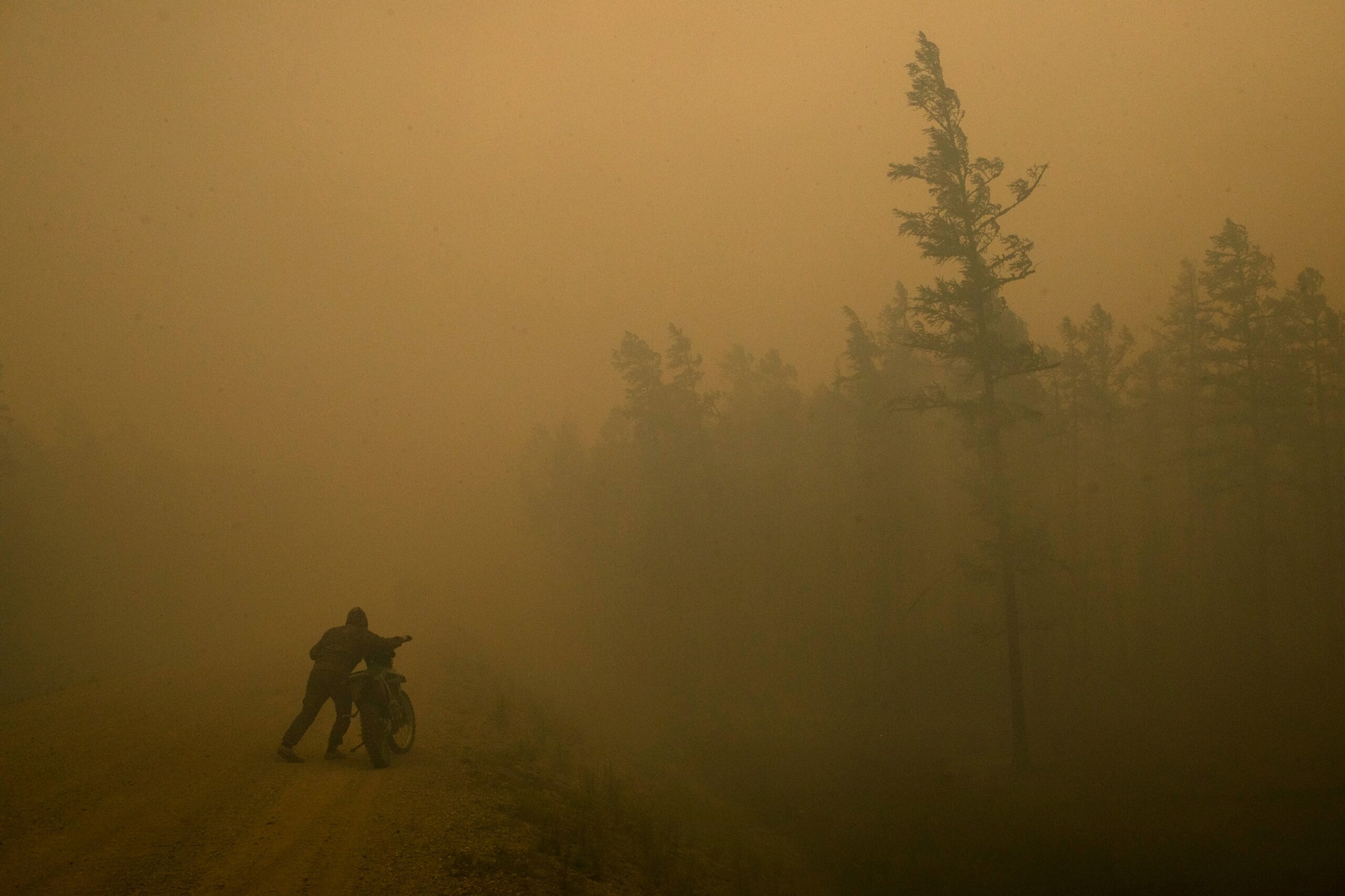
In a year that saw a succession of extreme weather events, few stood out more than the wildfires that swept across swaths of Canada and polluted the skies over much of the United States. A record 45.7 million acres burned across the country in 2023, almost three times the previous record amount and an area approximately twice as large as Portugal.
According to a study by the Copernicus Climate Change Service, Canada’s wildfires emitted 410 million metric tons of carbon dioxide into the atmosphere, roughly the equivalent of Mexico’s emissions in 2021 and not far off the 546 million metric tons that Canada itself emitted as a result of human activity in 2022.
Earth’s most northerly region continues to warm four times faster than the rest of the planet.
In December, NOAA published its annual Arctic Report Card, which found that 2023 was the warmest year ever recorded in the region.
In Greenland, temperatures at Summit Station, high on the ice sheet, temporarily nudged above freezing on June 26—temperatures only seen five times in the past 34 years.
At the other end of the Earth, sea ice dwindled to a record low.
For several years, Antarctic sea ice—which melts almost entirely each summer—had been stable, despite the warming ocean below it. Researchers have offered a number of explanations for this persistence but predicted that there would one day come a time when Antarctic sea ice would begin to retreat. That time is now.
The maximum extent of Antarctic sea ice for the year was the lowest ever recorded: 6.55 million square miles, almost 400,000 square miles below the previous low, and a cause for concern for the Antarctic wildlife such as penguins and seals, for which sea ice is a vital habitat.
The COP28 climate change conference concluded in December with a pledge to triple renewable energy capacity by 2030.
That would almost certainly require more investment in the industry, but there’s reason to believe that investment is possible. The use of renewables has already reached new records in 2023.
The International Energy Authority stated in July that global renewable energy capacity will increase by 440 gigawatts over the course of 2023, 107 gigawatts greater than the growth in 2022. Two-thirds of that increase is driven by a growth in solar cell capacity, the IEA added.
According to a report published earlier this year by energy think tank Ember, wind and solar together provided 14.3 percent of global electricity in the first half of 2023, compared to 12.8 percent in 2022. Fifty countries set monthly records for solar generation in that same period, although energy generation from hydropower declined slightly, due largely to droughts in China.
The clean energy revolution is spreading to personal transportation. While sales were lower than what automakers and the federal government had hoped for, the number of EVs on the road had a notable increase in the U.S. and abroad.
Global sales of common types of electric vehicles rose 20 percent this year, according to one study. Sales increased by 43 percent in the United States and Canada, and 25 percent in China.
According to the BloombergNEF Zero Emission Vehicles Handbook, forecasts for the number of battery electric vehicles on the road by 2030 have risen 26 percent compared to 2022, with all zero-emission vehicles combined estimated to account for as much as 75 percent of global passenger vehicle sales in 2040.
This increase is primarily driven by China, where more than 25 percent of new passenger vehicle sales are electric vehicles.
In May, a study of 71,000 animal species found that 48 percent are experiencing declines, 49 percent remain stable, and just three percent are seeing an increase in the size of their populations. That same study concluded that one-third of animal species that are not presently considered at-risk are nonetheless declining in numbers that threaten their long-term survival.
The U.S. government removed 21 species from the endangered species list because they are now considered extinct, including the Little Mariana fruit bat, the Bachman’s warbler, and several species of birds, mussels, and fish. However, as the Endangered Species Act reached its 50th anniversary, the continued survival of several species— including bald eagles, peregrine falcons, and American alligators— is testament to what can be achieved when conservation measures are taken.
And some species, previously considered extinct, were rediscovered in 2023, including a “golden mole that swims through sand,” last seen in 1937, and a species of echidna named after Sir David Attenborough and described as having “the spines of a hedgehog, the snout of an anteater and the feet of a mole.
Missed climate targets mean mounting damages. More forests burn, more ecosystems are lost, more people are killed or displaced by extreme weather.
This article was written by Steve Easterbrook and was published in the Toronto Star on December 30, 2023.
Eight years ago, at the Paris climate change talks, the United Nations agreed a legally binding treaty to limit global warming to well below 2C above pre-industrial global average temperatures, and to pursue efforts to keep the temperature increase below 1.5°C. Canada was a vocal supporter of the more stringent 1.5C limit. But with the failure to agree on a meaningful timeline to phase out fossil fuels at this year’s COP28 meeting, and monthly global temperatures regularly shattering records, some scientists are starting to say it’s too late to save the UN’s 1.5C target. It now looks likely we’ll pass that temperature threshold within the next decade.
However, we must never give up on the 1.5C target, no matter how desperate it seems. The actions we must take to meet the 1.5C target are the same actions we need to take to stay below the 2C target (or indeed any similar target). Both targets require us to make massive investments in renewable energy alternatives and phase out fossil fuels as rapidly as possible. The only difference between the targets is how fast we must do it. Discarding a hard goal for an easier goal will merely remove some of the urgency. And if we relax our goal, we’ll stop trying so hard. We then risk missing the 2C goal as well.
Fossil fuel companies pay lip service to the 1.5C goal, but simultaneously work to undermine it because they want to sell as much oil, coal, and gas as they can before they are forced to stop. They are the most profitable industries in the world, so their intransigence is understandable. But with the price of renewable energy dropping fast, the clean energy infrastructure we must build will be just as profitable for whichever companies create it. The problem isn’t that we’ll somehow destroy the economy, or all end up poorer, or as Sultan al-Jaber, the chair of COP28 put it, end up sheltering in caves. The real question is who will reap the rewards of the energy transition: a handful of giant fossil fuel companies who want to keep doing what they have always done, or a vast array of smaller, more agile, cleantech companies who are already making the necessary investments.
It now looks likely that the world will reach and then exceed 1.5C of warming within a decade from now. Climate scientists might disagree on how exactly to determine the threshold has been passed, but that’s irrelevant. There’s no point arguing at what point the car can be said to be over the edge of the cliff, when the most important thing is that the car is going off the cliff.
But the car going over the cliff is the wrong metaphor anyway. The world doesn’t end at 1.5C, nor at 2C. What happens is the damages pile up. More forests burn down, more ecosystems are lost, more crops fail, more people are killed or displaced by extreme weather, more land is lost to the rising seas. So when we pass 1.5C, it is not game over. It is not even a defeat. It is an overshoot that needs to be managed and contained.
By retaining the 1.5C target even after we see it in our rearview mirror, we will commit to reversing course as fast as possible. We must then redouble our efforts to bring carbon emissions to zero as rapidly as possible, and ramp up emergency measures to remove carbon from the atmosphere to cool the planet back down again. It will never be okay to say we can give up on everybody whose lives or communities will be destroyed in the interval between 1.5C and 2C.
Every fraction of a degree matters; every fraction of a degree multiplies the destruction. So we must fight to avoid every fraction of a degree of further warming. If and when we miss the 1.5 degree target, we cannot let ourselves off the hook. The correct answer for how much more warming we should aim for is: none at all. The correct target for a world hotter than 1.5C is to get back to a world below 1.5C as rapidly as possible.
Steve Easterbrook is a professor and director of the School of the Environment at the University of Toronto.
This editorial was written and published by the Globe & Mail on December 30, 2023.
In mid-October, climate scientist James Hansen published a short paper about the trajectory of global warming. In four words: it’s getting worse, fast.
Mr. Hansen has been right before. In 1988, his testimony on Capitol Hill in Washington became front-page news: “Global Warming Has Begun, Expert Tells Senate,” read the New York Times headline. We knew then what to do. The Times’ subheadline was: “Sharp Cut in Burning of Fossil Fuels is Urged to battle Shift in Climate.”
Thirty-five years later, the burning of fossil fuels continues to increase, despite various efforts and climate treaties. Our collective goal to limit heating to 1.5 degrees Celsius compared with preindustrial times, enshrined in the 2015 Paris Agreement, is slipping away.
Mr. Hansen’s recent work makes this clear. As anyone following the news would know all too well, the heat this year is unprecedented. September hit 1.76 C. November was 1.72 C – and two days eclipsed 2 C hotter than the planet was before the bonfire of fossil fuels.
The goal to limit heating to 1.5 C is not based on a single month but to see it happen, so soon, is both jarring and a call to action. It was once thought 1.5 C was many years away. There was always still time.
It is a reality of the present, Mr. Hansen concludes, these days in his early 80s and working at Columbia University. His calculations suggest an accelerating warming trend could lead to 2 C of heating by 2040, with the 1.5 C mark officially surpassed in the next few years. “There will be no need,” he wrote, “to ruminate for 20 years about whether the 1.5 C level has been reached.”
In November, a United Nations report said heating could eventually approach 3 C. If you thought this year was bad, imagine the future.
That’s the bad news.
There’s also good news, some at least. The same UN report noted the modest progress made. Greenhouse gas emissions in 2030 were expected to be 16 per cent higher than in 2015, before the Paris deal. The increase is now projected at 3 per cent. Problem is, emissions need to be falling, by at least about 30 per cent by 2030.
The UN report also put odds on the fading hope of success to limit long-term heating to 1.5 C: one-in-seven. One expert called those odds “very, very slim” but, given the circumstances we find ourselves in, one could say they are a reasonable beacon of hope.
Because change is happening. At the end of the annual UN climate meeting in Dubai this month, countries for the first time agreed to transition away from fossil fuels.
We have the tools. Rystad Energy, a Norwegian consultancy, argued in November that an array of technologies led by solar power, already widely deployed, could limit heating to 1.9 C. And renewables are not a charity case. Clean power can outcompete fossil fuels for investment dollars.
The UN climate meeting endorsed the goal of tripling renewable power by 2030 – stepping up from a predicted doubling in the next seven years. Some experts have suggested that solar power, by 2030, could be so cheap as to be free for several hours on sunny days. There are obviously other challenges, such as expanding transmission grids and energy storage, but the potential of a transformation is real.
Rystad and others such as the International Energy Agency see global emissions from fossil fuels peaking around 2025. There’s a new emerging view that emissions in China will also peak soon – and possibly decline starting in 2024.
It’s time for rich countries such as Canada, which have greatly benefited from the use and sale of fossil fuels, to redouble their efforts. It’s sometimes said Canada accounts for less than 2 per cent of global emissions and, thus, our actions are meaningless.
But if the countries of world are a platoon of 50 soldiers, the cowardly abdication of one – especially one of the most able – would contribute directly to a collective failure.
Mr. Hansen continues his life’s work, the science, and the mission to stoke action. In a lengthier study in November, he again warned of the “enormity of consequences” of inaction and pointed to the main two strategies: a carbon tax on fossil fuels and the rapid building of clean energy. Mr. Hansen has not given up hope. “Current political crises,” Mr. Hansen wrote, “present an opportunity for reset, especially if young people can grasp their situation.”
This article was written by Marco Chown Oved and was published in the Toronto Star on December 19, 2023.
While carmakers say hitting Canada’s new zero emission vehicle sales mandates is unrealistic, their track record elsewhere shows that electric vehicle sales have surged past legislated targets once they’re brought in.
The federal government is set to reveal regulations that will require automakers to sell a growing proportion of EVs starting at 20 per cent in 2026 and growing to 100 per cent in 2035, the Star reported on the weekend.
Similar regulations have been in place in Quebec, B.C. and California for the past five years. In those cases, auto manufacturers had no trouble meeting the EV sales targets.
In fact, B.C. met its 2025 target five years early.
“Each time automakers say a target is unachievable, they achieve it — ahead of schedule,” said Joanna Kyriazis, director of public affairs at Clean Energy Canada, a B.C.-based think tank.
Each system is designed differently, but they all operate on a similar premise of issuing credits for sales of zero-emission and hybrid vehicles. Credits can be bought and sold to ensure automakers are in compliance with the law as the proportion of EVs ratchets up.
“Quebec and B.C. ZEV (zero emission vehicle) mandate compliance reports show that all automakers have been able to comply with requirements to date and most are often in overcompliance (i.e. they have more credits than they need),” Kyriazis said.
In fact, the federal government’s original EV sales target was 10 per cent in 2025, a level that will likely be surpassed this year, two years ahead of schedule.
EV sales have been growing rapidly around the world, especially in China, the U.S. and the EU. The International Energy Agency (IEA) found global EV sales grew 25 per cent in 2022 and are set to grow 35 per cent this year.
In Canada, nationwide EV sales reached 12 per cent of all new car sales in the third quarter of this year, helped along by jurisdictions that already had sales mandates.
One in five new cars are electric in Quebec. In B.C., EVs make up nearly a quarter of all new car sales, according to Statistics Canada data.
These numbers indicate that actual EV sales will blow past the government sales targets, said Adam Thorn, director of transportation at the Pembina Institute.
“Canada is following the herd here. We know these targets can be achieved. They are being achieved,” Thorn said.
Brian Kingston, president and CEO of Canadian Vehicle Manufacturers’ Association, pushed back against the imposition of sales mandates, telling the Star the approach of the U.S. federal government is better. There, instead of requiring a proportion of new car sales to be zero emissions, the government sets vehicle emissions standards and ratchets them downward overtime.
Automakers south of the border, however, have been lobbying to weaken those emission regulations, something Daniel Breton, president and CEO of Electric Mobility Canada, said Canadians should know about when listening to the auto industry.
“Some car manufacturers speak from both sides of the mouth, from both sides of the border,” he said.
The emissions standards are layered with other EV policies in the U.S. In addition to California, sixteen states have introduced sales mandates like the ones being introduced in Canada.
Earlier this year, U.S. President Joe Biden announced another suite of incentives to encourage EV uptake, including purchase subsidies, funding for public charging and incentives for heavy-duty vehicles. Canada has similar programs in place, though they are much smaller in scale.
Climate activists point to the EV revolution as an example of a consumer-led climate solution, one that will play a big role in reducing carbon emissions regardless of government intervention.
Extracting, transporting and burning oil to fuel road transportation accounts for almost half of the world’s oil consumption, according to Bloomberg. As the auto fleet electrifies, its share of the overall oil market will drop to about a third of the market in 2040 and a quarter in 2050.
Based on current trends, the rollout of EVs is set to avoid the need for 5 million barrels of oil a day by 2030, according to the IEA. That’s about 5 per cent of world oil production.
The sticker price for EVs, once a deterrent, has been dropping rapidly. The cost of a new EV dropped 22 per cent in the last year, led by aggressive price cuts at Tesla.
Meanwhile, the average price of gas-powered vehicles has shot up by nearly the same amount, hitting $67,800, as Canadians continue to buy larger SUVs, which not only cost more, but have far worse emissions than sedans.
There are now dozens of EV models available for less than the average price of a new car.
“When a person is considering buying a new vehicle, they are clearly looking at the dollars and cents. And there’s some really good research out there that shows in the long term EVs will be cheaper for the consumer,” said Thorn. “There’s less maintenance and obviously the fuel costs are greatly reduced. So the total cost of ownership, if not that initial purchase price, will certainly lead to a more affordable vehicle over time.”
In partnership with Corporate Knights, the Star analyzed how much an average household would save by switching to low-carbon technologies and found an EV would be $2,170 cheaper per year than a gas-powered car.
As a keen observer of the EV industry, Breton said he’s confident that EV sales will far exceed the mandated sales targets.
“It’s a good start,” he said. “But I hope that as we see EV sales go even higher, that the government can crank it up a bit.”
This article was written by Marco Chown Oved and was published in the Toronto Star on December 13, 2023.
Halton Hills, home to one of Ontario’s biggest gas plants, has rejected an expansion project, with local councillors saying concerns about climate change and local air pollution prevented them from being able to support new fossil fuel infrastructure.
The 9-2 vote on Monday evening is the latest setback to Premier Doug Ford’s plan to build new gas plants to meet Ontario’s growing demand for electricity.
For the last year, the province’s electricity system operator and developers have been pitching cities and towns on hosting new plants in an effort to build 1,500 megawatts of gas-fired generation but have only secured 2 local approvals for a total of 550 megawatts.
Halton Hills is the fifth municipality to vote on a new gas plant, breaking the tie between two that approved (Windsor and Napanee) and two that rejected (Thorold and Loyalist) proposals.
“Saying yes to supporting this plant expansion will mean turning our backs on at least 10 years of environmental stewardship and it will also indicate to our residents that climate action is for someone else to worry about,” said Mayor Ann Lawlor.
“Expansion of this plant will demonstrate yet another failure of governments to plan long term for a healthy planet where we all can thrive.”
In 2021, Halton Hills became the first municipality in Canada to commit to net zero emissions by 2030.
This target is more ambitious than virtually any other worldwide. Canada currently seeks to achieve net zero emissions by 2050. The draft Clean Electricity Regulations, if implemented, would mandate net zero electricity nationwide by 2035.
The currently proposed gas plants in Ontario would be contracted until 2040.
In its low-carbon transition strategy, the municipality stated: “the energy system is in transition away from fossil fuels. Halton Hills’ commitment to decarbonize ahead of the curve will enable us to capitalize on new economic opportunities, avoid projected financial losses, and ensure sustainable economic growth.”
Pointing to this report, several councillors said they could not support a new gas plant.
“I’m sure we’re not the only municipality in this situation. We declared a climate emergency in 2019. We’ve got a climate change adaptation plan. We’ve got a corporate energy plan. We’ve got green development standards. We’ve got a retrofit program. And now we’re being asked to endorse a gas plant,” said Coun. Alex Hilson.
In a lengthy back-and-forth with councillors, the province’s Independent Electricity System Operator (IESO) made the case that new gas plants were necessary to meet demand in the short term, while transitioning to a net zero grid long term.
“I’m very aware of how confusing the message can be: that we need to rely on fossil fuels to bridge out of fossil fuels,” said the IESO’s chief energy transition officer Chuck Farmer. “This was a hard decision to make but I think it is the only way we can move forward in order to maintain the reliability of the system.”
“If we don’t maintain the reliability and affordability of the system, then we will lose the support for the longer term journey and the investments that are required in order to get to net zero,” he said.
His explanation did not sway Council.
Lawlor was unimpressed with the developer, Atura (a subsidiary of the publicly owned Ontario Power Generation), who made few efforts to work with the municipality on its net zero by 2030 goals, she said.
“Do they really want us to say yes? If they have, why didn’t they give us a great pitch? Because I sure haven’t seen it tonight,” she said.
Other councillors decried how they’re being asked to make decisions that extend far beyond municipal borders, shaping the provincial electricity grid, with global implications in exacerbating climate change.
“We as a council have been put in a difficult situation that we should not be in. The provincial government should be making these decisions, not us,” said Coun. Michael Albano.
Before the Ford government was elected in 2018, electricity planning in Ontario was carried out centrally and imposed on local communities by Queen’s Park.
Capitalizing on local opposition to wind farms, Ford won election in part by promising to give local communities a say on any new energy projects. This effectively gave municipalities a veto, which is now being wielded against gas plants.
This has forced gas plant developers to woo local representatives with financial contributions to “community benefit funds,” something that has never before been offered for electricity generation projects.
Napanee Council voted to support Atura’s 450 megawatt gas plant last month after being offered $1,000 per megawatt per year, a contribution that could add up to $4.8 million over the 12 year contract.
Atura offered Halton Hills $1,100 per megawatt, or between $2 million and $3.5 million over the 12 year contract being sought, depending on the eventual size of the plant.
The very fact that Atura proposed payments had locals questioning the project.
Lawlor said an “unprecedented” number of residents contacted council about the new plant, and more than a dozen of them spoke at council before the vote.
They raised concerns about exacerbating climate change by burning additional fossil fuels and about the health impacts of local air pollution.
“I would feel both betrayed and abandoned should you decide to approve this proposal,” said resident Daniel Poirier, who described how he had bought an electric vehicle and heat pump to fight climate change.
“Why in God’s name did I spend so much effort and many tens of thousands of dollars to reduce my own carbon footprint only to see all that wasted … because of a dirty electricity grid?”
Several councillors said they were swayed by the passionate deputation of 16-year-old high school student, Matthew Tyhurst.
“I’m no councillor, mayor or politician. I’m not even in a position or age to vote yet. All I do is watch and hope that you keep the promises that you yourselves have set forward in a supposed attempt to secure the future of myself and future generations.”
Last fall, the province’s electricity grid operator put out a call for 1,500 megawatts of new gas “peaker” plants to ensure there are no blackouts during periods of peak demand. These peaker plants are only supposed to run about 2 per cent of the time, typically on hot summer afternoons when everyone cranks up their A/C.
But a Star investigation this fall found that Ontario’s fleet of gas peaker plants actually run most of the time. The three plants in the GTA, which produce toxic air pollution in the densest urban area in the country, were fired up more than 19 hours a day last summer, the investigation found.
The Halton Hills plant has doubled how much it runs in the summer, when electricity demand is highest. Five years ago, it ran just over 10 hours a day during the hottest months. Last summer, it ran more than 20 hours a day.
‘‘ Why in God’s name did I spend so much effort and many tens of thousands of dollars to reduce my own carbon footprint only to see all that wasted … because of a dirty electricity grid?
DANIEL POIRIER HALTON HILLS RESIDENT WHO BOUGHT AN EV AND HEAT PUMP TO FIGHT CLIMATE CHANGE
This article was written by Marco Chown Oved and was published in the Toronto Star on December 18, 2023.
All new cars in Canada will have to be zero emissions by 2035, the government will announce this week when it unveils new vehicle regulations, the Star has learned.
But rather than being a way to force new technology on consumers, it’s being sold as a way to guarantee that people who want EVs will be able to get them more quickly.
The new regulations, called the Electric Vehicle Availability Standard, will shorten the lengthy wait times for EVs that have been dampening consumer demand, said a senior government official whom the Star agreed not to name because they were discussing policy that hadn’t been made public yet.
“This is helping to solve one of the greatest barriers to EVs uptake: that wait times are too long,” they said. “We are making sure that supply is going toward Canadian markets, because one of the issues with EVs is that we’re competing against other markets where the actual EVs are being shipped to.”
Despite reports earlier this year that EVs were languishing on dealer lots, sales numbers show there is a large and growing demand for electric cars and SUVs across Canada and around the world.
One in eight new vehicles sold nationwide is electric or plug-in hybrid, according to Statistics Canada’s records of registrations. In provinces that already have regulations requiring dealers to sell a certain proportion of EVs, sales are far higher.
One in five new cars are electric in Quebec. In B.C., EVs make up nearly a quarter of all new car sales.
“By doing this nationally, we will make sure supply is available and that consumers in all provinces are going to get quicker access to the vehicles,” the official said.
In 2022, the Star published an investigation that found wait times for EVs were much longer in Toronto than elsewhere in Canada, and that dealers were pushing potential buyers toward gas-powered vehicles, which had shorter waitlists.
Anecdotal evidence suggests the situation hasn’t improved much in the meantime, with people waiting a year or more to receive delivery of a new electric vehicle.
The new regulations will require zero emissions vehicles (ZEVs), which include battery electric, hydrogen and plug-in electric vehicles, to make up 20 per cent of all new car sales in 2026, 60 per cent in 2030 and 100 per cent in 2035, the official said.
Companies can receive credits toward their ZEV sales quotas by selling EVs now, before the regulations come into effect in 2026, and by building public fast chargers, to make it easier for consumers to recharge their vehicles on the go.
This will complement the 84,500 chargers the federal government has committed to building by 2029, the official said.
While auto manufacturers have been investing tens of billions of dollars in transforming their production lines to make EVs, including building three new major plants in Ontario, they have also been pushing back against the regulations ever since they were released in draft form last year.
“What the mandate does is it forces a ratio of EV sales that is completely unrealistic given the current affordability challenges facing Canadians and the charging infrastructure gap,” said Brian Kingston, president and CEO of Canadian Vehicle Manufacturers’ Association. “And that’s not feasible.”
“Rather than dictate which technologies have to be used, we should use the existing emissions regulations which Canada has aligned with the United States and make them increasingly stringent. And then you leave it up to the market and automakers to innovate, to reach those emissions reductions objectives,” Kingston said. “That’s the best approach.”
Industry analysts, however, say the status quo policies aren’t working. Despite overtures from the automotive industry of a commitment to zero emissions, carbon emissions from the transportation sector — which is largely cars and trucks — are on the rise.
Canadians drive the least fuel-efficient cars in the world, and they’ll continue to do so until they’re offered affordable zero emissions vehicles, said Joanna Kyriazis, Director of Public Affairs at Clean Energy Canada, a B.C.-based think tank.
“This will force automakers to make good on their promises to deliver more affordable models to meet their zero emission sales targets,” she said.
China, South Korea and the United Kingdom, as well as 17 U.S. states all have EV sales mandates, and these are where all the limited supply of EVs are being sent as soon as they roll off the line, she said.
“As a growing number of places put sales mandates in place, Canadians risk missing out,” she said.
It’s not just about reducing emissions, it’s also about making life more affordable.
“EVs are one of the best ways for Canadians to save on their energy bills,” she said, citing a recent analysis showing EVs are so much cheaper to charge than a gas car is to fill up, owners would end up saving more than $33,000 over the course of 10 years.
Even in cases where the electric option costs more to buy, the EV will still work out cheaper overall, the report found. Most EV models broke even with their gas equivalents in under a year.
 Mobilize, Canada!