A series of climate records on temperature, ocean heat, and Antarctic sea ice have alarmed some scientists who say their speed and timing is unprecedented.
This editorial was written and published by the Globe & Mail on August 1, 2023.
Remember the summer and fall of 2021? The people of British Columbia sure do. That was the year when three disasters linked to climate change rolled over the province like a well-orchestrated military campaign.
First came the heat dome, a blister of extreme temperatures that settled over the Vancouver area and the Interior, as well as the Pacific Northwest in the United States. The B.C. village of Lytton set a national temperature record of 49.6 degrees Celsius on June 29, then burned to the ground the next day. In the end, more than 600 deaths were attributed to the brutal heat in one week, from June 25 to July 1, 2021.
The wildfires were next: 1,600 of them at their peak. They burned 8,700 square kilometres – 1½ times the area of Prince Edward Island – and killed at least two people. Thousands were forced out of their homes, and a curtain of smoke darkened the skies for weeks. The province declared an emergency.
Finally, in the fall, the rains came. An atmospheric river dropped torrents of water and caused widespread flooding and landslides. The major highways and railways from Vancouver to the rest of Canada were cut off. Hundreds of thousands of farm animals drowned in metre-deep water in the Abbotsford region; the entire population of Merritt, about 7,000 people, had to be evacuated. At least five people died. The province declared yet another emergency.
And now we’re learning that 2021 was just a prologue. The catastrophes that struck the province two years ago are happening across the country this summer. The climate crisis is metastasizing.
From B.C. to Nova Scotia, the country is living through the worst and most widespread wildfire season in its history. Federal data show that more than 12.1-million hectares of forest have burned to date this year. The previous high, for an entire year, was 7.4-million in 1989, according to the Canadian National Fire Database.
Alberta, B.C. and Quebec have been the hardest hit, but few provinces have been spared. The smoke and ash from the fires have blanketed Toronto and Montreal, at times briefly rocketing them to the top of the world’s list of cities with the worst air quality.
Four firefighters have been killed – in Quebec, B.C., Alberta and the Northwest Territories. In B.C., the July death of a nine-year-old boy who suffered from asthma has been linked to the smoke.
Then there is the bizarre mid-summer flooding seen most recently last week in Nova Scotia, where 25 centimetres of rain fell in 24 hours, and people, roads and homes were swept away. At least three people are dead, including two children, and the province has declared a state of emergency. Sudden heavy rains also caused damage and forced evacuations in Montreal and Quebec City in July.
And, finally, the heat. Northern Canada has suffered a record heat wave. Fort Good Hope, NWT, hit a record high of 37.4 C in early July, more than two degrees above the previous record. Environment Canada issued heat warnings for parts of Yukon and NWT on July 11. Northern Alberta and B.C. are suffering through record heat and drought.
The heat is a global phenomenon. July, 2023, is destined to go down as the hottest month ever recorded. At 16.95 C, it will surpass the previous high of 16.63 C in 2019 by almost a third of a degree. Texas and Arizona were trapped under a heat dome for weeks in July, and much of the southern U.S. is suffering through excessive heat. In Spain, Greece, Italy and China, high temperatures have forced governments to invoke emergency measures.
“The era of global warming has ended; the era of global boiling has arrived,” United Nations Secretary-General António Guterres said ominously last week.
Every summer in the Northern Hemisphere seems to bring a new reckoning with the consequences of climate heating. What will next summer, and the one after that, bring?
There are things Canada can and must do to begin mitigating the catastrophes that kill people, harm the economy, destroy property to the tune of billions of dollars and create ever-greater inequality. We will discuss those measures in our next editorial.
But the bottom line is that Canadians can no longer look away, hope for the best and rely on others to address the climate crisis. It’s here now, and getting worse.
In middle of heat wave, Pope exhorts global leaders to fight climate crisis
This article was written by Nicole Winfield and Derek Gatopoulos, and was published in the Toronto Star on July 29, 2023.
People play in front of a burned forest at a beach near Gennadi village on the Aegean Sea island of Rhodes, southeastern Greece. Wildfires have scorched hundreds of square kilometres of land outside Athens.
ATHENS, GREECE Pope Francis urged governments to do more to fight climate change and protect “our common home” as improving weather conditions Friday helped firefighters contain wildfires in Greece, Italy and other countries in southern Europe.
Francis, who has been outspoken on environmental issues, sent a telegram of condolences to Greece, where wildfires killed five people over the past week, including the pilots of a water-dropping aircraft.
The Pope noted that successive heat waves have exacerbated the dangers of the summer fire season. He offered his prayers for firefighters and emergency personnel in particular.
“(I hope) that the risks to our common home, exacerbated by the present climate crisis, will spur all people to renew their efforts to care for the gift of creation, for the sake of future generations,” Francis said.
Fuelled by the heat waves and strong gusts of wind, wildfires in Europe’s Mediterranean region have kept travellers and residents on alert. In Greece, fires scorched hundreds of square kilometres of land outside Athens, on the island of Rhodes and elsewhere this month.
As the situation improved considerably on Friday, Greece’s minister for the police unexpectedly stepped down, citing “personal grounds.” Greek media said Notis Mitarachi’s resignation was requested after it emerged he had been on a family holiday during the wildfire crisis.
In central Greece, authorities maintained an exclusion zone around one of the country’s largest air force bases after a wildfire triggered powerful explosions at a nearby ammunition depot Thursday. Fighter jets stationed at the 111th Combat Wing base were moved to other facilities.
The depot blasts near the central city of Volos shattered windows in nearby towns and prompted the evacuation of more than 2,000 people. Local news broadcasts showed a ground-shaking fireball erupting.
A drop in temperatures and calmer winds helped firefighters get a handle on the blazes in Greece and all major fires were contained by midday Friday, Greek Fire Service officials said.
Conditions also improved elsewhere in Europe’s Mediterranean regions thanks to cooler temperatures, allowing firefighters to contain wildfires along the Croatian coast and in Sicily.
Firefighting teams in Turkey also brought a wildfire burning close to the southern Mediterranean resort of Kemer under control, four days after it erupted, Ibrahim Yumakli, the country’s forestry minister, said.
The governments of the countries hit by heat waves and fires have steered public debate away from the potential impact on tourism. Rhodes, where a fire last weekend required about 19,000 people to be evacuated from several locations on the island, was promised state support Friday for its international advertising campaign.
In Germany, Health Minister Karl Lauterbach sought Friday to address Italian irritation over a midJuly social media post in which he described the heat wave he encountered on a visit to Italy as “spectacular” and added that “if it goes on like this, these vacation destinations will have no future in the long term.”
Lauterbach told reporters in Berlin that he wasn’t warning against vacations in southern Europe and plans to visit Italy again himself.
“Of course, it is more difficult now for the southern countries to organize heat protection in such a way that it is also accessible for every tourist, but I think those countries will know exactly what they have to do,” he said.
Vassilis Kikilias, the Greek minister for climate change and civil protection, said fires had burned 400 square kilometres of land in the country in July alone, while the recent average is 500 square kilometres in a year.
“Is the situation any better in other countries bordering the Mediterranean? It’s a fair question … but the answer is no,” Kikilias said.
UN secretary general says ‘humanity is in the hot seat’ as we near the end of a month that is virtually certain to be the warmest on record for the planet
This article was written by Kate Allen and was published in the Toronto Star on July 28, 2023.
Fires have raged across parts of Greece during three successive Mediterranean heat waves in the past two weeks, leaving five people dead.
It was still dark out when Tamara Jewett awoke in Mont-Tremblant. But almost immediately, she could tell something was wrong.
Jewett had risen at 4 a.m. on a Sunday in June to do something exceptional that, for her, is fairly routine: swim for almost two kilometres, bike for 90 kilometres, then run a half-marathon. The Toronto native is a professional triathlete who specializes in longdistance races such as the Mont-Tremblant Ironman 70.3, held every summer in Quebec’s Laurentian Mountains.
Last year, in one of her first seasons after leaving corporate law to turn pro, Jewett, 33, won the women’s race. Jewett wanted to win again, and the buzz had her as the favourite..
But as the sun rose, Jewett couldn’t see the mountains through a thick haze. The air smelled like a campfire. The bikes arrayed at the ready were covered with a layer of ash, and thousands of dying moths had accumulated into eerie, fluttering drifts.
Soon the organizers called it: wildfire smoke blown in from forests burning in the north of the province had made the air quality too
unsafe. The race was cancelled.
From fires to floods to heat waves, this summer has suffered under a punishing barrage of environmental crises. On Friday, Toronto is expected to endure humidex values in the upper 30s, as we near the end of a month that scientists say is “virtually certain” to be the hottest on record for the planet.
“Humanity is in the hot seat,” UN Secretary General Antonio Guterres said Thursday in New York. “Climate change is here, it is terrifying, and it is just the beginning. The era of global warming has ended, the era of global boiling has arrived.”
Climate change has been explicitly blamed for some of what we have seen in recent weeks. For other recent disasters it’s a likely contributor.
Either way, for many people in parts of the world that have until now been mostly insulated from the worst effects, climate change has gone from feeling like a real but remote threat to a specific, tangible reality.
The impacts “are beginning to be felt in a very visceral way,” says Faisal Moola, a professor of ecology and environmental policy at the University of Guelph. “Our day can actually be ruined by climate change.”
Canadians wait all winter for the brief, beautiful weeks of summer, magnifying the grief for what might otherwise be considered small losses: a day of camp, a weekend paddling, a backyard beer. Other losses from this summer’s disasters, including the deaths of wildland firefighters battling blazes across the country and the confirmed deaths of two children and an adult in the floods in Nova Scotia, are undeniably bigger.
In Mont-Tremblant, Jewett says her first reaction to the cancellation of the race was shock. The “almost apocalyptic feel of the environment” added to how jarring that moment was for the athletes.
It wasn’t until the next day that the emotion sank in, feelings that intensified driving home through Ottawa, where she couldn’t see the Parliament buildings through an orange-tinted haze.
“It just felt very extreme, and that felt quite different than if a race was cancelled because of a thunderstorm,” Jewett says.
“This felt like the race had been cancelled because of something that was really really, really wrong, and continuing.”
Aside from uneasy feelings, there are ways to objectively measure how extreme this summer has been. First, there’s the heat.
Records have been broken and then re-broken so quickly that it’s hard to keep track. Last month was the hottest June on record, and on Thursday, scientists with the European Union’s Copernicus Climate Change Service said that this July was virtually certain to be the hottest month overall by a wide margin, and warned that records would keep falling.
The constant patter of broken records can be numbing. But the Copernicus announcement contained a statistic that maybe still holds the power to shock: of the 30 warmest days on record globally, 21 of them occurred this month, and the month’s not over yet.
At the White House, President Joe Biden announced plans to protect workers and communities from extreme heat, including directing the Labor Department to boost inspections in high-risk workplaces.
It’s sometimes hard to link what’s happening in a given place on a given day to the incremental and diffuse phenomenon of global heating. But scientists have explicitly credited July’s boggling temperatures to climate change.
“The extreme weather which has affected many millions of people in July is unfortunately the harsh reality of climate change and a foretaste of the future,” the World Meteorological Organization’s secretary-general, Petteri Taalas, said.
This week, a group of researchers who work on what is known as attribution science concluded that the searing, deadly maximum temperatures in the U.S. and southern Europe this month would have been “virtually impossible” if humans had not warmed the planet by burning fossil fuels.
That’s the heat. Then, there’s the smoke.
By mid-July, Toronto had choked through 58 hours when the smoke was so thick it became impossible to see 9.7 kilometres in the distance — how Environment and Climate Change Canada, which collects this data, defines a “smoke hour.”
Last year, Toronto experienced zero smoke hours. Montreal, Halifax and Edmonton didn’t have any either. This year, each had anywhere from three to 194 smoke hours. Calgary logged 265.
Smoke hours don’t tell us anything about health — they measure visibility, when in fact the most dangerous component of wildfire smoke, very fine particulate matter a fraction of the width of a human hair, is invisible.
Smoke hours tells us what it looked like, which is maybe a better reflection of how it felt — which, even for those immersed in the reality of the climate crisis every day, has been distressing.
“It’s felt very different, and it’s felt very personal,” Moola says of this summer. His son has respiratory issues, and he has two elderly parents.
“I’m worried about my parents and their health. I’m worried about my children and their ability to cope with these effects.”
That personal worry has been compounded by Moola’s frustration with the country’s political leadership, or lack thereof.
“I’ve not seen any policymaker use this summer as an opportunity to have a frank and honest conversation with Canadians about the impacts of climate change and say, ‘You know what, You can’t adapt your way out of this. We have to decarbonize the country’s economy,’ ” and make some hard choices to achieve that.
Partly to escape the mental toll of all of this, Moola travelled to Newfoundland this summer to do field work that immersed him in nature every day — a prescription, he suggests, others can follow as a path out of climate-related fear and anxiety.
Canada’s vast expanses of healthy natural landscapes, from the Boreal forest in the North to southern Ontario’s Greenbelt, hold huge quantities of carbon that, if these ecosystems are destroyed or degraded, could make climate change much, much worse, Moola says.
Spending time in nature is “so critical. It’s so life-affirming,” Moola says. It’s also a pathway toward climate action.
“It’s actually a very simple formula. It is: Get out into nature to experience nature. You’re going to fall in love with nature, and once you fall in love with nature, you’re going to be much more motivated to actually fight to protect nature, to support the policies that will protect and restore ecosystems.
“You’re not going to do that if you’re watching nature on a David Attenborough documentary.”
If camping as climate action feels like cheating, other experts also agree the dialogue needs to be reframed in terms of what we gain rather than what we lose as we respond to the crisis, and that many people don’t realize what “climate action” encompasses.
“For example, as a transplant in Toronto, you guys are obsessed with public transportation, which I totally get,” says Jessica Green, a professor of political science at the University of Toronto who studies climate governance. “But it’s always about how crappy it is instead of how it could be better.”
Advocating for a bike lane is a form of climate action, Green says. So is getting a free tree from the city for your front yard. “Join a union,” she suggests — “we know that climate change is ultimately driven by wealth inequality.”
“People feel frozen,” agrees Dr. Samantha Green, president-elect of the Canadian Association of Physicians for the Environment and a family doctor at Unity Health in Toronto.
Part of the reason why, Green suggests, is that the conversation around these weather-related crises and climate consequences — and the media coverage — doesn’t always link back to the root cause of the problem: burning fossil fuels.
As a result, people feel like there’s nothing they can do, when really there’s a lot they can do, and every small action matters.
“There’s this lack of agency around the problem. And then people start to feel hopeless and anxious, and that’s when they shove the problem to the back of their brains because you can’t be hopeless and anxious all the time,” Green says.
“Taking action really helps combat that anxiety and hopelessness — it really makes me feel less hopeless.”
When Jewett got back home, the emotions followed her, and so did the smoke, which lingered over the GTA for several days. “That sat very heavy,” she says.
She got advice from a knowledgeable friend about whether there was anything she could do as an individual and launched a fundraiser for a non-profit focused on reforestation, pledging to match her fans’ and followers’ donations this month up to the amount of her prize purse from winning the Mont-Tremblant race last year.
Tree planting “is obviously not a perfect solution to anything, but at least it’s some kind of positive action, and I did research to try to find what I thought was a really good organization involved in that in a thoughtful way.”
The Mont-Tremblant cancellation was a “strange experience,” Jewett says. As she has adapted her training schedule around the missed race, the days and weeks continued to feel unsettled.
“I’ve generally felt that the summer has been a strange one.”
This article was written by Raymond Zhong and was published in the Globe & Mail on July 28, 2023.
People use the beach in front of a burnt forest near Gennadi village, on the Greek island of Rhodes on Thursday after wildfires.
Weeks of scorching summer heat in North America, Europe, Asia and elsewhere are putting July on track to be Earth’s warmest month on record, the European Union climate monitor said on Thursday, the latest milestone in what is emerging as an extraordinary year for global temperatures.
Last month, the planet experienced its hottest June since records began in 1850. July 6 was its hottest day. And the odds are rising that 2023 will end up displacing 2016 as the hottest year. At the moment, the eight warmest years on the books are the past eight.
“The extreme weather, which has affected many millions of people in July, is unfortunately the harsh reality of climate change and a foretaste of the future,” Petteri Taalas, the secretary-general of the World Meteorological Organization, said in a statement. “The need to reduce greenhouse-gas emissions is more urgent than ever before.”
The world has entered what forecasters warn could be a multiyear period of exceptional warmth, one in which the warming effects of humankind’s continuing emissions of heattrapping gases are compounded by El Nino, the recurring climate pattern typically associated with hotter conditions in many regions.
Even so, when global average temperatures shatter records by such large margins, as they have been doing since early June, it raises questions about whether the climate is also being shaped by other factors, said Karen A. McKinnon, a climate scientist and statistician at the University of California, Los Angeles. These elements might be less well understood than global warming and El Nino.
“Do we expect, given those two factors, the record to be broken by this much? Or is this a case where we don’t expect it?” Dr. McKinnon said. “Is there some other factor that we’re seeing come into play?”
Many parts of the world are continuing to swelter this week as July enters its final days. In the United States, a dangerous heat wave was taking shape on Thursday in the Northeast and mid-Atlantic, the National Weather Service said, and high temperatures remained a concern in the southwest and central states. It’s been scorching in parts of North Africa, southeastern Europe and Turkey. Wildfires, amplified by heat and dryness, have raged in Canada and around the Mediterranean.
Researchers who analyzed this month’s punishing heat waves in the southwest United States, northern Mexico and southern Europe said this week that the temperatures observed in those regions, over a span of so many days, would have been “virtually impossible” without the influence of human-driven climate change.
Still, scientists will need to investigate further to fully understand the “alarming” extent to which the entire surface of the planet has, on average, been hotter than usual this summer, said Emily Becker, a climate scientist at the University of Miami.
Fossil-fuel emissions, which cause heat to build up near Earth’s surface, are certainly playing a role. Since the Industrial Revolution, humans have pumped 1.6 trillion tons of carbon dioxide into the atmosphere. This has caused the world to be about 1.2 degrees Celsius warmer than it was in the second half of the 19th century.
But the way this extra heat is distributed around the globe is still shaped by a complex brew of factors spanning land, sea and air, plus a certain amount of random chance – which is why untangling the specific factors behind this summer’s severe heat will take time, Dr. Becker said.
“There’s going to need to be quite a lot of research to understand it, and understand if we’re going to be seeing this again next year or 10 years from now,” she said.
One factor that probably hasn’t been very important so far this summer, at least not in North America, is El Nino, Dr. Becker said. The cyclical phenomenon emerges when the surface of the central tropical Pacific is hotter than normal. Its arrival, which this year occurred in late spring, triggers a cascade of changes to wind patterns and rainfall around the globe. But its most immediate effects are felt in the tropical and far western Pacific, in places such as Indonesia.
“In terms of North America, this El Nino is really just getting started,” said Dr. Becker, who contributes to the National Oceanic and Atmospheric Administration’s El Nino and La Nina forecasts. Winter is when North America experiences El Nino’s most prominent effects, including wetter conditions in the U.S. South.
This summer’s record heat could still affect the way this El Nino plays out later this year and into 2024, Dr. Becker said. Large areas of the planet’s oceans have been warmer than average. If this continues into fall and winter, it could lead to even stronger storms, with even heavier rain, in places that typically receive more storms during El Nino, she said.
When it comes to factors besides global warming that may also be worsening heat waves, scientists have been examining potential changes in the jet streams, the rivers of air that influence weather systems around the planet.
In the Northern Hemisphere, the differences in temperature between the Arctic and the equator keep the subtropical jet stream moving. As humans warm the planet, those temperature differences are narrowing, which could be causing the jet stream to weaken and hot spells to last longer.
So far, however, the evidence for this is inconclusive, said Tim Woollings, a professor of physical climate science at the University of Oxford. “It’s really not clear that the jet has been getting weaker,” he said.
In a study published in April, Prof. Woollings and four other scientists found that humancaused warming might have shifted the jet streams in both hemispheres toward the poles in recent decades. More research is needed to understand this potential shift, he said. But if it continues, it could make subtropical regions susceptible to greater heat and drought, he said.
This article was written by Sheena Sharp and was published in the Toronto Star on July 26, 2023.
SHEENA SHARP IS PRESIDENT OF COOLEARTH ARCHITECTURE, AND VICE-CHAIR OF TORONTO 2030 DISTRICT, A NON-PROFIT SEEKING TO DECARBONIZE TORONTO’S BUILDINGS.
I went to the Ontario Clean Air Alliance kickoff event for the fight against the expansion of the gas plant in the Portlands on July 19.
There were about 90 people in attendance in person with more online. Ralph Torrie, an Ontario energy policy expert and senior consultant at Sustainability Solutions Group, spoke about past campaigns against other gas plants, and how they were successful. It seemed possible to do it again. The feeling in the room was excited and hopeful. There were lawn signs and flyers to be delivered. Lots of people in the audience volunteered.
But this is a different problem. This is not about stopping something to protect what we love. This problem requires us to reinvent at minimum, our energy system, and more likely our entire approach to food and materials.
Yes, we need to abandon the expansion of the Portlands gas plant; we also need to remove existing gas service to our buildings and we need to expand the grid, storage and renewables. We have all the technology we need, and we can afford it.
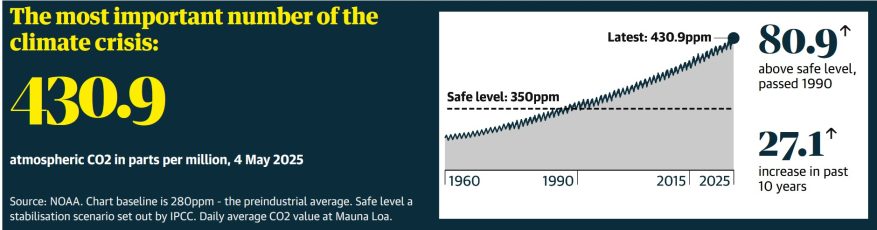
There is urgency. The United Nations Intergovernmental Panel on Climate Change (IPCC) recommends that in order to stabilize the climate where it is now, we need to reduce our emissions by 50 per cent by 2030. In the Ontario political context that means during the remainder of this session of the legislature and the next. A tall order given where our political parties stand on the issue.
Politicians were the featured speakers at the event. Except the conservatives did not send anyone, which is not surprising as the expansion of the Portlands plant is their idea.
Mike Schreiner, leader and sole MPP for the Greens spoke passionately of all the issues related to climate change and the urgency of action. However, stating the obvious has not put the Greens in government. I’m a member but I have no illusions. We need all parties on board.
It was the NDP’s Peter Tabuns turn to speak. He was articulate and passionate. He knows his stuff except that he insists on energy efficiency, which is way too slow, not gas reduction, which would do it but would eliminate the need for pipelines. The NDP supports the steel workers who support pipelines. Thus, the party is neutered.
Mary-Margaret McMahon, Liberal MPP, gave her protest bona fides, then spoke of the need to save energy, giving the example of turning down the thermostats in winter. This is a profound disconnect from required solutions, but not surprising as she joined the Liberal caucus after the Kathleen Wynne era, when they had a viable, scientifically sound plan but were unable to sell it to the electorate. Since then, the Liberals seem to have abandoned climate action as incompatible with regaining power.
I am reminded of a quote by Roger Pielke Jr., the bad boy of climate science. “The scale of the challenge is huge, but that does not make achieving the goal impossible. What makes achieving the goal impossible is a failure to accurately understand the scale of the challenge and the absence of policy proposals that match that scale.”
There is a good case to be made that it’s too late. With temperature records set all the time, and humidity falling we have the perfect conditions to start fires. We see this in the forest wildfires that have enveloped the continent in smoke. Urban areas are not immune, like Litton, Fort McMurray, and the suburbs of Halifax. Right now, as I type this, communities in Spain and Greece are being evacuated.
Forests are the lungs of the planet, creating some of the oxygen we breath. Millions of hectares have been destroyed by fires so hot that nothing is left.
Meanwhile the percentage of oxygen in the air is falling, very slowly and steadily. The level is not yet dangerous, but it’s not stable like we want it to be.
We don’t know for sure that it’s too late. Feedback loops are not well understood. Given that there is a chance of maintaining a mostly habitable planet, shouldn’t we be making a serious attempt?
To all by friends from all parties: this is a political problem. Get mad and get vocal. Withhold donations. Be relentless.
This opinion was written by Ralph Torrie, Director of research at Corporate Knights and was published in the Globe & Mail on July 26, 2023.
It was 1976. I was 24, single and a physics student at the University of Waterloo. Ontario Hydro was projecting 7-per-cent annual growth in electricity demand and calling for 24 new nuclear reactors and 18 new coal-fired units. None of the plants were ever built. Peak power demand two decades later, in 1997, was 22,000 megawatts – not the 57,000 that Hydro had predicted.
It was 1989. I was 37, married with two toddlers. Ontario Hydro called for 10 new nuclear power reactors at three locations, as well as several large fossil-fuelled plants. Hydro was forecasting that peak demand would track economic growth at 2.5 per cent per year and top 35,000 MW by 2014 – 50 per cent above its 1989 level. What happened? In 2014, peak demand was lower than it was in 1989 when the plan was hatched.
It was 2005. I was 53, vice- president of ICF International, my children were grown, and my wife and I had moved to Cobourg, Ont., to care for my ailing mother. The newly formed Ontario Power Authority (OPA) forecast that peak demand for electricity would start growing nearly twice as fast as it had over the previous 15 years, reaching 30,000 MW by 2025. Worried that a gap might develop between supply and demand, the government expedited approval of new gas power plants, and we all know how that went. The gap never materialized.
Now it is 2023. I have two young grandchildren who face a future of climate chaos, my work focuses on the pattern of investments needed for the sustainability transition and “gap-ology” is once again afoot in Ontario electricity’s sector.
Premier Doug Ford‘s government is making a big push on nuclear power based on this perennial hunger. The OPA has been absorbed by the Independent Electricity System Operator (IESO), and they are forecasting an eyewatering 60,000 MW of peak demand by 2050 for Ontario to successfully decarbonize its economy. Like all the ones that came before it, it’s a forecast that will surely be proven both wrong and costly.
The IESO puts the price tag at $400-billion over the next 27 years. And that’s just for the bulk power system – it doesn’t include conversion costs for households and firms to electrify, or the costs for local distribution utilities to cope with the transition. Much of that money is earmarked for unproven prototype technologies that we’ve never built or licensed before. The list begins with four 300-MW enriched uranium lightwater reactors slated for Darlington, which will not put power on the grid until who knows when (10 years from now?) and at who knows what cost.
Yes, it stands to reason that the shift to electric vehicles and heat pumps will add new electricity consumption to the system. But it’s a transition that will take place with many other countervailing factors at play – the same factors that rendered previous forecasts obsolete, and that are evidently outside the framework in which electricity planning is conducted in Ontario.
A global energy transition is under way, and while electrification is a central theme, so is the development of technologies, materials and techniques that reduce the amount of electricity and the peak consumption required to meet the demand for human amenities that drive all economies.
These technologies and techniques are being most intensively researched and deployed in countries where natural resources are scarcer and electricity is more expensive than in Canada, but once they’re developed, they move through the global economy in less time than it takes to design, build and license a multibilliondollar nuclear power plant prototype. These new technologies could keep peak demand growth in Ontario well under 1 per cent a year, even as we electrify our vehicles and our natural gas-heated homes and buildings.
History continues to outrun electricity planning in Ontario, as it has been doing for decades now, and we all pay for the overshoots and malinvestment that result. We cannot afford another round of ill-conceived commitments to multibillion-dollar megaprojects that will be left half-built and stranded just as technology, market forces and common sense are converging on a smarter, less expensive, more distributed and renewable-based energy system. One our grandchildren can feel good about.
 Mobilize, Canada!