Their unprecedented profits over the past year have shown their unwillingness to adapt. It’s now D-Day for them.
This article was written by Christiana Figueres and was published in Aljazeera News on July 6, 2023.
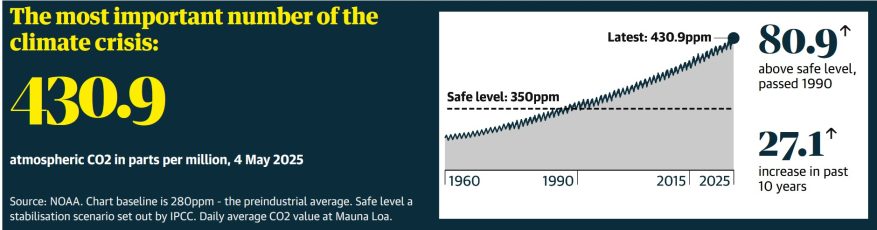
This article was written by Christiana Figueres and was published in Aljazeera News on July 6, 2023.
This article was written by Benjamin Shingler and Rukhsar Ali, and was published by CBC News on July 14, 2023.
This article was written by Kate Allen and was published in the Toronto Star on July 20, 2023.
As a searing sun rose over Phoenix, Ariz., on Wednesday morning, the city incinerated yet another temperature record — one that generated far fewer headlines than the string of all-time daily highs set the day prior.
The overnight low hovered above 35 C, the hottest night there since record-keeping began.
Huge swaths of the Northern Hemisphere are baking under a punishing heat wave, with scorching daytime temperatures setting historic highs.
But experts are urging the public to pay closer attention to the unrelenting nighttime lows, which have a profound effect on human health — helping extreme heat earn its nickname as the “silent killer.”
The World Meteorological Association warned this week that while “most of the attention focuses on daytime maximum temperatures, it is the overnight temperatures which have the biggest health risks,” especially for the most vulnerable people.
“We need the world to broaden its attention beyond the maximum temperature alone,” said senior WMO extreme heat adviser John Nairn.
As climate change increases the frequency and intensity of extreme heat, experts say that much more can be done to reduce deaths and hospitalizations during these events — starting with a better appreciation of just how dangerous heat can be.
“In general, there is a pretty low awareness that heat kills, and that essentially all heat-related deaths are preventable,” said Kristie Ebi, a professor at the Center for Health and the Global Environment at the University of Washington. “So heat has been framed as a ‘silent killer.’ ”
It can be difficult or impossible to attribute an individual death to heat alone. But when epidemiologists zoom out and look at how many more deaths than normal happen during these events, the lethal toll of heat is clear. According to a study published in Nature Medicine last week, at least 60,000 people died last summer from extreme heat in Europe.
During the 2021 heat dome in British Columbia, when the hottest temperature ever recorded in Canada was measured in Lytton, B.C., the day before the town burned to the ground in a wildfire, public health officials reported a 100 per cent increase in deaths among adults 50 or older. The vast majority occurred inside people’s homes.
Studies that have analyzed the relationship between heat events and mortality have often found a stronger association with hot nights than hot days, said Lara Cushing.
“Nighttime temperatures are important because the night is when your body has a chance to cool off and chill … there’s just not that relief,” said Cushing, a professor of environmental health sciences at the University of California Los Angeles.
Our bodies are very good at maintaining a stable core temperature amid fluctuations in the temperature surrounding us, a process called thermoregulation. But there is a limit to our ability to adapt, and when the body is under heat stress all day and then gets no break at night, problems can come on quickly.
During heat events, “we do know that mortality starts within 24 hours,” Ebi said. “And so one really hot night after a really hot day for somebody who is particularly susceptible can be enough to cause adverse health consequences.”
The very young and the very old, whose bodies aren’t as good at thermoregulating, are especially vulnerable to heat-related health problems. People with underlying health conditions are also at particular risk. Ebi added that big epidemiological studies of excess deaths after heat waves have found that about half of those deaths come from cardiovascular causes, like heart attacks.
Other effects are less well understood. Multiple studies have found a link between extreme heat and a heightened risk of infants being born pre-term. Cushing said that in her own research, she has observed this association after just a single day of high temperatures.
“Within a day, you do see health effects. But obviously the longer it goes on, the worse and worse it is.”
As worrisome as the problem is currently, policies and solutions can eliminate all heat-related deaths, said Tarik Benmarhnia, a professor of epidemiology at the University of California San Diego.
“Heat is a big issue, and probably the most problematic issue in a context of climate change for human health and environmental justice,” he said. “But this is preventable, easily preventable. And we can make a difference.”
For policies to be effective, they have to take into account that heat waves don’t affect every place and every person equally.
Benmarhnia points out that most forms of outreach during heat waves happen during the day: Cooling centres aren’t usually open in the middle of the night, for example, and it’s hard to ask someone to show up at a library at 3 a.m.
Effective solutions need to be more targeted: for example, identifying not only who doesn’t have access to air conditioning at night, but also people who have it and can’t afford to run it.
“There is a lot of literature now showing how even people that have access to air conditioning don’t use it because they can’t afford that extra bill.”
Housing and the design of neighbourhoods can be improved to lower temperatures, too. Cities amplify heat through something called the “urban heat island effect.” Materials like concrete and asphalt absorb heat throughout the day, while higher buildings and other built forms block cooling winds. Air conditioners, vehicles and other human activities add more heat to the environment.
Over the course of a year, a city might be a degree or two hotter than its rural surroundings, said James Voogt, a professor in the department of geography and environment at Western University. But under the perfect conditions for an urban heat island, on a given night in a city like Toronto, it might be 10 degrees hotter than the surrounding area, he said.
“We also know the urban heat island effect is larger at night than it is during the day.”
In humid cities like Toronto, one of the best strategies for combating the urban heat island effect is planting trees, Voogt said: Vegetation helps cool the environment, both through direct shade and through a process called evapotranspiration.
For Cushing, another policy solution is critical: “No. 1, we need to stop burning fossil fuels because this is just getting worse and worse the longer that we do that.”
Nighttime temperatures are important because the night is when your body has a chance to cool off and chill … there’s just not that relief.
LARA CUSHING UNIVERSITY OF CALIFORNIA LOS ANGELES
This article was written by Oliver Milman and was published in The Guardian on July 18, 2023.
This opinion was written by Arno Kopecky and was published in the Globe & Mail on July 19, 2023.
The events of the last few years have shaken a journalist out of his detachment
A journalist and author whose latest book is The Environmentalist’s Dilemma: Promise and Peril in an Age of Climate Crisis
In 2019, Greta Thunberg headlined a global climate march that brought millions of people into city streets around the world. Thanks to the pandemic, there hasn’t been another one since. That’s finally about to change: The March to End Fossil Fuels has just been announced for Sept. 17.
I’m an independent journalist who has long held activism at arms-length, but the climate crisis has grown so urgent that straight-up reporting now feels like a passive response that verges on complicity. This time, I’m marching with the protesters.
Even for those who saw it coming, recent developments have been shocking to behold. Annual carbon emissions have steadily increased over the past four years, with Canada leading the charge – production in the world’s fourth-largest oil producer has doubled since 2010. The result has finally untethered itself from the abstract hypotheticals of scientific literature and leapt into the daily lives of several billion people.
Virtually all of North America is coping with some combination of record heat, drought, flood, wildfire and smoke. A heat dome stretching across North Africa and Southern Europe to the Persian Gulf has pushed highs to nearly 60 C in Spain and Iran. China just set a new national record with the town of Sanbao experiencing 52.2 C. Extreme flooding has raged through England, Turkey, India and Japan. Some water in the Florida Keys is now the temperature of human blood.
I’ve never been big on slogans.
I distrust the righteous certainty that so often accompanies activism. I tend toward doubt, which is fine for journalism but wreaks havoc on conviction – a vital prerequisite for blocking traffic at a protest. But this summer, after 20 years of writing about climate change and seven years of being a father, the magnitude of events finally caught up to me.
I felt myself succumbing to a strange type of manic depression. The urgency and the despair took on the quality of a terrible dream, like I’d been handcuffed and forced to watch as villains suffocated my daughter. This can’t be how it ends, I thought. There has to be something more I can do. I surprised myself by starting to reach out to my contacts to see if I could organize a march myself before I learned that the March to End Fossil Fuels was already in motion.
If you’re also wondering what on Earth you can do about all this, Sept. 17 is for you. “The time is ripe for a big climate march,” says Tzeporah Berman, chair of the Fossil Fuel Non-Proliferation
Treaty Initiative and a veteran activist who is among the organizers of the climate march. “Everyone is starting to realize that as long as we don’t shift our energy systems, there is nowhere that’s safe.”
As in 2019, the global strike’s epicentre will be New York City, where the UN is hosting both a Climate Ambition Summit and a General Assembly the following week. With organizing just now getting under way, thousands of groups are expected to assemble crowds in cities across the planet.
Caroline Brouillette, executive director of Climate Action Network Canada, agreed that this could be a historic march. “We’re having a summer where different climate impacts are coming at us here and now and are often overlapping,” Ms. Brouillette told me from her home in Montreal. Two days before we spoke, she had to take refuge from both a heat wave and a tornado.
Ms. Brouillette cast September’s march as a chance to regain critical mass that COVID-19 sapped from the climate movement. “Organizing is about momentum,” she said. “The pandemic dealt a great blow to the energy and mobilizing that was happening right before everything stopped in 2020.”
That loss was the oil industry’s gain. In May, 2020, Sonya Savage, then Alberta’s energy minister, said: “Now is a great time to be building a pipeline because you can’t have protests.”
Bradley Lafortune, the executive director of Public Interest Alberta, says he hears all the time from Albertan politicians that you can’t run and win on climate action. “It’s really up to us to make our voices heard and show up in numbers to change that narrative in Alberta.”
Thankfully for the climate movement, it will be experienced organizers like these and not me who will organize society’s next great cry of hope and outrage. But the impact of that cry depends entirely on how many voices join in. I hope that others will recognize the true stakes of this moment in history, shake off their detachment, and join us on the streets this fall.
This article was written by various authors and was published by the Carbon Brief on July 18, 2023.
This article was written by Nicole Winfield and was published in the Toronto Star on July 18, 2023.
Italian officials intensified heat warnings Monday as southern Europe began a brutally hot week with temperatures expected to top 40 degrees C on a continent already sizzling under the sun and overburdened by tourists.
Countries with borders on the Mediterranean Sea weren’t alone in suffering. Authorities in North Macedonia extended a heat alert for the next 10 days with predicted temperatures topping 43 C, while Kosovo also issued heat warnings.
The Italian Ministry of Health urged regions to beef up house-call services so older people don’t have to go out if they need medical care and to set up dedicated heat stations at hospitals to treat emergency cases. Rome braced for temperatures as high as 42 C on Tuesday.
The Italian capital’s civil protection office, volunteers and officials from the local water company plan to be at 28 locations, including the ancient Colosseum and open-air produce markets, to guide residents and tourists to fountains and to distribute bottled water.
The city government said that having volunteers fan out through the city would help hasten the arrival of medical help for people who seem to be suffering ill effects from the heat.
Europe’s third heat wave in a month was expected to affect much of the Mediterranean region and last until Wednesday.
The mercury in Rome hit 39 C by 3 p.m. on Monday afternoon. Power outages were hitting parts of the city as electric grids sputtered under heavy demand from air conditioners.
Spain’s Aemet weather agency said the heat wave this week “will affect a large part of the countries bordering the Mediterranean.” Temperatures in some southern areas of Spain were forecast to exceed 42 C before dropping at some point on Wednesday.
Aemet spokesperson Rubén del Campo said that as Cerberus pushes a hot mass of air from Africa toward Europe, the heat and very dry air would cause the risk of wildfires to skyrocket.
Greece got a brief respite from the heat Monday, with opening hours returning to normal at the ancient Acropolis and other sites. But two wildfires threatened homes in areas outside Athens.
This article was written by Alex Ballingall and was published in the Toronto Star on July 18, 2023.
They’re big, profitable corporations whose products — while essential to modern life — created the climate crisis.
The government also supports them with your tax dollars.
It’s a long-standing feature of Canadian policy that is about to change, as the federal government prepares to finally make good on its promise to eliminate at least some of the fossil fuel subsidies it gives to oil and gas companies in this country. Federal Environment Minister Steven Guilbeault’s office would not confirm when it will release long-anticipated details of which domestic fossil fuel supports it will cut by the end of 2023. A spokesperson would only say Monday that a framework to define which subsidies to scrap is coming “very soon.”
It’s a potentially significant step for climate action in Canada that environmentalists are watching closely — one that comes after Guilbeault pledged last week to lobby other countries to phase out “unabated” fossil fuels at this year’s annual climate summit in the United Arab Emirates.
It’s also being met with skepticism, since Canada is still promising billions of dollars in tax credits to help the oil and gas sector reduce its greenhouse gas emissions, which many climate advocates consider unnecessary and expensive new subsidies. The government also bought and financed construction of the Trans Mountain expansion project, a major oil pipeline to the west coast that is now expected to cost $30.9 billion.
Here’s everything you need to know about the coming framework to cut federal fossil fuel subsidies.
It’s been a long time coming
The move is the culmination of a pledge made way back in 2009. That year, Canada and its peers in the G20 agreed to “rationalize and phase out over the medium term inefficient fossil fuel subsidies that encourage wasteful consumption.”
Under Justin Trudeau’s Liberals, Canada promised to do this by 2025, then moved that deadline up to the end of 2023 when they won the last federal election.
With record wildfires blazing across the country and scientists warning time is running out to prevent the worst extremes of the warming world, the removal of public supports for the fossil fuel sector is seen by environmentalists as an essential feature of the fight against climate change.
António Guterres, the secretary general of the United Nations, has called it “moral and economic madness” to put more money toward fossil fuel projects.
“This isn’t a problem we don’t understand. We have to phase out the production and use of oil and gas,” said Julia Levin, a climate policy expert with the advocacy group, Environmental Defence.
“Continuing to subsidize the cause of the climate crisis diverts money — public money — away from what we need to be building, and it locks in more dependence on what we need to be phasing out.”
For Kathryn Harrison, a political scientist who specializes in climate policy at the University of British Columbia, subsidies undermine the purpose of policies like the carbon price, which are designed to make it more expensive to burn fossil fuels that cause climate change. That’s the case even for public dollars meant to encourage companies to invest in technology to capture and store their emissions, or to clean up abandoned drilling wells, she said.
“If we give them money to make it cheaper to reduce their pollution, they’ve got more money to do other things, like explore more or charge less for their product and sell more of it,” Harrison said.
How much money do companies get?
Estimates vary, depending on the definition of a subsidy.
The Canadian Association of Petroleum Producers, a lobby group representing oil and gas companies, denies it receives any “production subsidies,” arguing that tax breaks aren’t subsidies because they represent forgone revenue, rather than direct transfers of money from public coffers.
The association is declining to comment until Guilbeault releases the framework to define which subsidies to eliminate before the end of the year.
Pro-green groups, however, have used wider definitions to conclude public support is substantial.
Levin’s organization says the federal government provided $3.5 billion in “direct subsidy programs” to oil and gas companies in 2020, with another $13.5 billion in financing through Crown corporations like Export Development Canada. This included money through government programs mean to help the sector cut its greenhouse gas emissions and clean up abandoned drilling wells.
Earlier this year, the Parliamentary Budget Officer calculated that tax deductions for the oil, gas and coal sectors reduced federal revenues by around $1.8 billion per year between 2015 and 2019.
So what will Canada eliminate?
This is the big question that Guilbeault’s framework will finally answer. Already, in the 14 years since the G20 commitment, Canada has eliminated tax breaks for the sector, like the accelerated capital cost allowance for oilsands operations.
But for the official definition of what supports Canada will cut by the end of this year, Guilbeault hinted last week that reporters should look at the parameters the government used when eliminating public supports for fossil fuel projects abroad.
Released last December, those guidelines spelled out how Canada would stop funding “new,” “direct” and “unabated” fossil fuel projects in other countries.
Translation: no new support from the government or Crown corporations for fossil fuel projects abroad that don’t use technology to significantly reduce their emissions.
What does that mean for domestic subsidies?
That’s not a prescription for the total elimination of public supports to the sector, but Levin did say it was “quite strong.”
There is no indication, for instance, that the government will scrap public funding to help oil and gas companies reduce their emissions and adopt emerging technology to capture and store their greenhouse gas output.
A tax credit for carbon capture, utilization and storage technology was a major plank in last year’s federal budget, and the government points to programs it has established under the Liberals to help the sector reduce its emissions from producing oil and gas as key planks of its climate agenda.
It’s also not clear if the framework will include details of the promised plan to stop financing the sector through Crown corporations like Export Development Canada, which is providing money and loan guarantees for the Trans Mountain expansion project.
A spokesperson for Guilbeault declined to say Monday whether the framework to eliminate subsidies will come with the promised plan to stop all public financing.
For Levin, the framework could also set an important bar for the international community. Canada, she said, is the first country to roll out an official definition of which subsidies it will eliminate under the G20 pledge.
“If done well, this is a road map for other countries to use,” she said. “If done poorly, it sets a really dangerous framework that will allow other countries to shirk their responsibilities as well.
“So all eyes will be on Canada this week.”
This article was written by Laura Osman and was published in the Toronto Star on July 17, 2023.
Canada’s recordbreaking wildfire season has now seen 100,000 square kilometres of land scorched as blazes continue to burn out of control across the entire country.
The total area burned is roughly the size of Lake Ontario, Lake Erie and Lake Michigan combined.
“There are some very, very large fires still burning and a number of them are out of control so that number is going to continue to rise,” Emergency Preparedness Minister Bill Blair said in an interview Thursday of the vast amount of land that’s burned.
Canada surpassed the record set in 1989 for total area burned in one season on June 27 when the figure totalled 76,000 square kilometres, and communities have faced evacuation orders, heat warnings and poor air quality for months.
The majority of blazes are now in western Canada, and British Columbia has the greatest number, with more than 370 of the country’s 878 active fires, Canadian Interagency Forest Fire Centre data shows.
More than half of those fires were burning out of control as of Sunday afternoon.
The Northwest Territories reported Sunday that a firefighter died from an injury sustained while battling a fire near his home community of Fort Liard the day before.
He was the second firefighter to die in under a week, after 19-yearold Devyn Gale was killed by a falling tree Thursday near Revelstoke, B.C.
Based on forecasted conditions, Natural Resources Canada expects the wildfire season will continue to be unusually intense throughout July and into August.
As of Saturday’s national fire situation report, Quebec has seen the largest area of scorched earth this season, with 43,145 square kilometres burned — an area slightly larger than Vancouver Island and slightly smaller than Nova Scotia.
The good news, Blair said, is that conditions are expected to improve significantly in Eastern Canada if the seven-day weather forecast holds true.
“The situation is far less dire than it had been even a week and a half ago,” the minister said, though he acknowledged that very serious out-of-control fires continue to burn on the East Coast, and in On- tario and Quebec.
The government has yet to tally the costs associated with the wild- fires, but Blair said they are expec- ted to be considerable given how far the fires have spread and how long and intensely they’ve been burning.
The other silver lining is that, so far, flames haven’t compromised critical infrastructure in communi- ties the way they did in Fort McMurray in 2016, when fire de- stroyed thousands of homes and buildings, he said.
“We have not seen that type of damage as a result of these fires,” he said.
This article was written by Emma Graney and was published in the Globe & Mail on July 17, 2023.
Canada’s oil sands will likely have to slash up to 1.3 million barrels a day of possible production to meet 2030 federal emissions-reduction targets, according to an analysis by commodity data firm S&P Global, resulting in the loss of somewhere between 5,400 and 9,500 jobs.
The numbers by the U.S.based company, obtained by The Globe and Mail, underscore Alberta government fears that federal emissions-reduction goals are too much, too fast.
Under Canada’s climate plan, the oil and gas sector is to reduce its emissions to 42 per cent below 2019 levels by 2030. The industry and Alberta have long argued that the target will threaten the province’s most important economic driver – and one of Canada’s, given the energy sector represented $175-billion (or 9.2 per cent) of Canada’s GDP in 2017.
Proponents counter that a failure to significantly hasten emissions reductions in the oil and gas sector puts at risk Canada’s ability to meet its climate commitments and limit the effects of climate change.
The S&P report analyzed only the oil sands, which produce the bulk of Canada’s crude and are the third-largest proven oil reserves in the world.
It estimated that the production region can feasibly reduce emissions by around 15 megatonnes by 2030, based on regulatory readiness, technical feasibility and the time it will take to build large-scale emissions-reduction projects such as carbon capture and storage.
That leaves a gap of 29 megatonnes to achieve the federal target – and plugging that gap would put at risk 800,000 to 1.3 million barrels of forecast production a day. (S&P’s forecast sees oil sands production increase by one million barrels a day, or 34 per cent, between 2019 and 2040.)
However, the deployment of carbon-capture technology could allow the oil sands sector to reduce the gap by 2035, and small modular nuclear reactors could further help to reach the 2030 target by 2040, the report found.
Canada’s largest oil sands companies are co-operating under the Pathways Alliance and have pledged to bring emissions to net zero by 2050. The group covers about 95 per cent of oil sands production, but a lack of investment and concrete action to date – particularly as companies raked in historic profits in 2022 – has made critics skeptical of just how serious they are about reducing their emissions.
Kendall Dilling, Pathways Alliance president, echoed the findings of the S&P report, telling The Globe in an e-mail that reaching federal targets by 2030 “is simply not realistic given current technology, construction and regulatory requirements.”
The industry agrees that it needs to significantly reduce its emissions by 2030, he said, but “impractical time frames for emissions-reduction targets could drive investment away from our industry and our country, reducing production in Canada while increasing output and emissions in other countries.”
It’s a message that the industry and Alberta’s United Conservative government will likely deliver to federal Environment Minister Steven Guilbeault this week, when he travels to Calgary for meetings with various groups, including the fossil-fuel sector.
He will also meet with his provincial counterpart, Rebecca Schulz, who said in an interview that the numbers in the S&P report are “hugely concerning.”
Alberta this year released an emissions reductions and energy development plan, which Ms. Schulz argued is far more realistic and reasonable, and “shows a very real commitment to our aspiration of net zero by 2050.”
The plan sets a goal of creating a carbon-neutral economy by 2050, but depends on technology that is not yet viable, regulations that do not yet exist and interim targets that have not yet been set.
Ms. Schulz said that while the province shares a net-zero 2050 goal with Ottawa, the road to get there must ensure “that we’re not putting Albertans out of work and having to cut production, which, at a time when the world needs energy, just doesn’t make any sense.”
Alberta takes emissions reductions seriously, she said, but the effect of a potential 1.3-millionbarrel-a-day loss of production “has a huge impact both on our economy, on the fiscal situation for the province and on jobs – and that should be concerning to Albertans and all Canadians.”
Mr. Guilbeault’s office did not respond directly to the numbers in the report, but in an e-mail pointed to an agreement this month to work with the Alberta government on a collaborative approach to incentivize carbon capture and other emissions-reducing infrastructure and “set reasonable and achievable milestones for emissions reductions in these sectors through to 2050.”
 Mobilize, Canada!