This article was written by John Woodside and was published in Canada’s National Observer on June 23, 2023.
Canada’s billions in fossil fuel subsidies under mounting scrutiny
Reply
This article was written by John Woodside and was published in Canada’s National Observer on June 23, 2023.
This article was written by Max Fawcett and was published in Canada’s National Observer on June 22, 2023.
This article was written by Amanda Stephenson and was published in Canada’s National Observer on June 2o, 2023.
This article was written by Morgan Lowrie and was published in the Toronto Star on June 27, 2023.
Canada surpassed the record for area burned by wildfires in a single year Monday as hundreds of fires continued to blaze in almost every province and territory.
The Canadian Interagency Forest Fire Centre reported Monday afternoon that 76,129 square kilometres of forest and other land has burned since Jan. 1. That exceeds the previous record set in 1989 of 75,596 square kilometres, according to the National Forestry Database.
Last week federal Emergency Preparedness Minister Bill Blair said he wasn’t “looking to break any records” but acknowledged it was likely coming. “Unfortunately the fire season this year started earlier and has been more widespread across the country than in recent memory,” he said.
It took less than six months to surpass the previous record for an entire year. And in 1989, more than 11,000 different fires combined to create the total, with an average size of about seven square kilometres. This year, there have been less than 3,000 fires so far, but they have averaged about 26 square kilometres in size.
Currently there are 490 fires burning nationally, with 255 of them considered to be out of control.
In Quebec, where nearly a quarter of the fires are burning, heavy smoke grounded water bombers in the province’s north Monday and caused widespread smog warnings farther south.
Nicolas Vigneault, a spokesperson for the province’s forest fire prevention agency, said the smoke had reduced visibility, making it impossible for some water bombers and helicopters to take off.
“We do as (many) operations as we can in the field with the firefighters, and in the air with the planes and helicopters,” he said.
“But our priority is the security of everybody, and the smoke is a challenge right now, and it’s been a challenge over the last two or three days.”
However, he said heavy rain and some wind is expected in the most affected parts of the province in the coming days, which should allow operations to resume “almost normally.”
While no towns are under immediate risk of burning, the fires have forced thousands of Quebecers from their homes. That includes the 2,000 residents of Lebel-sur-Quévillon, parts of Val-d’Or and Senneterre and some Indigenous communities.
Monday, the fire prevention agency said the fire burning near Lebel-sur-Quévillon remained out of control, and had grown to more than 4,400 square kilometres.
The Cree Nation of Mistissini said Sunday it was asking remaining community members to evacuate the area due to a fire threatening a nearby highway.
“The dryness index is 100, the highest that can be recorded, and the intensity of the fire is really high,” read a post on the community’s Facebook page.
Authorities noted that the forest fire agency was unable to get images of the fire due to low visibility, which made it hard to track its progress. A plan was in the works to protect the community by widening firebreaks, bringing in water tankers to combat spot fires and putting sprinklers at the entrance to the community.
This article was written by Marco Chown Oved and was published in the Toronto Star on June 25, 2023.
If someone had told you in 2008 — the year after the first iPhone was released — that in the next 15 years, virtually everyone in Canada would have a smartphone, you might have rolled your eyes all the way to the internet café (as you slowly tapped out a text on your numbered keypad).
Nowadays, it’s hard to believe we ever lived without the internet in our pockets.
But that’s how adoption curves work: New technology wins converts slowly at first, then all at once.
The digital technology that swept our lives into this millennium changed the way we communicate and shop, plan trips and watch shows. But it also came with a heavy cost to the planet. The greenhouse gases produced by online video streaming exceed one per cent of global emissions. Bitcoin miners produce more carbon emissions than some entire countries.
The next wave of technological upgrades to our lives, however, will emit zero carbon. It’s going to change how we get around, the way we heat and cool our homes and what we use to cook and take showers.
The electric vehicle (EV), heat pump, induction stove and heatpump water heater may not alter our behaviour as much as texting and email have. But they will revolutionize society, allowing us to continue to do many daily activities — only faster, more efficiently and without producing emissions.
And they are poised to go from curiosity to ubiquity faster than you think.
The carbon-saving potential is enormous. According to an analysis by Corporate Knights’ research division and shared with the Star, these four technologies alone would cut the average Canadian household’s carbon footprint by 80 per cent. If everyone made the switch, it would eliminate 92 megatonnes from Canada’s national emissions annually — more than produced by all of the country’s oilsands.
The financial benefit is even greater. If everyone in Canada swapped out their existing gas-powered car, furnace, stove and water heater for
these green technologies, the collective yearly savings would be more than $65 billion, the analysis found — $4,300 per household.
These ecological and economic incentives have created the conditions for rapid adoption, motivating governments that have emission-reduction targets to meet, as well as individuals feeling the squeeze of fossil-fuel-driven inflation.
Critics say fear of climate change will not prompt people to adopt new technology. They argue that we just love our gas stoves and gasguzzling SUVs too much. But dozens of car dealers and HVAC professionals who spoke with the Star said EVs and heat pumps are popular not because they’re green — people are buying them for other reasons: convenience, comfort and savings.
The result is a win-win. People’s lives get better. They save money. And the faster these technologies are adopted, the fewer emissions Canada will produce.
The Star has partnered with Corporate Knights to analyze the benefits of these clean technologies, quantifying just how much cash Canadians in each province can save by adopting them, and what their impact will be on emissions.
The results vary widely across the country.
In Quebec, Manitoba and British Columbia, where hydro dams provide cheap, carbon-free electricity, the benefit of ditching fossil fuels is the greatest. An average British Columbian household switching to these four technologies would save more than $4,800 per year and virtually eliminate their carbon footprint (more than 97 per cent reduction).
In provinces with carbon-intensive electricity, such as Alberta and Nova Scotia, switching off fossil fuels has a smaller impact — and can even make your emissions rise in some cases — but the financial benefits are not insignificant. An average Nova Scotian household adopting the four green technologies would save $5,200 per year and shrink their emissions by five tonnes (or 64 per cent).
Switching now is also futureproofed. As the carbon tax rises, the cost savings grow — reaching an additional $790 per year on average for every household in 2030. And as the electrical grids in these provinces decarbonize, the already low emissions will piggy back them right down to zero.
We’ve reached out to early adopters to find out about the benefits and challenges of these technologies, and have created calculators so you can figure out the estimated cost and emissions savings associated with each technology depending on where you live.
While no one would say these four pieces of green technology are a panacea for solving climate change, they’re a big start. And they’re something individuals can do without waiting for the government to act (though the incentives and rebates help).
Each EV, water heater, heat pump and induction stove on its own may not make a big difference for the warming planet, but they will save a family hundreds, if not thousands of dollars a year. And as Canadians switch away from burning fossil fuels and electrify their lives, the cumulative power of individual action is undeniable.
Electric vehicles (EVs)
David Hollingworth is an active skier, someone who heads up to Whistler from his home in North Vancouver for a day on the slopes whenever the powder is fresh.
But unlike many of his neighbours, he straps his skis to the top of his EV (a Nissan Leaf) for the trip into the mountains, and leaves his family’s gas-powered Honda CRV at home.
“It’s just a no-brainer, the cost savings,” he said. While it costs more than $100 to gas up the CRV, Hollingworth estimates that an overnight charge for the Leaf runs him only about $2.
In the eight years since he bought his EV, Hollingworth says he’s grown more enamoured with it. The Leaf serves his family’s day-today needs so well they’ve cancelled the insurance on the Honda except for a few months in the winter when they go on longer ski trips.
“I don’t keep a log of the expenses for both vehicles, but it’s just obvious. I’m sure that we’ve saved thousands of dollars in fuel and maintenance (with the EV),” he said. “Even driving the CRV a lot less, it seems to cost us at least $1,000 in repairs every year. And the Nissan Leaf, it’s basically maintenancefree.”
EV owners often cite fuel and maintenance savings as the top benefits. In B.C. — which has the highest gasoline prices in the country and some of the lowest electricity prices — those savings are $2,450 per year on average, according to the Corporate Knights’ analysis.
(The savings figure assumes charging at home using average electricity prices. Of course, many EV owners minimize their costs by charging overnight when electricity is cheaper and searching out free charging, still widely available.)
While EVs have a reputation for being expensive, this is changing quickly. Many of the early high-end models are now making way for entry-level EVs priced far lower than the average cost of a new car in Canada, which hit $58,478 at the end of last year.
A survey of Toronto car dealerships last fall turned up four EV models with a listing price below $40,000 and nine more under $45,000.
These prices don’t include the $5,000 federal EV purchase subsidy, which is topped up by certain provinces, ranging from $2,500 in Newfoundland and Labrador to $7,000 in Quebec. (Ontario cancelled its EV purchase rebate in 2018 when Doug Ford’s Progressive Conservatives came into power.)
In B.C. and Quebec, the purchase subsidies are coupled with a sales mandate, requiring dealerships to have EVs available for purchase. (The federal government announced a nationwide sales mandate last December.) This combination has fuelled the fastest uptake of EVs in the country. Last year, EVs made up 16 per cent of all new-car sales in B.C. and 12 per cent in Quebec.
Ontario lags behind; only 6.5 per cent of new cars sold in the province in 2022 were EVs. Since automakers send their EVs to the provinces that have sales mandates, Ontarians have to wait for months or even years on Canada’s longest EV wait-lists.
In addition to savings, EVs also boast souped-up climate impacts.
Even in provinces with electricity generated from fossil fuels, EVs dramatically reduce emissions because they’re so efficient. In an EV, up to 91 per cent of the energy in the battery goes directly to turning the wheels, while in a gas-powered car, 84 per cent of the energy from the gas tank is lost to heat and friction.
So in Alberta and Saskatchewan, where most electricity is generated by burning coal and natural gas, an average family would reduce their carbon emissions by 1.2 tonnes by switching to an EV, the Corporate Knights analysis found.
In Quebec, Manitoba and B.C., where most electricity comes from hydro dams, an EV would cut a family’s carbon emissions by far more: 3.1 tonnes per year.
Nationwide, if everyone switched to an EV, it would lower Canada’s carbon emissions by 57.8 megatonnes, or about 8.6 per cent of all emissions. This assumes we maintain our current electrical-generation sources. But if the federal government succeeds in getting our electrical grids to net-zero by 2035, EV adoption would reduce emissions by 67 megatonnes, or 10 per cent.
On each trip up to Whistler in his Leaf, Hollingworth has to make a 20-minute stop in Squamish for a quick charge. He uses the opportunity to stretch and admire the mountains — taking pleasure, he says, in knowing he’s doing his part to protect the beautiful scenery from climate change.
“There is some type of endorphin or dopamine that happens when you know you just saved a bunch of carbon emissions,” he said.
He said he thinks everyone will soon be driving EVs, not only to reduce emissions, but because they’re so much cheaper and more convenient to operate.
“We’re in a transition period now. People will roll their eyes in the future when they look at how we lived today.”
Heat pumps
Shortly after Brian Gifford retired and moved back to Halifax, he knew
he had to do something about the oil furnace in his basement, which was costing him $2,500 to run each winter.
Not knowing that he had any choice but to continue to use oil, he added insulation to his basement, walls and attic — and saw his heating bills go down to $1,700.
Five years later, he was told his firebox had a crack and the furnace would have to be replaced, so he looked at switching to natural gas — newly available in the Maritimes — or buying an electric heat pump.
“Both environmentally and financially, heat pumps made a whole lot more sense,” he said.
Installed in 2015, the heat pump has reduced his annual heating bill to $700 — about a quarter of what it used to be.
“The heat pump is a huge, huge benefit, especially in places like the Maritimes, where heating costs are relatively high because we use oil,” he said.
“We’re saving a lot of money,” he said. “We’re really happy with that.”
For decades, heat pumps weren’t powerful enough to heat through Canadian winters. But the new generation of cold-climate heat pumps have been shown to work in the deep cold of Whitehorse. They also do double-duty, running in reverse to provide air conditioning in the summer.
Much like the EV, the heat pump electrifies something that’s traditionally powered with fossil fuels. And like an EV, switching to a heat pump to heat your home saves money and reduces emissions — even on a dirty grid, like Nova Scotia’s — because the technology is so much more efficient.
While the newest natural-gas furnaces operate at 98 per cent efficiency, heat pumps are 220 to 320 per cent efficient in Canadian conditions. This means that in a furnace, one unit of energy in natural gas produces 0.98 units of heat in your home. But with a heat pump, one unit of energy in electricity produces 2.2 to 3.2 units of heat. (This works because heat pumps use ambient heat in the air and concentrate it, gaining a multiplier effect on the energy used to power the process.)
As a result, heat pumps promise cost savings not only for people who switch from natural gas and oil furnaces, but for those switching from electric baseboards, because they will use far less electricity to produce the same amount of heat.
The Corporate Knights research division calculated that for a typical single-family detached house in Nova Scotia, switching from an oil furnace to a heat pump would save $1,750 in annual heating costs. They would save even more switching from baseboard heating: $2,773 per year.
The price to install a heat pump can vary from around $4,500 for a hybrid (one that works with your existing furnace) to upwards of $20,000 for a top-of-the-line centrally ducted model. Federal government rebates of up to $5,000 and zero-interest loans of $40,000, both offered through Ottawa’s Greener Homes Initiative, can significantly reduce how much you pay out of pocket at the outset.
Greener Homes can even eliminate the cost: if you’re switching from oil to a heat pump, there’s a special federal program that will cover up to $10,000. Provincial rebates can also stack on top of the federal ones, offering an additional $5,000 in Ontario and Nova Scotia, and up to $20,000 in Quebec, reducing upfront costs even further.
Since the federal subsidies were introduced in 2021, heat-pump adoption has shot up, surpassing sales of natural gas furnaces in Canada for the first time, according to wholesale shipment information tracked by the Heating, Refrigeration and Air Conditioning Institute of Canada.
Because of their efficiency, heat pumps use far less energy to heat than furnaces, but just how big their impact is on carbon emissions is mostly determined by how the electricity is generated. In Nova Scotia, where the majority of electricity comes from coal and oil, switching from an oil furnace to a heat pump will reduce a typical household’s emissions by 1.2 tonnes.
In provinces with lots of carbonfree renewable electricity, the greenhouse-gas reductions are even greater. In Ontario, for example, a household switching to a heat pump would reduce its emissions by 4.2 tonnes and save $489 a year at today’s gas prices — savings that will nearly double by 2030 as the carbon tax increases.
Canada-wide, if everyone switched to heat pumps, it would produce annual savings of $13.5 billion and an emission drop of 26.3 megatonnes, or four per cent of the nation’s total, the Corporate Knights analysis found.
For a peek at the future, look no further than Sweden, where heat pumps have almost entirely replaced oil for residential heat. Since 1990, the pumps have been responsible for chopping carbon emissions from heating by 95 per cent, according to Martin Forsen, the president of the European Heat Pump Association, who gave a recent presentation in Toronto.
The adoption of heat pumps has gone so well in his Scandinavian country that he sees their global dominance as an inevitability.
“I don’t think it’s a question of if. It’s just a question of when,” Forsen said.
Heat-pump water heaters and induction stoves
Anya Barkan’s water heater was 15 years old and “a piece of garbage” when she called her rental company and asked for it to be replaced.
After some back-and-forth that left her frustrated, she decided to break free from the rental contract she had inherited when she bought her home and get a heat-pump water heater.
“It just made sense. We wanted to stop that monthly fee and get something that is much more energyefficient and also not reliant on natural gas,” she said.
Breaking the contract proved much harder than getting the water heater. But ever since, Barkan said she has been happy, and not only because she no longer pays the monthly rental fee.
“You can make your house more efficient and lower your bills. But also it’s better for the environment in terms of fighting climate change,” she said.
Water heaters don’t have a huge impact on gas bills on their own. But like gas stoves, they are often one of the few links to the natural gas system in a home. If swapping these two gas appliances for electric means being able to cut your gas line, it supercharges the savings because it eliminates the fixed monthly charge for natural gas, which comes to $325 a year in Ontario.
Because gas water heaters consume relatively little gas, the Corporate Knights research found that swapping one out for a heater that operates with a heat pump would save an Ontario family just $124 per year. For an induction stove, the annual savings in Ontario for switching from a gas stove is only five dollars. But if switching lets you cut your gas line, those combined savings jump to $439 a year.
And it’s not just economics. There are other reasons people are looking to get rid of their gas stoves. Worries about air quality in the home surfaced earlier this year after an official with the U.S. Consumer Product Safety Commission said the agency was considering banning new gas stoves amid research that links them to childhood asthma.
While the ensuing uproar prompted the head of the agency to walk back talk of a ban, the health hazards are real. Health Canada’s residential indoor air-quality guidelines estimate that 25 per cent of houses with gas stoves exceed the exposure limit for nitrogen dioxide (NO2), one of the toxic compounds released when a gas stove is turned on, “for brief periods of time after cooking” — even with “moderate ventilation.”
Meanwhile, some professional chefs recommend switching to induction stoves for performance reasons alone, saying they’re faster to heat up, more responsive, not as hot to work over and easier to clean.
Soon, people moving into new houses and apartments could have no choice but to go without gas appliances. Dozens of cities across the United States, recently joined by Vancouver, have banned natural gas hookups in new developments. The State of New York just passed a similar ban and Toronto and Montreal city councils are considering similar measures.
Even though they burn little gas, the climate impact of eliminating these gas-burning appliances isn’t negligible. Switching from a gas stove to induction will reduce an average Ontario household’s indoor emissions of greenhouse gasses by 370 kg. Swapping a gas water heater for a heat-pump version saves 640 kg.
If everyone in Canada made these changes, the collective impact would reduce emissions by 7.6 megatonnes, more than one per cent of all emissions in the country.
It’s what analysts refer to as the light bulb effect. When incandescent light bulbs were replaced by LEDs, the difference in electricity consumption was tiny for any one lamp or light fixture. But multiplied across households, apartment buildings, university campuses and sport stadiums, the cumulative impact was enormous.
That’s where we’re at right now with climate change. The solutions are all readily available. The wind turbines and solar panels that provide clean electricity are being adopted much faster than anyone predicted. Now it’s time to electrify and use that clean power to eliminate carbon emissions.
“It’s not just your individual action that will change the world,” said Barkan. “We need to go at it together.”
RALPH TORRIE IS DIRECTOR OF RESEARCH FOR CORPORATE KNIGHTS
AND ONE OF THE WORLD’S LEADING ENERGY ANALYSTS. HE HAS BEEN WORKING IN THE AREA OF SUSTAINABLE ENERGY FUTURES SINCE THE LATE 1970S AND HIS LOW CARBON SCENARIO ANALYSIS FOR CANADA WAS THE FIRST SUCH STUDY IN THE WORLD. HE IS THE INVENTOR OF STRATEGIC PLANNING SOFTWARE FOR LOCAL GOVERNMENT CLIMATE MITIGATION THAT WAS USED BY HUNDREDS OF CITIES ON FIVE CONTINENTS. CORPORATE KNIGHTS IS A TORONTOBASED
This opinion was written by Heather Scoffield and was published in the Toronto Star on June 24, 2023.
It’s often said that today’s economy is all about resilience — developing robust and crisis-proof supply chains, diluting our dependence on other states for critical materials, making sure we always have a backup plan on hand so we can pivot when disruption strikes.
But economic resilience is as much about dealing with extreme weather as it is dealing with unpredictable geopolitics.
Forest fires threaten our communities summer after summer, increasing in their severity and stifling the country in smoke.
Summers are hotter. Winters are wishy-washy. Flooding is more commonplace. The world is aghast, as it should be, as the wildfires in northern Quebec, Nova Scotia and northeastern British Columbia break records and turn millions of hectares of trees into charred stumps — even as Alberta faces flooding.
And even though we, as a country and as a business community, know all these things, our backup plans are stumbling along.
The big money, of course, is backing a multi-year plan to transition the economy to a low-carbon stance. It’s the focus of government policy, of billions in federal budgets, and of much planning and investment within corporations that have taken on net-zero commitments.
And so it should be. Canada is ambitious in its targets. Business and government alike are orchestrating a wholesale transformation of the economy around us.
But our ability to confront the already-present dangers of climate change is shaky at best and could use some focus of its own.
Policy and funding for adaptation to warmer temperatures has always been the poor cousin when it comes to climate politics.
The federal government finally produced a plan for a national adaptation strategy late last year, after thorough consultations with provinces, Indigenous organizations and business. The spring budget allocated $1.6 billion over five years to the plan — building on some previous funding — and concrete details are expected to be rolled out this week. That compares to about $50 billion that the U.S. has earmarked for climate adaptation and resilience through its budget and Joe Biden’s Inflation Reduction Act.
And while the latest federal allocation isn’t the only thing governments are driving on climate adaptation, it’s a sliver compared to what Ottawa says is $200 billion in long-term plans for cutting emissions and protecting the environment — plans that are evolving and are clearly a top government priority.
In other words, the amounts dedicated to ensuring severe weather events don’t tear apart our economy are slim, reflecting the priorities of policymakers.
And now we learn that they’re not being spent as advertised. As the Star’s Alex Ballingall reported last week in an analysis of budgeted funds for climate initiatives, government spending was billions behind schedule or left on the sidelines according to the Public Accounts.
Much of that slow funding circles around climate adaptation. Disaster mitigation funding was just a trickle until recently. Investment in resilient infrastructure was only half spent. Money for ensuring the flow of goods and people can withstand the effects of climate change is way behind.
Meanwhile, the companies and communities that lean on that kind of infrastructure to do business are under fire or under water — literally. Wildfires in June have forced the temporary shutdown of dozens of mining operations across Canada, and now flooding in some parts of the country is forcing road closures.
This isn’t just bad luck. There’s a reason why the largest homeowner insurance company in California won’t sell coverage any more in that state, and other insurers are scrambling to cover costs. Costs, the New York Times reports, are just too hot to handle.
That hasn’t happened in Canada, and here, the federal government is working with the insurance industry to make sure it doesn’t, according to a CBC report.
But there’s no doubt that that kind of collaboration between the private and public sectors needs to ramp up dramatically to meet the immediate challenge of more turbulent weather events.
A recent study by the Canadian Climate Institute, The Co-operators Group Ltd., and Climate Resilience Consulting figures the Canadian economy will need $78 billion in investment by 2050 to cope with the effects of extreme weather events. The price tag drops by half, though, if the work is done earlier rather than later.
Number-crunching by Ontario’s Financial Accountability Office found a similar dynamic last year. Climaterelated strain on infrastructure will cost the province about $2.2 billion a year for transportation infrastructure alone, if left untouched. But with investment in buoying up the network, climate-related costs would be lower.
More importantly, transportation of goods and people would be far more reliable, which is exactly the kind of predictability businesses need if they want to be resilient.
A more robust transportation network that connects Canada reliably to the U.S. is already a prerequisite in the new economy of friend-shoring and regional trade alliances — a network that requires federal and provincial governments to co-operate, plan and invest together.
This early summer of fire and floods confirms, however, that resilience is not just a question of beefing up trade corridors and supply chains. It’s also about climate-proofing those very networks.
“This early summer of fire and floods shows economic resilience is also about climate-proofing those networks. — Heather Scoffield
This article was written by David Suzuki and was published by the David Suzuki Foundation on June 22, 2023.

we’d all be better off economically if we shifted rapidly to more affordable renewables(Photo: Radoslaw Sikorski via Pexels)
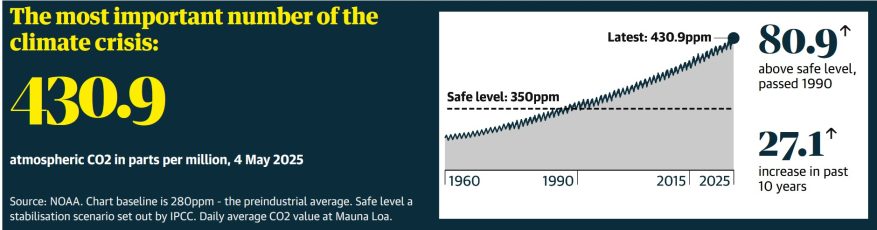
It wasn’t the first time I had discussed the looming climate crisis. In 1977, I interviewed writer Isaac Asimov, who spoke about the “greenhouse effect.” He explained how carbon dioxide in the atmosphere absorbs infrared light, acting as a “heat shroud.” He noted that burning coal, oil and gas raises CO2 levels in the atmosphere and that, in “another 50 years or so … instead of three hundredths of a percent, it might be five hundredths of a percent.” (It’s now over four hundredths of a per cent.)
Even though that seems like a small increase, he said, it could melt polar ice caps, raise sea levels and cause runaway effects.
In 1988, just before the CBC series, renowned NASA scientist James Hansen testified to the U.S. Congress that climate change was, in fact, occurring and that failing to address it quickly could lead to dangerous consequences. In his presidential campaign, Republican candidate George H.W. Bush vowed to combat the problem if elected. Four years later, under his presidency, the U.S. became a founding member of the United Nations Framework Convention on Climate Change, which continues to be the international forum for efforts to address climate change.
Even though politicians of every political stripe from around the world vowed to take climate change seriously, emissions have risen by 68 per cent since then, and fossil fuels have gone from supplying 79 per cent of the world’s energy needs to 81 per cent.
emissions have risen by 68 per cent since then, and fossil fuels have gone from supplying 79 per cent of the world’s energy needs to 81 per cent
Greenhouse gas emissions have reached a record high, and scientists say it’s now too late to save summer Arctic ice. We’re seeing the effects: massive wildfires in Canada — where warming is occurring faster than southern parts of the world — droughts, floods, extreme weather events, growing numbers of climate refugees leaving increasingly inhospitable parts of the world.
What’s astounding is that fossil fuel spokespeople, politicians and media pundits are still saying the same things they’ve been saying for at least the past four decades — that we can’t get off fossil fuels overnight (it’s been a long night), that we need to keep burning fossil gas as a bridge fuel (it’s a long bridge) and that we can’t afford to transition to renewable energy (it’s long outdated information).
Then there are those who still deny there’s a problem at all, or who say our concerns are alarmist or hysterical. If you aren’t alarmed, you don’t understand the science.
If it seems dire, it’s because it is. But it’s not hopeless. We’re running out of time, but we’ve made progress, and we have numerous solutions — more every day. Evidence shows that employing those solutions will make the world better for just about everyone except, perhaps, those raking in massive profits from fossil fuels and destroying forests, wetlands and agricultural land. Even their lives would likely be more satisfying if they realized there’s more to life than profit and power.
but we’ve made progress, and we have numerous solutions — more every day
Energy efficiency, renewable energy and energy storage solutions have advanced by leaps and bounds, far faster than anticipated. Not only that, but costs have fallen to the point that renewable energy is less expensive than coal, oil and gas.
Overall, we’d all be better off economically if we shifted rapidly to more affordable renewables, especially given the volatility of fossil fuel markets Our health would be better without the pollution burning fuels causes. Ecosystems would improve. And, if done right, the shift could bring greater equality as power and wealth wouldn’t be as concentrated as it is in the fossil fuel economy.
Of course, we still have the responsibility to stop consuming so much, to rethink our wasteful ways of living. As human populations increase, the planet can’t support endless growth and consumption.
There are no excuses left to continue exploiting and burning any fossil fuels, and there’s no time left to waste. Nature has spoken. We must listen and act now.
This article was written by Jonathan Watts and was published in The Guardian on June 22, 2023.
This is our wake-up call, climate change is now in our backyard, but we continue to fiddle while Rome burns, Wayne Poole writes.
This article was written by Wayne Poole and was published in the Hamilton Spectator on June 21, 2023.

Most countries, regardless of their political ideologies, have market economies, built on continuous growth and increasing consumption. We’re doing all of these things with the Earth’s resources, resources that we rely on to provide the necessities of life. Our landfills, trash incinerators and plastic clogged waterways are a testament to our wastefulness. As we consume we drive up greenhouse gas levels which trap more heat and raise the Earth’s temperature, disrupting weather systems and creating weather extremes resulting in destructive floods, droughts and deadly wildfires that are becoming more widespread, intense and persistent.
Wildfires rage across the country, winds carrying the hazardous smoke thousands of kilometres, a reminder of our vulnerability. We can see, smell, almost taste it. This is our wake-up call, climate change is now in our backyard, but we continue to fiddle while Rome burns.
This article was written by Tzeporah Berman and was published in The Guardian on June 20, 2023.
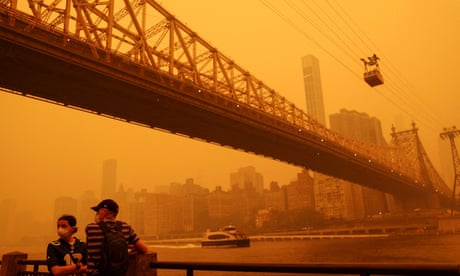
Canada is on fire from coast to coast to coast. Thousands have been evacuated, millions exposed to air pollution, New York a doom orange and even the titans of Wall Street choking.
Catastrophic flooding in Pakistan, back-to-back cyclones in the Pacific islands and droughts in Africa haven’t been enough to create a tipping point for action. Now that climate impacts have hit the economic capital of western power, will it spur governments in the global north to get serious?
A lack of scientific knowledge about climate change is not the barrier. Nor is a lack of cleaner, safer, cheaper energy alternatives. The IPCC said as much last year – the barrier is vested fossil fuel interests putting their profit above our safety.
We know exactly which fossil fuel companies are robbing us of clean air and a secure future. We can now measure which oil companies are responsible for wildfires (13 operate in Canada), but oil executives are still calling the shots.
Internationally, big oil has been flooding the climate talks for decades. The result? The Paris agreement doesn’t even include the words fossil fuels, oil, gas or coal. And today we are on track to produce 110% more oil, gas and coal by 2030 than the world can ever burn, or it will burn us. If we are going to manage the decline of fossil-fuel production in an equitable and fair way we need our governments to stand up to big oil and start negotiating a new international agreement on fossil fuels to complement the Paris agreement.
Back at home, as the smoke rolled in, the prime minister, Justin Trudeau, promised to do whatever it takes to keep people safe. But Ottawa just backed another loan guarantee for the Trans Mountain Pipeline. “Whatever it takes” – except tackling the industries stoking the flames.
Trudeau is not alone in refusing to acknowledge the need to stop expansion of oil and gas. That same attitude – “we must act on climate change but my expansion of fossil fuels is OK” – is alive and well south of our border where Biden has recently approved the Willow project and more.
These are scary times. Global leaders declare a climate emergency while approving projects to expand oil and gas. In Canada and around the world, fossil fuel proponents are still being elected. Alberta’s premier, Danielle Smith, used her victory speech to rally her constituents against the federal government’s plan to clean the grid as her province burns.
For more than five decades, oil and gas companies have muddled the truth and blocked progress. They’ve spent millions on PR campaigns to convince the public that expanding fossil fuels is safe, reasonable and unavoidable and that the alternatives are problematic and unreliable. It’s working. Canadians are alarmed about climate change yet are largely unaware that most of Canada’s carbon pollution comes from fossil fuels like oil and gas. Half of the public say they’re unsure whether “solar panels emit more greenhouse gases during manufacturing than they end up saving”.
These messages and those who peddle them have an impact on politics. Canada subsidises oil and gas more than any other G20 nation, averaging $14bn annually between 2018 and 2020. Now big oil is getting tax breaks for carbon capture and storage – an unproven technology that won’t change the fact that Canada needs to phase out fossil fuels. Funding the industry to continue is like giving arsonists a tinderbox to play with.
Fossil fuel companies and their executives don’t need our money. In fact, they use it against us. Take the Koch brothers, who have funded anti-climate and anti-clean energy campaigns. Or the fossil fuel industry’s Pathway Alliance in Canada that is running “Let’s Clear the Air” misinformation ads to an audience coughing and choking on their product.
Fossil fuel companies’ net-zero pledges are meaningless and we need to stop pretending we can negotiate with them. We need to start regulating them.
John Valliant, homing in on the recent Alberta election, puts it more provocatively: “Alberta politics is still a largely and wholly owned subsidiary of the petroleum industry.” And: “The petroleum industry is a wholly owned subsidiary of fire.”
Governments need to represent us, not fossil-fuel profiteers. We need plans to phase out fossil fuel production and emissions. Plans that include protections and support for communities and workers dependent on oil, gas and coal.
But that’s not enough. Wealthy fossil-fuel producing countries like Canada must support countries in the global south to be part of the transition to clean energy so it can happen in a fast and fair way.
Oil, gas and coal are burning us. Politically and now literally. That’s why 101 Nobel laureates and over 3,000 scientists are calling for a fossil fuel non-proliferation treaty. Six countries and 84 subnational governments have already endorsed it. It’s time for yours to get on board, too.
 Mobilize, Canada!