There’s never been a better time to go green

This article was written by Stephen Thomas, the Clean Energy Manager at the David Suzuki Foundation, and was published in the Toronto Star on June 3, 2023.

Today, wind and solar are proven technologies with decades of successful operation in Canada, Stephen Thomas writes.

We all need and use electricity — to heat and cool our homes, power our online lives and charge our cars or power transit commutes.

Canada has set a goal of 100 per cent zero-emissions electricity by 2035, with new clean electricity regulations expected this year.

The benefits of adding wind and solar to power that electricity go deeper than fighting climate change; they include more affordable energy bills, healthier homes and cities and more good quality jobs.

The stories we often hear of wind, solar and other renewables rarely reflect the current reality. Today, wind and solar are proven technologies with decades of successful operation in Canada. They’re now the least expensive sources of electricity in history — cheaper than electricity from gas, oil, coal or nuclear.

Canada’s electricity grid is aging and needs upgrading as we begin to use much more electricity to power our lives. The good news is that even with these additional investments, the cost of household energy will, within time, go down for everyone as we move away from fossil fuels and toward the efficient use of clean electricity.

With affordability top of mind, low-income families need direct financial support to unlock these benefits and to access building retrofits and energy-saving technologies like electric heat pumps. A national strategy to alleviate energy poverty would ensure those suffering from the high costs of fossil fuels get a break as they transition to cleaner options.

Renewable energy is also local, secure, stable energy. It’s true that the wind doesn’t always blow and the sun doesn’t always shine. But grids can be reliably run with secure power using energy storage, new transmission connections between provinces and Canada’s significant existing hydroelectric resources.

The fallout of Russia’s invasion of Ukraine and other disruptive global events speak to the price volatility of fossil fuels.

It’s impossible to predict the increasingly common price spikes for fossil gas to heat our homes or gasoline to fuel our cars.

Contracts for renewable electricity often lock in low, predictable pricing for 20 to 30 years, without being so beholden to global markets or supply chains.

Building all of this new electricity infrastructure and upgrading homes to be more energy efficient will create jobs. Lots of jobs. A Clean Energy Canada report estimates that meeting clean energy goals will lead to a net gain of 700,000 jobs by 2050 in Canada — even accounting for job losses in the oil and gas sector during the energy transition.

Indigenous communities are leaders in clean electricity projects and deserve to be at the forefront of these benefits as a key element of energy sovereignty and economic reconciliation.

The energy transition’s health benefits are often overlooked. We’re used to living with the health effects caused by fossil fuels, but we shouldn’t be.

Every day, more than 42 people in Canada die from health complications caused by burning fossil fuels, according to a federal government report. This has economic impacts to the overstretched health care system reaching more than $120 billion a year.

With so many benefits, why aren’t we seeing a push for more renewables? The foundation for this transition has been set with an unprecedented tens of billions of dollars in investments for clean electricity in the March federal budget. But these investments will only pay off if they’re coupled with strong clean electricity regulations that ensure a move away from fossil fuels to renewables.

Despite the oil and gas lobby’s claims to the contrary, there has never been a better time to leave fossil fuels behind once and for all.

The moment for affordable, secure, renewable power has arrived. It’s time to lock in new clean electricity regulations that ensure we get to 100 per cent clean electricity by 2035. The sooner we start this work, the sooner communities will begin to see the benefits.
Disaster rates

Extreme weather events drive up the cost of home insurance

This article was written by Rosa Saba and was published in the Toronto Star on June 3, 2023.

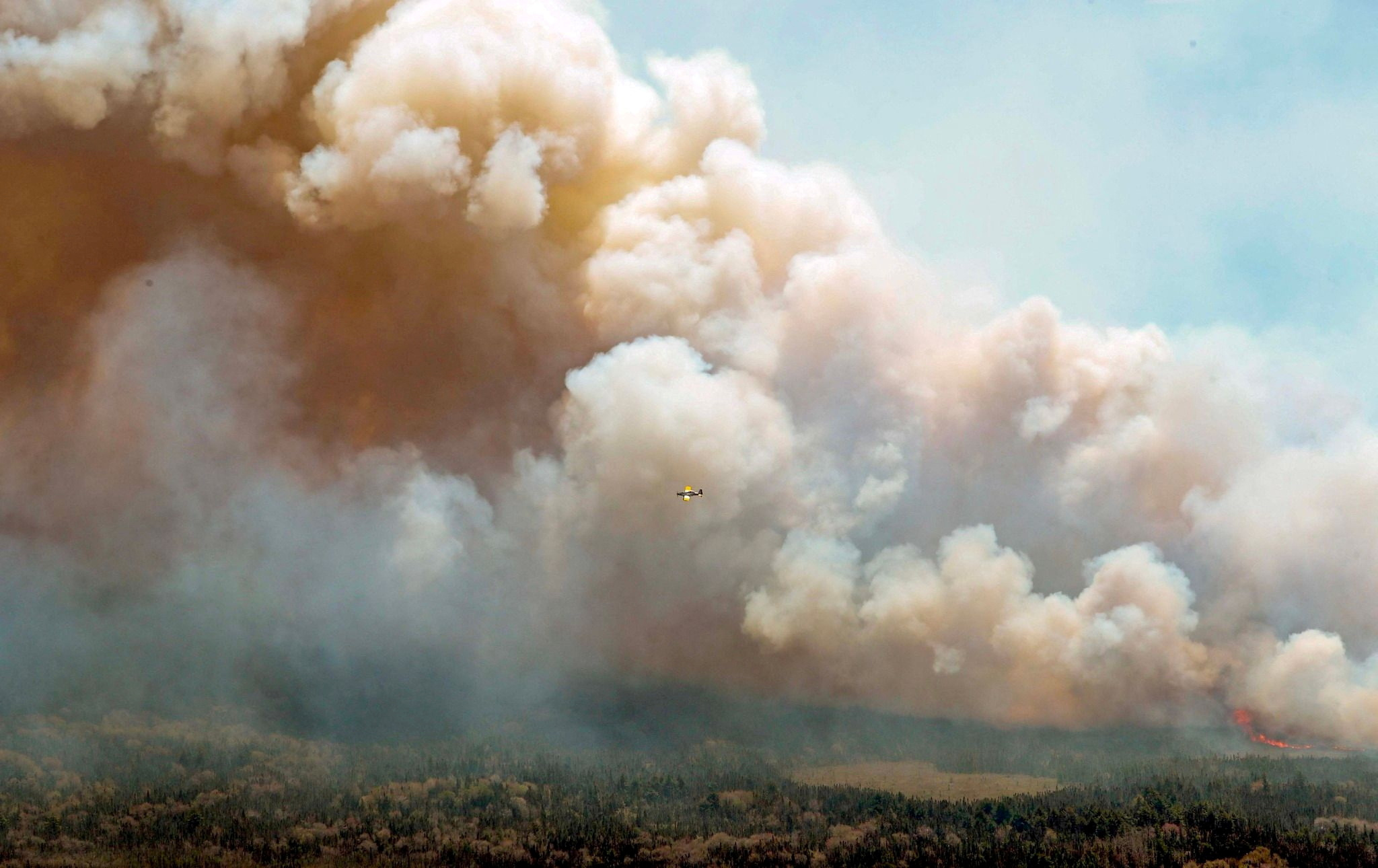
Smoke rises from a wildfire in Nova Scotia. According to the Insurance Bureau of Canada, severe weather caused $3.1 billion in insured damage in 2022, up from $2.1 billion in 2021, and the third worst year in Canadian history.

The wildfires plaguing residents in Alberta and Nova Scotia are part of a larger trend that’s driving up the cost of home insurance as extreme weather becomes more common, insurance experts say.

“Premiums in Canada have been increasing for some time already,” said Marcos Alvarez, global head of insurance at DBRS Morningstar.

After a large event like the wildfires dominating Canadian headlines, customers in those geographical areas might see their policies re-priced, said Alvarez, or might see insurers becoming more involved: “When you have losses of this magnitude, you might reassess how you approach your underwriting price.”

Over time, these changes on a local level will contribute to the larger trend, he said.

According to a July 2022 report by Ratesdotca, home insurance premiums in Ontario had risen about 10 per cent in less than a year, with increasing incidences of severe weather one of several factors contributing to higher costs for homeowners, especially those in smaller population centres.

A similar report published a year earlier found that home insurance rate growth was well outpacing inflation, with average home insurance rates in Alberta up 140 per cent over 10 years to $1,779 as of early 2021, while in Ontario the average annual rate was up 64 per cent to $1,284.

Larger losses are the biggest contributor to higher premiums, whether those losses are due to natural disasters, inflation or other rising costs, said Daniel Ivans, an insurance expert with Ratesdotca.

“When you have a loss, it’s more expensive now than it’s ever been,” he said.

According to the Insurance Bureau of Canada’s annual report, severe weather caused $3.1 billion in insured damage in 2022, up from $2.1 billion in 2021, and the third worst year in Canadian history. The Fort McMurray fire put 2016 in the highest spot at almost $6 billion.

The increasing cost of insuring homes at risk for damage from extreme weather was highlighted this week in California, when insurer State Farm announced it would no longer accept commercial and residential insurance applications in the state due to “historic increases in construction costs outpacing inflation, rapidly growing catastrophe exposure and a challenging reinsurance market.”

The trend where certain risks become less, or completely, uninsurable because of climate change is happening around the world, said Alvarez. State Farm isn’t even the first insurer to leave the California market, he noted.

Insurers in Canada face the same problems as State Farm, said Craig Stewart, IBC’s vice-president of climate change and federal issues. These include higher costs for rebuilding and reinsurance, plus more frequent events like wildfires, he said.

But it’s unlikely Canada will see an insurer make the same move as State Farm any time soon, Alvarez said. For one, home insurance prices in California are regulated, meaning insurers have limits on how much they can charge, while in Canada insurers don’t have the same barriers.

The California situation is extreme, Stewart said, with fires becoming not just more common but essentially a predictable event.

“Living in California is akin to living on a floodplain in Canada,” he said. “We know that the disaster is going to happen.”

Ivans said while insurers in Canada sometimes pause new business amid a disaster, this happens rarely and is only a matter of days or weeks.

Alvarez said while homeowners are currently covered for wildfires as part of standard home insurance, they’re underinsured for other risks, including flooding.

When a segment becomes uninsurable, it’s a public policy problem, he said. That’s often when the government steps in, which it did with flooding, promising to create a national low-cost flood insurance program in the latest federal budget.

Alvarez thinks we could see the Canadian government getting more involved in insurance in the future if other natural disasters become increasingly difficult to insure against.

“Wildfire could be a potential candidate for some sort of public program if this becomes more and more prevalent,” he said.

As weather events become more extreme, it is becoming more challenging for insurers to keep coverage affordable without government partnerships, said Stewart.

Canada’s no good, very bad summer is just getting started

This opinion was written by Marsha Lederman and was published in the Globe & Mail on June 3, 2023.

In her victory speech Monday night, Danielle Smith called out Ottawa for what she said were soon-to-be-announced environmental policies, including new restrictions on electricity generation from natural gas and a de facto production cap on the oil and gas sector.

Canada’s wildfire summer of 2023 has already made it into the record books, long before summer officially begins. This past week, as the calendar flipped to June, the country, east and west, was on fire. In Nova Scotia, wildfires have destroyed homes and sent people fleeing through walls of smoke and flames. This is happening not only in remote areas, but in the suburbs of Halifax. In British Columbia and Alberta, fires have been raging for weeks, displacing thousands.

In a week when hundreds more Albertans had to evacuate their homes, voters in that province elected a Premier whose stance on climate change should concern every Canadian.

Danielle Smith’s “track record on the issue spins like a greatesthits playlist of the past 15 years in climate-denial talking points,” Chris Turner, the award-winning author of How to Be a Climate Optimist: Blueprints for a Better World, wrote in The Globe and Mail days before the election.

This is a Premier who, on the campaign trail as wildfires raged, told UCP supporters at a political rally about the declaration of a state of emergency before announcing it to the wider public.

A leader who, in her victory speech Monday night, called out Ottawa for what she said were soon-to-be-announced environmental policies, including new restrictions on electricity generation from natural gas and a de facto production cap on the oil and gas sector.

“As Premier, I cannot, under any circumstances, allow these contemplated federal policies to be inflicted upon Albertans. I simply can’t and I won’t,” she said.

Even if those circumstances are the wildfires ravaging her province, apparently.

Without any sense of shame or irony, she made this declaration (to cheers) three weeks after asking Ottawa for relief funding to deal with the wildfires. While a funding request is entirely reasonable, Ms. Smith so consistently and unjustifiably bites the hand that she is asking to feed her that it is hard not to listen to her and think: hypocrisy.

To deny a connection between the climate crisis and Canada’s increasing wildfire crisis is folly. John Vaillant, author of Fire Weather: The Making of a Beast, argues with force and facts that we have to reduce our emissions as soon as possible in order to minimize the climate emergency’s already lethal effects.

“Wildfire seasons have been lengthening, and fires have been burning with a greater destructive intensity,” wrote Mr. Vaillant in the Globe in May.

Mr. Vaillant, a Governor-General’s Literary Award-winning author, said he’s angry. We should all be. Not just about government policies that don’t do enough to fight climate change (or in fact actively fight against the fight). But also about government decisions that hurt our ability to deal with emergencies when they hit.

In Alberta in 2019, the UCP government cut the elite team of firefighters who were trained to rappel from helicopters to tackle wildfires early, before they grow. What difference could that team have made this spring?

In Nova Scotia, three of the municipalities affected by the Halifax-area Tantallon fire had been identified by the auditor-general as having inadequate water sources to fight fires.

When there is an emergency, you want the person in charge to be smart, diplomatic and fair. Someone who doesn’t burn bridges in the name of bravado and vote-courting. Someone who will abandon partisanship for leadership. You don’t want a disaster trying to lead you through a disaster.

With her party shut out of Edmonton ridings, Ms. Smith announced this week that she would create a council of defeated UCP candidates from that area to advise her on all things Edmonton. Rather than listen to the MLAs Edmontonians elected, she’s going to go to the losers for advice.

If you want something else to be depressed about in Alberta, the UCP candidate who compared trans people to feces in chocolatechip cookies handily won her riding on Monday.

Another news item that may have caught your attention during Canada’s terrible, horrible, no good, very bad week concerns artificial intelligence. A group of top AI researchers and executives released a chilling warning: “Mitigating the risk of extinction from AI should be a global priority alongside other societal-scale risks such as pandemics and nuclear war,” their statement read.

Terrifying, right? But the apocalypse need not be AI-generated. We are on track to do it ourselves, as we continue to elect not serious people (to borrow a term from Succession’s Logan Roy) because we don’t want to pay a few cents more to gas up our cars or power our homes.

We’re not going to need AI to cause our extinction event. We just need to keep electing politicians who don’t take the climate emergency seriously, even when its effects are ripping through the province they are supposed to govern.

Wildfires rage across the country

This article was written by Lindsay Jones, Frederik-Xavier Duhamel, and Bill Curry, and was published in the Globe & Mail on June 3, 2023.

A helicopter drops water on a hot spot at a wildfire in Tantallon, N.S., on Thursday. Federal Emergency Preparedness Minister Bill Blair said Friday that the Canadian Forces ‘are moving quickly’ to mobilize, train and deploy an unspecified number of members in the province.

Largest fire recorded in Nova Scotia’s history grew to more than 23,000 hectares Friday

Wildfires are raging from British Columbia to the Atlantic, forcing thousands to evacuate and overwhelming firefighting capacity in some areas.

The largest fire recorded in Nova Scotia’s history, located in the southwest of the province, grew to more than 23,000 hectares Friday, provincial officials said, despite a constant attack from aerial waterbombers and firefighters on the ground.

Dave Rockwood, of the province’s Department of Natural Resources, said bone-dry forests, gusting winds and a lack of rainfall set the conditions for the blaze. “We need the weather to give us a hand when fires get this big,” he said.

Lots of rain is on the way to Nova Scotia, Environment Canada meteorologist Bob Robichaud said, but wildfires west of Halifax and in the southwestern Barrington Lake area have already forced the evacuation of at least 21,000 people and burned about 200 homes this week.

Jessika Hepburn, a resident of Birchtown, in southwestern Nova Scotia, said she and others are rallying to protect and inform vulnerable residents there and in nearby Shelburne. About half the municipality’s population – roughly 6,700 people – have been evacuated from their homes.

She said she has been going door to door to update people and ensure they have masks and water, especially those who may not know they need to leave because their telephone and internet services are not working.

“It’s a very terrifying time,” she said. “I have concern for our elders who are breathing in smoky air, who don’t have HEPA filters. There’s been no delivery of N95 masks or bottled water.”

The Canadian Red Cross has registered 7,000 affected households in Nova Scotia. The province announced on Friday that small businesses in evacuated zones would be eligible for onetime grants of $2,500.

Federal Emergency Preparedness Minister Bill Blair said Friday that the Canadian Forces “are moving quickly” to mobilize, train and deploy an unspecified number of members in Nova Scotia. He said four waterbombers, contracted by the Nova Scotia government from Montana, would arrive Friday, and two more on Saturday.

At a news conference in Toronto, Prime Minister Justin Trudeau said the federal government is prepared to support firefighting efforts across the country in whatever way it can.

“This is a scary time for a lot of people, from coast, to coast, to coast,” he said.

The Canada Interagency Forest Fire Centre reported that, as of Friday afternoon, there were 324 fires burning across the country, with 167 considered out of control. That’s a big jump from Thursday, when the agency reported 209 fires, with 87 out of control.

In Quebec, there were 116 active wildfires Friday in the “intensive zone,” which covers roughly the southern half of the province, according to the Société de protection des forêts contre le feu, the organization fighting wildfires in the province.

SOPFEU is not equipped to fight so many fires simultaneously, spokesperson Stéphane Caron said, meaning it has had to prioritize. The organization has deployed about 400 firefighters to fight only 21 wildfires, Mr. Caron said.

Nearly 11,000 hectares have already burned in the zone, more than 55 times the past decade’s average at this time of the year, according to SOPFEU.

Mr. Caron said a fire near Sept-Îles, in the Côte-Nord region of Eastern Quebec, had damaged power lines, causing tens of thousands of outages Thursday.

The mayor of Sept-Îles, Steeve Beaupré, declared a state of emergency. He said about 4,000 people had been evacuated as of Friday afternoon, a total that could increase.

“I have never seen an evacuation of such magnitude” in Sept-Îles, he said.

Another 1,500 people were ordered to evacuate from the nearby Mani-Utenam community of the Innu Takuaikan Uashat Mak Mani-Utenam First Nation, spokesperson Jean-Claude Therrien Pinette said.

A combination of dry weather and heavy damage from the eastern spruce budworm had rendered the surrounding forest particularly vulnerable to fire this year, according to Mr. Therrien Pinette.

Wildfires also forced the evacuations of about 500 homes in Chapais, in Northern Quebec, according to Jean-Raphaël Drolet of the Sûreté du Québec, the provincial police.

In B.C., there were 55 active wildfires Friday, including nine considered out of control, according to the province’s online emergency map. The Peace River Regional District, the Village of Lytton and the Lytton First Nation were all under evacuation orders.

In Alberta, wildfires have burned nearly 1.2 million hectares, almost 100 times more than last year at this time. Rain and cooler temperatures have helped with the firefighting effort, but a state of emergency remains in place. There are 56 active blazes, 15 of which are considered out of control.

Christie Tucker, a spokesperson for Alberta Wildfire, said during a news conference Friday that about 1,700 local firefighters have been joined by 900 from out of province.

”It was a good day for firefighters yesterday,” Ms. Tucker said. “We saw minimal growth on wildfires in the province, allowing them to make progress on containing the fires.”

There are already more than 500 firefighters from the U.S., Australia and New Zealand assisting in Alberta, according to Mr. Blair’s office, and more than 700 additional firefighters from those countries and South Africa are expected to arrive in Alberta and Nova Scotia in the coming week.

Separate from the federal announcement, there are 17 firefighters arriving in Nova Scotia from New England on Saturday, with an additional 18 coming Monday. Another 40 from Costa Rica are arriving next week through the Canadian Interagency Forest Fire Centre.

Explainer: Why are wildfires raging in eastern Canada’s Nova Scotia province?

This article was written by Nia Williams and was published by Reuters on June 2, 2023.

New Brunswick aircraft drops fire retardant in Barrington Lake, Nova Scotia

 New Brunswick aircraft drops a mix of water and fire retardant as it passes over the wildfire in Barrington Lake, Nova Scotia, Canada in this social media handout image released May 31, 2023. Nova Scotia Government/Handout via REUTERS

June 2 (Reuters) – Wildfires are common in Canada’s western provinces, but this year the eastern province of Nova Scotia is reeling from its worst-ever wildfire season, forcing the federal government to send in the military.

The Atlantic province has had nearly 200 wildfires so far this year that have burned more than 22,000 hectares and displaced more than 25,000 people. In 2022, there were just 152 fires that burned 3,390 hectares.

Across Canada, some 2.7 million hectares have been scorched so far this year, equal to more than five million football fields, federal Minister of Emergency Preparedness Bill Blair told reporters on Thursday.

HOW UNUSUAL ARE WILDFIRES IN NOVA SCOTIA?

Situated on Canada’s eastern seaboard, Nova Scotia’s climate is heavily influenced by the North Atlantic Ocean, which brings higher humidity and more moderate temperatures than many other parts of the country. Fires are not unusual but tend to be much smaller than those in the west.

The region is covered by what is known as the ‘Acadian Forest’, which contains plenty of broadleaf trees like sugar maples mixed with evergreens such as conifers. Broadleaf trees are less flammable than evergreens because their branches and leaves are further from the ground, and their leaves hold more moisture.

The Acadian forest is much less prone to large wildfires than forests in western Canada.

WHAT’S CAUSING THEM?

Atlantic Canada received low snowfall this winter, followed by an exceptionally dry spring. Nova Scotia’s capital Halifax received just 120 millimetres of rain between March and May, roughly a third of the average, according to Weather Network meteorologist Michael Carter.

A scorching late May heatwave pushed temperatures in Halifax to 33 degrees Celsius (91.4 F) on Thursday, around 10 degrees Celsius above normal for this time of year.

Most of the wildfires are believed to be accidentally caused by human activity.

Ellen Whitman, a research scientist with the Canadian Forest Service, said there is also speculation that trees felled during Hurricane Fiona, which hit Atlantic Canada in September 2022, or killed by an infestation of forest pests may be providing more fuel than usual for wildfires, but that theory requires further investigation.

Renewable energy to boom globally

Countries investing in solar, wind: report

This article was written by Frank Jordans and was published in the Toronto Star on June 2, 2023.

The world is set to add a record amount of renewable electricity capacity this year as governments and consumers seek to offset high energy prices and take advantage of a boom in solar power, according to a new report Thursday.

The International Energy Agency said high fossil fuel prices — resulting from Russia’s attack on Ukraine — and concerns about energy security had boosted the rollout of solar and wind power installations, which are expected to reach 440 gigawatts in 2023.

That’s about a third more than the world added the previous year, taking the global installed capacity to 4,500 GW, roughly the combined total power output of the United States and China, the Paris-based agency said.

“The global energy crisis has shown renewables are critical for making energy supplies not just cleaner but also more secure and affordable,” said Fatih Birol, the IEA’s executive director. “Governments are responding with efforts to deploy them faster.”

Recent incentives to install renewables introduced by the Biden administration are already driving a significant uptake in the United States.

About two-thirds of this year’s increase in renewable power capacity will come from photovoltaic, with both large-scale solar farms and consumer rooftop installations seeing significant growth.

IEA said manufacturing capacity for PV components was also surging, especially in China.

Construction of new wind farms is predicted to rebound after a period of low growth. However, in contrast to solar manufacturing, the supply chains for wind turbines aren’t growing fast enough to meet demand, the agency said.

Birol also cautioned power grids must be upgraded and expanded to cope with the intermittent nature of solar and wind power, which require a fundamentally different approach by network operators compared with existing coal, gas or nuclear plants.

The report forecast that several European countries, including Spain, Germany and Ireland, will see wind and solar’s combined share of their overall annual electricity generation top 40 per cent by 2024.

Shifting the global economy away from fossil fuels is one of the most important steps for reducing greenhouse gas emissions that cause global warming.

Experts say that to meet the Paris climate accord’s goal of limiting temperature rise since pre-industrial times to 1.5 C, emissions need to be halved by 2030 and cut to “net zero” by mid-century.

The International Renewable Energy Agency, a separate body, has called for a major increase in wind and solar investments. Nations are expected to discuss setting an international target for the rollout of renewable energy at this year’s UN climate summit in Dubai.

Ottawa backs $3-billion of debt for Trans Mountain pipeline

This article was written by Jeffrey Jones and was published in the Globe & Mail on June 2, 2023.

Ottawa has backstopped $3- billion more in debt for Crown-owned Trans Mountain Corp.’s delayed and over budget oil pipeline expansion, but the government maintains its guarantees do not amount to public funding.

According to Export Development Canada’s website, Ottawa is guaranteeing $1.75-billion to $2billion of financing provided by commercial lenders in a transaction finalized at the beginning of May. That followed a guarantee for $750-million to $1-billion of debt in late March. The guarantees are listed within the Canada Account, which includes transactions that are too risky for EDC under its usual course of business because of risks related to deal size, markets, borrowers and financing conditions.

The government approved the loan guarantees after backstopping another $10-billion in financing last year.

In March, Trans Mountain Corp. reported the estimated costs for its expansion had ballooned to $30.9-billion, an increase of more than 300 per cent from the initial $7.4-billion that former owner Kinder Morgan Canada forecast in 2017.

Even before the latest overrun was disclosed, independent analyses, including one a year ago from the Parliamentary Budget Officer, had shown Ottawa would lose money on the project, which it purchased from Kinder Morgan Canada in 2018 for $4.5-billion.

Finance Minister Chrystia Freeland said in 2022 that Ottawa would not plow any more public money into Trans Mountain, which the government has pledged to sell eventually. She said the corporation would secure the funding necessary to complete the project through third-party financing, either in public debt markets or from financial institutions.

The additional government guarantees mean taxpayers are taking on the risk of default. But they are not footing more of the bill to complete the project, Marie-France Faucher, a spokesperson for Ms. Freeland, said in a statement.

“As confirmed in TMC’s first quarter financial statements, TMC continues to secure the necessary third-party financing to complete the project. As part of this process, the Government of Canada has provided a loan guarantee on behalf of the corporation,” Ms. Faucher said. “This is common practice and does not reflect any new public spending. The company is paying a fee to the government for this loan guarantee.”

Trans Mountain is Canada’s only pipeline system for transporting oil to the West Coast. The first phase was completed in 1953, and the line can currently ship 300,000 barrels of oil a day to Burnaby, B.C., from the Edmonton area. Prime Minister Justin Trudeau’s government bought the pipeline after Kinder Morgan Canada shelved plans for the expansion in the face of stiff opposition and court challenges from environmentalists and some Indigenous groups.

The expansion project, which is due to be completed early next year, will nearly triple the pipeline’s throughput to 890,000 barrels a day. Eighty per cent of the capacity of the expanded pipeline has been allocated to 11 Canadian and international producers and refiners, under 15- and 20-year transport contracts.

Energy companies have said for years they are looking to the expansion of the pipeline to boost the value of their oil production, which has at times suffered deep price discounts compared with other international crude types because of tight export capacity and reliance on the United States as the Canadian oil patch’s only sizable customer.

Years of delays and cost increases have raised concerns about the project’s longterm financial viability. Ms. Faucher said the government plans to start the process of divesting itself from the pipeline “in due course.”

“As assessed by BMO Capital Markets and TD Securities, the project remains commercially viable, and there is strong interest from investors in high quality, operational infrastructure assets like the Trans Mountain Expansion Project,” she said.

Several Indigenous groups have expressed interest in buying the pipeline, including Calgary-based Project Reconciliation; Nesika Services, a group that describes itself as an Indigenous-led not-for-profit; and Chinook Pathways, a partnership between Western Indigenous Pipeline Group and Pembina Pipeline Corp. But some would-be bidders have expressed fatigue after waiting years for a formal process to begin.

No relief in sight as wildfires burn across the country

This article was written by Mike Hager and was published in the Globe & Mail on June 2, 2023.

An aircraft, centre, disperses a mix of water and fire retardant over a wildfire near Barrington Lake in Shelburne County, N.S, Wednesday.

With blazes out of control almost everywhere now, provinces need their staff back at home, federal officials say

A severe start to wildfire season has scorched 10 times the average amount of terrain burned during these first weeks over the past decade, leading Ottawa to warn that fires in eight provinces and the Northwest Territories are stretching Canada’s firefighting corps perilously thin with no immediate relief in sight.

Federal Emergency Preparedness Minister Bill Blair told reporters Thursday that this level of wildfire activity on June 1 is unprecedented, forcing tens of thousands of people to flee their homes and burning the equivalent of five million American football fields, or an area almost five times the size of Prince Edward Island.

“Due to climate change, similar extreme weather events may continue to increase in both frequency and severity across our country,” Mr. Blair said.

When big fires are burning in so many different regions, he added, the government is concerned there won’t be enough people and equipment where and when they are needed.

“There are a limited number of resources,” he said.

Burnout is also an issue, as many firefighters work days on end in extremely harsh conditions.

As the situation in Alberta grew quickly out of control in early May, the Canadian military moved in to help, and the Canadian Interagency Forest Fire Centre also helped commission firefighters from other provinces and other countries.

But federal officials said in a briefing to reporters Thursday that the fire situation is troublesome almost everywhere now, and those provinces need their staff back at home.

The centre’s daily report on the fire situation says demand for firefighting personnel and equipment from other jurisdictions “is extreme,” but the “national availability of resources is limited,” so they’re turning to international partners for help.

More than 300 firefighters from the United States and South Africa are heading here in the coming days, with roughly 100 Americans set to arrive in Nova Scotia by Monday to help knock down out-of-control wildfires that have destroyed at least 200 homes and cottages in the Atlantic province. Another 200 firefighters arriving from South Africa will likely end up in Alberta, though officials said the wildfire situation across the country is fluid.

To date, the centre said 566 firefighters have travelled between provinces this year to help other jurisdictions, and another 443 firefighters and other trained experts have come to Canada from the U.S., Australia and New Zealand. Most of them to date have gone to Alberta, where more than a million hectares burned in May and the province remains under a state of emergency.

Canada also has agreements to share firefighters with Mexico and Costa Rica. Federal officials said Thursday they are in talks with Mexico to bring staff up from that country.

Natural Resources Minister Jonathan Wilkinson said Thursday Canada is moving on the first phase of a Wildfire Training Fund to hire and train Indigenous firefighters in their own communities; 300 new firefighters and another 125 Indigenous fire guardians are being trained this season.

His department is also working to help retrain urban and rural municipal firefighters, who are mostly equipped to battle blazes in buildings, to assist in responding to wildfires as they increasingly encroach on urban areas.

Mr. Wilkinson said six provinces and territories have also already taken advantage of a new $256-million federal fund for wildfire equipment. He said he expects all provinces and territories to use it this year.

Mr. Blair said the government accepted Nova Scotia’s request for federal aid almost immediately Wednesday and the military is already preparing to send in additional help.

As of mid-afternoon Thursday, the Canadian Interagency Forest Fire Centre was reporting 209 active fires burning in eight provinces as well as in the Northwest Territories and 87 of them were out of control.

There are about 28,000 people currently evacuated from their homes, including 18,000 in Nova Scotia alone. There were 25,000 evacuees in Alberta in May, with 4,325 of them still out of their homes owing to six active evacuation orders, according to a provincial update Thursday evening.

Several small communities in northeastern B.C. were under orders to leave their homes Thursday as well.