The energy giant is lobbying Ontario municipalities to ensure efforts to reduce emissions don’t threaten its bottom line
This article was written by Fatima Syed and was published in the Narwhal on June 25, 2024.
This article was written by Fatima Syed and was published in the Narwhal on June 25, 2024.
This editorial was written and published by The Guardian on June 16, 2024.
This article was written by Amanda Stephenson and was published in the Toronto Star on June 21, 2024.
The Pathways Alliance group of oilsands companies has removed all content from its website and social media feeds, citing uncertainty over a new antigreenwashing rule poised to become federal law, while a major oil and gas industry group has also modified its website.
The Pathways Alliance is a consortium of Canada’s six largest oilsands companies, which together have publicly committed to reaching net-zero greenhouse gas emissions from oilsands production by 2050.
The consortium has previously spent millions of dollars on a countrywide public relations blitz aimed at demonstrating that the oilsands is committed to helping fight climate change.
But as of Thursday, all that remains on the group’s website is a notice saying Pathways has removed its content due to concerns around an anti-greenwashing provision in federal Bill C-59.
“Imminent amendments to the Competition Act will create significant uncertainty for Canadian companies that want to communicate publicly about the work they are doing to improve their environmental performance,” the Pathways statement reads.
“With uncertainty on how the new law will be interpreted and applied, any clarity the Competition Bureau can provide through specific guidance may help direct our communications approach in the future.”
The group — which has not yet responded to an interview request — added it remains committed to the work it is doing to reduce the environmental impacts of oilsands production.
The Canadian Association of Petroleum Producers also said Thursday it has “chosen to reduce the amount of information available on its website and other digital platforms.”
The omnibus bill C-59, which passed third reading in the Senate Wednesday and will soon become law, contains a truth-in-advertising amendment that would require corporations to provide evidence to support their environmental claims.
The provision is not fossil fuelspecific, but applies to all businesses and economic sectors.
The bill’s wording says businesses must not make claims to the public about what they are doing to protect the environment or mitigate the effects of climate change unless those claims are based on “adequate and proper substantiation in accordance with internationally recognized methodology.”
The Pathways Alliance says it remains committed to the work it is doing to reduce the environmental impacts of oilsands production
‘‘ This is basically a very modest provision in the Competition Act. It simply requires companies to tell the truth and to have an evidence base to back up their claims. So I do think this reaction is very telling.
LEAH TEMPER CANADIAN ASSOCIATION OF PHYSICIANS FOR THE ENVIRONMENT
The passage of the provision is a win for Canadian environmental groups, who have been mounting a full-fledged campaign against “greenwashing” — a term given to the perceived tendency by companies to market their products and practices as more sustainable than they really are.
In the last year, Canadian green groups have lodged at least four formal complaints with the federal Competition Bureau alleging greenwashing or false environmental claims by fossil fuel companies or banks.
The Pathways Alliance was the target of one of those complaints. Environmental groups have said the consortium’s ads and public claims about net-zero are misleading, as the Pathways Alliance has not yet made a final investment decision on its proposed $16.5-billion carbon capture and storage network.
Leah Temper, program director with the Canadian Association of Physicians for the Environment, said Thursday she was “thrilled and surprised” to see the oilsands industry react so strongly to the passage of C-59.
“This is basically a very modest provision in the Competition Act. It simply requires companies to tell the truth and to have an evidence base to back up their claims,” Temper said.
“So I do think this reaction is very telling.”
In a statement, the Canadian Association of Petroleum Producers said the anti-greenwashing provision will have the effect of silencing the energy industry and curtailing the ability of Canadians to participate in debates around climate and environmental policy.
“The burden of proof provision included in the amendments means those making the complaint face no risk or accountability. Rather, the burden falls entirely on companies,” said CAPP president and CEO Lisa Baiton.
“Businesses across Canada are being put at significant risk for communicating their efforts to reduce their impact on the environment.”
But Temper said that as climate change concerns mount, it has become increasingly common for businesses in all industries to make questionable environmental claims in their advertising.
“It has been the Wild West. Companies have been able to make almost any claim they want, using terms such as net-carbon neutral, without any reliable evidence base,” Temper said.
“Hopefully this (C-59) will represent a sea change.”
Alberta Environment Minister Rebecca Shulz has called the antigreenwashing provision an “undemocratic gag order” that creates needless uncertainty for businesses.
Earlier this month, UN secretarygeneral Antonio Guterres urged countries to ban advertising by fossil fuel companies in the face of the climate crisis.
This article was written by Jeffrey Jones and was published in the Globe & Mail on June 21, 2024.
Several Canadian oil companies and lobby groups have added disclaimers to their websites and socialmedia feeds – in one case, scrubbing all content – in response to new federal legislation that aims to stamp out false or exaggerated environmental claims.
A contentious provision within the government’s Bill C-59 makes changes to the Competition Act to combat greenwashing, and puts companies at legal risk for making environmental or social assertions in public communications that do not stand up to scrutiny. Individuals and companies could face sizable fines if found liable.
On Wednesday, Pathways Alliance, a coalition of oil sands producers proposing a multibillion-dollar carbon capture and storage project, replaced its website and social-media content with a disclaimer it said is in response to the C-59 anti-greenwashing measure.
The amendment “will create significant uncertainty for Canadian companies that want to communicate publicly about the work they are doing to improve their environmental performance, including to address climate change,” it reads. The group warned that creating a disclosure standard it described as vague will open the door to frivolous lawsuits.
The legislative changes are part of the Fall Economic Statement Implementation Act, which received royal assent on Thursday.
Environmentalists have lauded the measure, which they say will help protect consumers by injecting reality into green claims.
They allege Canadian regulators have been dragging their feet when it comes to implementing mandatory climate-related disclosures.
Business and energy groups have argued vociferously against the provision, saying they will be forced to back up their assertions against standards that are still undefined. Alberta, a perennial foe of Prime Minister Justin Trudeau’s government on environmental matters, blasted the measure as “draconian.” Provincial Environment Minister Rebecca Schulz said it will hinder Canadians’ ability “to hear the truth about the energy industry and Alberta’s successes in reducing global emissions.”
At least three of the Pathways Alliance member companies, Suncor Energy Inc., Cenovus Energy Inc. and Canadian Natural Resources Ltd., have added notes to their online communications that warn of uncertainty regarding their ability to discuss environmental, social and governance matters.
“We’re going to see a lot more of this from a bunch of companies in a variety of sectors in the coming days,” said Conor Chell, national leader, ESG legal risk & disclosure, at KPMG.
“I think it will be a combination of disclaimer-type language that we’ll see, and some companies will likely choose to withdraw some or all of their ESG disclosure from the public domain,” he said. “Over all, I think what it says is there’s a lot of uncertainty.”
The change is primarily aimed at corporate net-zero or carbon-neutrality assertions, but also to address the authenticity of consumer product claims, he said.
The provision is broad – apart from sustainability reports, it could apply to comments made on social media, in investor presentation slides and even documents submitted to requests for project proposals, Mr. Chell said. In addition, the Competition Bureau could examine commentary made in the social realm, such as adherence to the Modern Slavery Act or regarding diversity, equity and inclusion.
Pathways Alliance said its members are committed to improving the industry’s environmental performance, but urged the bureau to provide clarity so it can determine the material they can publish.
The group has faced criticism over delays in moving forward with a $16-billion project to capture 12 million tonnes of greenhouse-gas emissions by 2030, a development that would require significant taxpayer support.
The Competition Bureau, which in recent years has dealt with greenwashing complaints, has said the amendment will strengthen its ability to police deceptive claims. But it declined on Thursday to provide details on how enforcement and determining infractions would change from current practices.
The Canadian Association of Petroleum Producers, the industry’s main lobby group, said it, too, had reduced the amount of information on its website in response to the amendment, which it contends is aimed at silencing its members and the ability of Canadians to debate climate and environmental policy.
Under the legislation, individuals could be fined up to $750,000, or three times the amount of any financial benefit gained, whichever is greater. Companies could face fines of $10-million or three times the financial benefit. If that figure is unknown, a company may have to pay 3 per cent of worldwide revenues.
Asked at a news conference about Pathways Alliance removing the content from its website, the Prime Minister said he believes freedom of expression is important in a democracy. “But we need to make sure that people are debating and discussing and basing their worldview on things that are anchored in truth and reality,” he said.
An alliance of green groups – the Canadian Association of Physicians for the Environment, Ecojustice, Équiterre and the Quebec Environmental Law Centre – had made recommendations to the government on the anti-greenwashing provision. The group said on Thursday that it would help address skepticism among consumers and reward companies that make sincere investments in sustainability.
Canada’s big banks are frequent targets of activists who complain that they tout their netzero targets, while at the same time remaining major lenders to fossil-fuel producers. The banks have consistently said they are setting aside billions of dollars to help those companies make the transition to lower-carbon operations.
The Canadian Bankers Association said the financial institutions are reviewing the legislation and its implications, and there appeared to be no changes to the banks’ digital communications on Thursday.
“Banks in Canada are implementing climate action plans and reporting on their actions,” said Maggie Cheung, spokesperson for the association.
This article was written by Amanda Stephenson and was published in the Toronto Star on June 19, 2024.
Canadian oil and gas companies facing a federally imposed emissions cap will decide to cut their production rather than invest in too-expensive carbon capture and storage technology, a new report by Deloitte says.
The Alberta government-commissioned report — a copy of which was obtained by The Canadian Press — aims to assess the economic impact of the proposed cap.
Its findings contradict the federal government’s stance that its proposed cap on greenhouse gas emissions from the oil and gas sector would be a cap on pollution, not a cap on production. And it supports Alberta’s position that a mandated cap would lead to production curtailments and severe economic consequences.
But the Deloitte report also casts doubt on the idea that widespread deployment of carbon capture and storage technology will drive down emissions from the oil and gas sector in the coming years, suggesting that scenario doesn’t make financial sense.
“We expect that the cap (will impose) 20 megatonnes in emissions reduction on producers by 2030, which will need to be achieved by CCS (carbon capture and storage) investments, or through production curtailment,” the Deloitte report states.
“Curtailing production would be a more cost-effective option compared to investing in CCS.”
The oil and gas sector is Canada’s heaviest-emitting industry, and rising oilsands production has meant total emissions from the sector are increasing at a time when many other sectors of the economy are successfully reducing overall emissions.
Globally, oil demand is growing, with the International Energy Agency forecasting global oil demand to be 3.2 million barrels per day higher in 2030 than in 2023, though the agency also suggests growing supply will outstrip demand growth sometime this decade.
In a draft framework released last December, the federal government proposed mandating a ceiling on oil and gas emissions in order to help slow climate change. The rules would require the industry to cut greenhouse gas emissions by 35 to 38 per cent from 2019 levels by 2030. Companies would also have the option to buy offset credits or contribute to a decarbonization fund that would lower that requirement to cutting just 20 to 23 per cent.
But the Deloitte report suggests oil production in this country could increase 30 per cent, and gas production over 16 per cent, from 2021 to 2040.
Those figures are based on a Canada Energy Regulator forecast and on current government policies.
This means that producers will have two choices to meet the constraints of an emissions cap, Deloitte argues.
They can invest heavily in carbon capture and storage — trapping greenhouse gas emissions from oil production at site and storing them safely underground — or they can cut back on planned production increases.
‘‘ Curtailing production would be a more cost-effective option compared to investing in (carbon capture and storage).”
DELOITTE REPORT
This article was written by Amanda Stephenson and was published in the Globe & Mail on June 19, 2024.
Deloitte’s findings contradict Ottawa, support Alberta’s position that a limit would drop oil production rather than invest in carbon capture
Canadian oil and gas companies facing a federally imposed emissions cap will decide to cut their production rather than invest in too-expensive carbon capture and storage technology, a new report by Deloitte says.
The Alberta government-commissioned report – a copy of which was obtained by The Canadian Press – aims to assess the economic impact of the proposed cap.
Its findings contradict the federal government’s position that its proposed cap on greenhouse gas emissions from the oil and gas sector would be a cap on pollution, not a cap on production. And it supports Alberta’s position that a mandated cap would lead to production curtailments and severe economic consequences.
But the Deloitte report also casts doubt on the idea that widespread deployment of carbon capture and storage technology will drive down emissions from the oil and gas sector in the coming years, suggesting that scenario doesn’t make financial sense.
“We expect that the cap (will impose) 20 megatonnes in emissions reduction on producers by 2030, which will need to be achieved by CCS (carbon capture and storage) investments, or through production curtailment,” the Deloitte report states.
“Curtailing production would be a more cost-effective option compared to investing in CCS.”
The oil and gas sector is Canada’s heaviest-emitting industry, and rising oil sands production has meant total emissions from the sector are increasing at a time when many other sectors of the economy are successfully reducing overall emissions.
Globally, oil demand is growing, with the International Energy Agency forecasting global oil demand to be 3.2 million barrels per day higher in 2030 than in 2023, though the agency also suggests growing supply will outstrip demand growth some time this decade.
In a draft framework released last December, the federal government proposed mandating a ceiling on oil and gas emissions in order to help slow climate change. The rules would require the industry to cut greenhouse gas emissions by 35 to 38 per cent from 2019 levels by 2030. Companies would also have the option to buy offset credits or contribute to a decarbonization fund that would lower that requirement to cutting just 20 to 23 per cent.
But the Deloitte report suggests oil production in this country could increase 30 per cent, and gas production over 16 per cent, from 2021 to 2040. Those figures are based on a Canada Energy Regulator forecast and on current government policies.
This means that producers will have two choices to meet the constraints of an emissions cap, Deloitte argues. They can invest heavily in carbon capture and storage – trapping greenhouse gas emissions from oil production at site and storing them safely underground – or cut back on planned production increases.
The oil and gas industry itself has been promoting carbon capture and storage as the key to reducing emissions while still increasing production. The oil sands industry, which is responsible for the bulk of Canada’s overall oil and gas sector emissions, has proposed spending $16.5billion on a massive carbon capture and storage network for Northern Alberta.
But the group of companies behind the proposal, called the Pathways Alliance, has not yet made a final investment decision, saying more certainty about the level of government support and funding for the project is required.
In its report, Deloitte concludes the cost of carbon capture and storage is so high that in many cases, it is “economically unviable.”
It says it is unlikely that many companies would go that route in an effort to comply with an emissions cap, and would instead simply curtail production.
“It is important to note that once implemented, the investment in CCS is irreversible,” the report states.
“However, production curtailment can be reversed. Considering these factors, we do not foresee any oil sands CCS investments being implemented.”
The Deloitte report concludes a mandatory limit on greenhouse gas emissions from the oil and gas sector would result in decreased production, job losses and investment, as well as a “significant” decline in GDP in Alberta and the rest of Canada.
The mining, refinery products and utilities sector will also experience a decrease in real output in the event of an emissions cap, Deloitte says, due to their proximity to the oil and gas sector.
Alberta’s oil production in 2030 would be 10 per cent lower with a cap than without one, the Deloitte report suggests, and its natural gas production would be 16 per cent lower. The cap would also mean decreased fossil fuel production in B.C., Saskatchewan and Newfoundland.
By 2040, Deloitte says, Alberta’s GDP would be 4.5 per cent lower, and Canada’s GDP would be one per cent lower, than if no emissions cap were in place.
Alberta Environment Minister Rebecca Shulz said the report supports what the province has been saying all along.
“We have to use common sense. You have to take socio-economic data into perspective when you’re looking at policies like [an emissions cap],” said Ms. Shulz in an interview.
“I don’t think Canadians want to see us throw the country into further economic decline.”
Ms. Shulz added Alberta recognizes that the economics of carbon capture and storage are challenging. She said heavy handed government policy that makes companies less profitable will only have the effect of discouraging investment in emissions reduction.
“From a policy perspective, the layering of all of these punitive measures are continuing to drive away the emissions reduction technology that we actually want to see happen here,” she said.
The Deloitte report predicts Alberta would have 54,000 fewer jobs in 2030 with an emissions cap than without one.
Once implemented, the investment in CCS is irreversible. However, production curtailment can be reversed. Considering these factors, we do not foresee any oil sands CCS investments being implemented.
DELOITTE REPORT
This editorial was written and published by the Globe & Mail on June 19, 2024.
Carbon dioxide and methane are not visible to the human eye. The greenhouse gases garner attention in the mind’s eye – and some sources attract more interest than others. Emissions in the oil sands were 87 megatonnes in 2022, according to the latest official figures, reported last month. Emissions in passenger transportation, from cars and trucks to planes and trains, were 90 Mt.
Each account for about an eighth of Canada’s total emissions. The oil sands of course attract a lot of attention – and money. Ottawa is set to provide more than $10-billion of subsidies for carbon capture, available to all industries but with the oil sands at the front of the line – even as the technology is untested at such a scale. Transportation also gets significant attention and funding, as government subsidies help drivers shift to electric vehicles.
Now consider buildings. Their emissions were 89 Mt in 2022, roughly split between residential and commercial. It’s as if the oil sands were scattered across the country in small dollops and few people took notice – yet the impact on climate is equal. A molecule of carbon dioxide or methane has the same climate-heating effect no matter its source.
In the work to deliver on Canada’s promise to cut total emissions by 40 per cent by 2030, buildings receive a fraction of the spotlight cast on the oil sands or transport. But that’s beginning to change. Some jurisdictions, such as California, are starting to modernize rules around how residential and commercial buildings are fuelled. Natural gas – which is mostly comprised of methane, an especially potent greenhouse gas – is burned in furnaces and boilers, to provide heat and to heat water. This is how buildings produce such large volumes of greenhouse gases.
The Canadian Climate Institute, a policy think tank, published a report last week about the urgency and challenges to reduce emissions from buildings. What it requires is an across-the-board look at how governments oversee the country’s energy systems, from elected officials and independent regulators to private companies. The institute warned that, for now, “inertia is prevailing” – and if it continues, the cost will be tallied in higher bills for consumers and businesses and missed climate reduction targets for Canada.
The report showed that methane heats about half the residential buildings in the country, led by Alberta, Saskatchewan, Ontario and British Columbia. Among commercial buildings, it’s more than 80 per cent.
The solution is clear, as it is in transportation: electrification. But to make it happen is more difficult, including generating greater levels of electricity and changing long-standing ways of doing things – such as always hooking up more buildings to new methane pipelines. A lack of co-ordination is a primary problem. The institute said no province has a clear plan about the future of gas for heating.
New builds should be easiest. Slow and stop the expansion of natural gas pipelines to heat buildings. Late last year, the Ontario Energy Board ruled on this, after a detailed review, and said new gas connections should be paid upfront, rather than amortized over decades. It was a smart decision, aiming to avoid an “overbuilt, underutilized gas system.” But the Progressive Conservative Doug Ford government immediately fought back – claiming the issue was about housing costs – and effectively overruled the decision this spring. It passed legislation, Bill 165, to limit regulatory oversight and make it easier for Enbridge, the gas supplier, to expand.
That was a mistake. Enbridge benefits as its pipeline network grows and the price is borne by all customers. They subsidize the Enbridge expansion, rather than the company paying the cost itself. And it locks in more fossil fuel infrastructure, worsening the risk of stranded assets in the future, as the Ontario Energy Board warned.
Ontario’s moving in the wrong direction. “Provincial governments need to start directing a shift from gas to electric heating infrastructure,” the Climate Institute argued. It called on governments to help bodies such as regulators and electricity system operators make decisions that abide by net zero goals and, especially, stop expanding fossil fuel systems.
The wrong decisions today will reverberate for decades. It’s easy to point at the oil sands or cars and trucks but the challenge of emissions exists across the economy and buildings merit more attention. Big changes are necessary – and moving in the wrong direction puts Canada further behind.
This editorial was written and published by the Globe & Mail on June 15, 2024.
‘How do you sleep at night?” It was a rhetorical question, framed as a real one, from a politician to one of Canada’s top oil executives at a House of Commons committee earlier this month. NDP MP Laurel Collins said she was simply asking what people want to know, in the face of delayed climate action from Canada’s oil sector.
Suncor chief executive Rich Kruger said the question was designed “to create headlines, point fingers” and “villainize the industry.”
The question might have been rhetorical, and designed to create social-media content, but it did serve a useful purpose. The question illustrates a long-standing tension in this country, that some Canadians believe oil executives are a special type of bad actor.
It’s a deeply inconsistent position. Would an MP ask about the slumber of CEOs in sectors that are the voracious consumers of fossil fuel, or extracted critical minerals? Those who lead Canada’s aircraft or vehicle manufacturing companies, those who produce their wares using power from coal plants overseas, or artificial intelligence executives, whose companies’ computers could suck up more electrical power a few years from now than a rich developed country consumes?
Probably not.
But oil executives should get a higher level of scrutiny because of the global industry history of not acknowledging, or hiding, the truth of climate change. And Canadian oil sands producers have not fully explained how they’re going to live up to their net zero by 2050 promises, and have not yet invested the required billions of dollars.
Here’s where the frustration of progressive MPs becomes concrete. Everyone needs to be more fully committed if there’s going to be sustainable progress in Canada on climate.
Canada is one of the world’s largest oil producers, and a transition in a world hungry for energy is not going to happen overnight. The world devours copious amounts of crude every day. Canada’s oil industry, riding high commodity prices, is also a bright spot in a national economy where per person GDP is flailing.
The oil and natural gas sector remains Canada’s largest source of greenhouse gas emissions, making up 31 per cent of the total in 2022, the latest official numbers. That’s because of the sheer scale of the export-focused industry. From 1990 to 2022, Canadian crude production nearly tripled.
The oil sands in Northern Alberta also use far more energy and produce more emissions than other types of oil, hitting a record level of emissions in 2022. Oil output is at record highs and set to rise significantly. It makes it more challenging to further reduce emissions, even as industry has cut the volume of emissions per barrel. That’s a good trend but it’s not enough.
The debate is happening as a key climate policy is on the ropes. The consumer carbon tax – which could be a solid, serious thing – has been under constant attack by the Conservatives and debased by the Liberals’ political manoeuvring in Atlantic Canada.
The proposed emissions cap on oil and gas, which no other country has instituted, will be forever fought by any provincial government in Alberta.
One bright spot is industrial carbon pricing. It’s effective, generally uncontroversial, and should survive into the years ahead – no matter which political party forms government. But it needs to be strengthened and bolstered, alongside potential federal contracts for difference that aim to encourage industry investments. The combination would help all heavy emitters reduce or capture emissions, no matter what sector or region of the country they are in.
There will be the carrot of taxpayer subsidies alongside the stick of emissions rules, as well. Finance Minister Chrystia Freeland said this week a carbon capture tax credit, worth more than $10-billion, will soon be law and she wants to see “shovels in the ground.” The oil sands companies had previously said they want taxpayers to fund the majority of their carbon capture project and wouldn’t forge ahead until public money is locked in.
How does a Canada oil executive sleep at night? Probably at least as well as leaders in other industries that consume the world’s resources. But the alarm clock is ringing – for everyone.

This article was written by Marco Chown Oved and was published in the Toronto Star on June 13, 2024. It was updated on June 17, 2024.
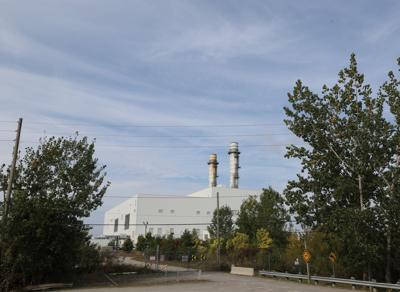
The natural gas system must stop expanding in order for Canada to meet its climate goals and to avoid saddling customers with rising costs as people switch to electric heat, according to a new report by the Canadian Climate Institute.
“Expanding gas infrastructure to heat buildings today would be like investing heavily in a chain of video rental stores 15 years ago,” said Jason Dion, senior research director at the institute and one of the authors of the report. “Energy systems need to plan for the reality that is arriving on our doorstep. The smart approach to protect consumers and ensure affordable, reliable energy in the future is to grow the electricity system — not lock in more dependence on gas.”
The report comes on the heels of a controversial move by the government of Premier Doug Ford to overrule the Ontario Energy Board’s decision to end the subsidization of gas hookups in new buildings.
The OEB had ruled that gas hookups were artificially cheaper than electricity hookups because of the practice of allowing the cost to be spread out over 40 years, instead of being paid upfront, and that gas consumption would likely drop significantly in that time, leaving fewer customers to pay for aging pipeline infrastructure.
The Ford government said it was unacceptable to make new houses more expensive by adding the full $4,400 gas hookup fee.
The dispute is emblematic of a problem that spreads across Canada: that utility regulators aren’t taking climate change and emissions reductions targets into account in their decision making and business as usual risks “costly dead-end pathways,” said Saachi Gibson, a research director at the climate institute.
“The sector is stuck,” she said.
For Canada to achieve net zero emissions by 2050, gas use will have to drop by 81 to 98 per cent in buildings, the report found. Electric heat (including heat pumps and baseboard heating), which now account for 34 per cent of heating systems, will need to more than double to 86 per cent over the next two and a half decades, with the remaining 14 per cent of systems (mostly in Alberta) powered by a hybrid of gas and electricity.
Yet natural gas systems continue to expand. Thousands of kilometres of new distribution pipelines have been built over the last decade and hundreds of thousands of new customers have been added, the report found. This is because gas utilities don’t make money by selling gas, which they don’t mark up. Instead, they get a guaranteed rate of return on their investments in pipelines and other infrastructure.
“They have a direct economic incentive to pursue continued growth of gas infrastructure and new customers, even if the long-term usage case is uncertain,” said Dion.
This incentive structure needs to change, Dion said, pointing to Quebec, where electrical utilities and gas companies work together to provide hybrid heat, and Massachusetts, where regulators are required to consider other options before approving the replacement of end-of-life gas pipelines.
To better align climate goals and utility infrastructure decisions, provinces need to legislate emissions reductions targets and empower utility regulators to take them into account, the report said.
“Provincial governments should stop treating gas system expansion as the default option, and equip regulators to consider alternatives,” said Kate Harland, the research lead on the report.
Cities and states around the world have started to ban gas hookups in new buildings, saying that electrifying heat is such a large undertaking, with millions of buildings that need to be transitioned, that the first step must be to stop adding new fossil fuel heating.
These gas bans have passed in Vancouver, Montreal, New York state and Germany. But in Ontario, natural gas customers pay fees to cover new pipelines and network expansion. As more and more people switch to electric heating, those left on the system will have to pay more to maintain the infrastructure.
While Ontario has a plan to expand electricity generation, including new nuclear plants, gas plants, grid-scale batteries and renewables, there is no similar long-term vision for the natural gas system.
“It’s our hope that (Ontario) will halt the continued expansion of the gas network in the interests of ratepayers over the long term,” said Dion.
This opinion was written by Rob Miller and was published in Canada’s National Observer on April 26, 2024.

Perhaps some relief for climate anxiety about our planet can be found by imagining what the world would look like if we embraced these climate-friendly measures — in 2029. Markus Spiske/Pexels
Another Earth Day has come and gone. Delegates are in Ottawa this week to hammer out a global plastics treaty. These events happened against a backdrop of continued uncertainty about our commitment to fighting climate change. Carbon pricing, electric vehicles and other climate-friendly measures are taking a back seat to pocketbook issues such as affordability. This kind of short-term thinking is creating anxiety amongst young people and climate activists who desperately want to be more hopeful about the future. Perhaps some relief for climate anxiety can be found by imagining what the world would look like if we embraced these climate-friendly measures.
 Mobilize, Canada!