False promises and the dirty truth

Featured

Oilsands companies have been taking us for fools, Catherine McKenna writes

This article was written by Catherine McKenna and was published in the Toronto Star on December 7, 2024.

CATHERINE MCKENNA IS A FORMER FEDERAL MINISTER OF ENVIRONMENT AND CLIMATE CHANGE AND INFRASTRUCTURE. SHE IS CEO OF CLIMATE AND NATURE SOLUTIONS AND CHAIR OF THE UNITED NATIONS EXPERT GROUP ON NETZERO.

Catherine McKenna says she worked for years with the oilsands industry — epitomized by facilities such this one seen near Fort McMurray, Alta., in 2014 — on plans that she now says were a mirage.

“ It became increasingly obvious to me that the oilsands sector, along with their cheerleaders in the Alberta government and the federal Conservative party, have no intention of making the fundamental changes required to align with the global shift toward a lowcarbon economy

In May 2016, I was leading intense negotiations between the federal government and the provinces and territories to secure Canada’s first national climate plan. Suddenly, the news was everywhere: wildfires were raging out of control in Alberta, and headed straight for Fort McMurray — the heart of Canada’s oilsands production. The news was devastating: flames jumping rivers, homes and businesses incinerated, and more than 80,000 residents forced to evacuate. Firefighters and other emergency responders did everything they could but were soon outmatched. Fort McMurray would be engulfed — at once causing immense hardship and also showing Canadians the visceral and unpredictable danger of our dependency on fossil fuels.

In that moment, it felt like an unlikely consensus had emerged. The federal government, most provinces and even oilsands companies had seemingly come to understand that Canada had for too long been a laggard on climate and that for both environmental and economic reasons we needed to make meaningful promises on reducing our greenhouse gas emissions and to actually meet them.

In 2015, at COP 21 in Paris, I could already see the world changing as Rachel Notley’s government put forward Alberta’s first credible climate plan. Standing with environmentalists and First Nations leaders, as well as oilsands companies, premier Notley announced a provincial cap on oilsands emissions, a tax on carbon, a phase out of coalfired power and a methanereduction strategy. She was clear that these measures were key to Alberta’s doing its part to tackle climate change while creating the incentive for the oilsands to innovate and be more competitive globally.

Amazingly, the chairman of Canadian Natural Resources Limited, Murray Edwards, spoke enthusiastically on behalf of the oilsands industry at the press conference: “(w)e applaud Premier Notley for giving us … the position of leadership on climate policy.”

Over the next four years, I worked very hard to collaborate with the oilsands sector. I really believed that the environment and the economy could go handinhand and include a vibrant oil and gas sector. I was convinced that we could reduce emissions from the oilsands as part of an ambitious climate plan, finally showing to the world that Canada was committed to meeting our targets and doing our part to tackle the climate crisis.

It turns out the consensus was a mirage. Or, more accurately, a sham. Maybe it shouldn’t have surprised me that our industry partners were working against us from the inside. After all, oil is their business, their bottom line. It was only after I left politics that I came to understand the truth: The oilsands sector and the politicians they sponsor aren’t just greenwashing a product. They are working to brainwash Canadians into buying a version of reality that no longer exists. One where oil will forever be the hero of the Canadian economy rather than an impediment to Canada’s future prosperity in a low carbon, climatesafe world.

Perhaps this sham was never clearer to me than on a Saturday morning in the fall of 2022. I was doing what I always do on weekends, reading the newspaper and enjoying a cup of coffee. But what I saw that morning nearly made me spit out my drink: a fullpage advertisement from the Pathways Alliance, a coalition of the country’s six largest oilsands producers.

The ad boldly claimed that these companies were making “clear strides to netzero” and would “help our country achieve a sustainable future.” Soon, I started seeing a version of this ad everywhere: on my Air Canada flight, on bus shelters, on YouTube, and even during the Super Bowl. Whenever I Googled “net zero,” the Pathways Alliance popped up.

Let’s be clear about the facts. Unlike other sectors in Canada that are reducing their emissions as part of a national effort to decarbonize our economy and become more competitive, emissions from oil and gas are only increasing. This is a massive problem. Oil and gas is by far Canada’s most polluting sector, at 30 per cent of our overall emissions while making up only 1/20th of our GDP. Emissions from the oilsands specifically rose by a whopping 142 per cent since 2005. There is no chance that Canada can live up to our international obligations under the Paris Agreement — the world’s best chance of avoiding catastrophic climate change — without the oilsands finally delivering significant emissions reductions like everyone else.

The irony of this ad campaign was not lost on me. After leaving politics, I was asked by the United Nations secretarygeneral to chair an international expert group to combat greenwashing — companies promoting false solutions to the climate crisis that distract from and delay action. As the secretarygeneral stated, “We cannot afford slow movers, fake movers or any form of greenwashing.” Our report, Integrity Matters, presented at COP 27 in Egypt, established clear global standards for netzero pledges and drew a red line around greenwashing.

And yet, here I was, staring at the Pathways Alliance’s blatant greenwashing campaign.

You would have thought that when the oilsands industry made historic profits over the past few years they would have reinvested that windfall in clean energy solutions. After all, their product is not only carbonintensive, but also expensive to produce. You’d think they’d have seen the need to clean up their act to compete in a lowcarbon future. But you would be wrong. Sure, oilsands companies invested a small fraction of their money in clean technology — enough to say they had — but mostly they chose business as usual, returning the vast majority of their historic profits to shareholders largely outside of Canada, rewarding their CEOs with bonuses of $10 million or more, and ramping up production while increasing their emissions.

Worse still, they continue to demand that governments cough up even more taxpayerfunded subsidies to “clean up” their pollution.

Oilsands companies are taking us for fools.

Only now, and much too late, are they starting to be held to account for their greenwashing. Greenpeace and other environmental groups have called out the Pathways Alliance to the Competition Bureau, which is investigating their misleading claims.

This June, the federal government passed new antigreenwashing rules, which resulted in the Pathways Alliance and oilsands companies preemptively removing their climate claims from their websites and social media. It seems they couldn’t handle the new truth in advertising rules.

I understand how persuasive these companies can be. As environment minister, I bought into the idea that tighter regulations and technological advances like carbon capture and storage (CCS) would allow us to continue developing the oilsands while being serious about climate action. I also believed that working with Alberta to help diversify their economy would require compromise.

Yes, I found the government’s decision to buy the Trans Mountain pipeline a bitter pill to swallow. But I rationalized it by telling myself that it was in the national interest and was the price of bringing Albertans onside with Canada’s climate plan.

Over time I started to have serious doubts, about both the pipeline and our conciliatory approach to the oilsands sector more broadly. They started when I learned that Conser

vative politicians and oilsands companies were spreading rumours that we bought the pipeline in order to kill it. Give me a break. (Today I wish we hadn’t bought it at all. As I watched the $4.5billion purchase price balloon to the $34 billion spent to date, as I came to realize that not only will taxpayer dollars probably never be recouped, but also that Canadians will likely be left with a very expensive stranded asset, I came to regret not pushing back harder.)

It’s also come to light recently that the epic fight led by the Conservatives to kill carbon pricing that I found myself embroiled in, especially online, was supported and significantly underwritten by oil and gas companies. The campaign to discredit carbon pricing by falsely claiming it raised the cost of living — when, in fact, it benefits most Canadians — was amplified by ragefarming outlets, bots and social media algorithms.

It became increasingly obvious to me that the oilsands sector, along with their cheerleaders in the Alberta government and the federal Conservative party, have no intention of making the fundamental changes required to align with the global shift toward a lowcarbon economy.

Unlike Progressive Conservatives like Brian Mulroney, and even recent Conservative leader Erin O’Toole, who understood the need for an economically sound strategy to protect the environment for future generations, today’s Conservative politicians are at war with the very idea of meaningful climate action. Their opposition isn’t scientific or even economic: it is pure ideology.

It was only after I finished my time in government and was able to step back that I could see the balance we were trying to strike couldn’t hold. As painful — and criticized — as the compromises we struck were, I was convinced that in a diverse federation such as ours it was crucial to keep everyone in the tent. But compromise has to go both ways. And you can’t find productive compromise with ideologues hellbent on trying to preserve the status quo while the world moves on.

The sham of cooperation has delivered great fortune to the oilsands and come at a great cost to the rest of us.

The urgency of the climate crisis has never been clearer and at the same time the world is undergoing a rapid transition to clean energy.

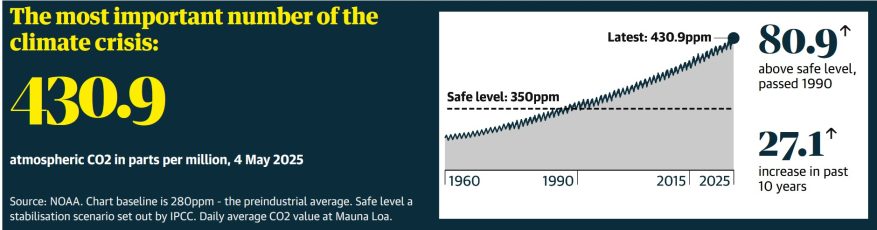
Global CO2 emissions are set to hit a record high this year, with the bulk of the emissions from the burning of fossil fuels. The UN’s Emissions Gap Report shows that if we continue on our current path, global temperatures will rise by more than 3 C or more by the end of the century, leading to catastrophic consequences.

This is a particular disaster for Canada, which is warming at nearly twice the global average. We are on track for temperature increases of 5 to 6 C — an unthinkable outcome. Imagine endless summers of boreal fires threatening communities and filling our air with smoke, torrential rainfalls that wash away buildings and cars, punishing heatwaves that kill our most vulnerable, huge chunks of our coastline falling into the sea, an icefree Arctic.

We’ve already seen the devastating impacts of climate change: extreme drought in Alberta, catastrophic wildfires in British Columbia, historic flooding in Eastern Canada and deadly heat waves. In 2023 alone, Canada experienced more than $3 billion in insured losses due to extreme weather events. These are not anomalies — they are the new normal. And they are happening because of our continued reliance on fossil fuels.

The good news is that the world is undergoing a massive trilliondollar clean energy revolution that is quickly reducing our reliance on fossil fuels. The International Energy Agency projects that global oil demand will peak by 2030 largely due to the exponential growth in electric vehicles, as well as the growth in renewable energy and government policies.

China, the world’s largest emitter, has likely already peaked its emissions and is leading the world in renewable energy investment. In fact, China is building the equivalent of a large solar farm every day, and half of all electric vehicles sold globally are now produced there. Meanwhile, the United States, through the Inflation Reduction Act, is investing billions into clean energy solutions, leaving Canada lagging far behind.

The shift to a global “age of electricity,” as the executive director of the International Energy Agency, Fatih Birol, calls it, is a huge opportunity for Canada with our vast natural resources in hydro, solar and wind. Canada also has an opportunity to leverage our manufacturing and technological expertise to meet the demand for clean, efficient technologies. Our vast reserves of critical minerals are essential to new electric vehicles, batteries and renewable energy infrastructure. And then there are the jobs: Clean Energy Canada estimates that by 2030, the clean energy transition could create up to 400,000 new jobs, far surpassing existing positions in the oil and gas sector.

But the energy transition also presents a huge risk to Canada’s economy if we don’t change. With an oversupply of oil driving prices down, the first barrels to go will be those that are the most costly to produce and the most polluting — the oilsands fall into that category. Oilsands defenders tell us that the proposed federal cap on oil and gas will bring nothing but economic ruin. But the opposite is true. Without taking serious action now to decarbonize and invest in the clean transition, it is likely that Canadians will be saddled with billions in stranded oilsands assets, a hugely expensive cleanup operation, lost jobs and devastated communities.

Of course, the Alberta government, federal Conservative politicians and big business lobbyists are already taking the second Trump presidency as proof that, yet again, this isn’t the right time to reduce emissions in the oil and gas sector. That is the exact wrong lesson to take. The fact that Trump is committed to doubling down on fossil fuels in the face of an accelerating climate crisis is all the more reason for Canada to work urgently with likeminded countries committed to climate action. Plus, the world has changed since the first Trump presidency: the global economic landscape has shifted drastically. It’s worth remembering that when Trump was elected the first time, he promised to revive coal in the U.S. But he couldn’t fight the economics of clean energy and his plan went nowhere. Canada’s longterm prosperity hinges on moving away from fossil fuels and shifting to clean energy, regardless of who occupies the White House.

There’s no getting around it: Canada is going to have to change. The market will insist on it. The question is whether we get dragged into the future saddled with stranded assets and unfunded liabilities or whether we lead, working together to make the transition as painless — and lucrative — as possible.

The oilsands sector has been lying to us for years. They are not getting cleaner. They are not part of the solution. As I tell my kids all the time, life is about choices. Canada can choose to be on the right side of history. We can act with the urgency the climate crisis requires and the economic case makes clear. Or, we can double down on the oilsands, abandon the Paris Agreement, ignore the economic opportunities of clean energy and leave our children a deadly and unsustainable future.

Without taking serious action now to decarbonize and invest in the clean transition, it is likely that Canadians will be saddled with billions in stranded oilsands assets, a hugely expensive cleanup operation, lost jobs and devastated communities


Canada’s two largest cities are cracking down on fossil fuel ads. What’s next?

@OilsandsAction posted this TTC streetcar ad on the social media platform X. Such ads now need to be reviewed to make sure they follow the Canadian Code of Advertising Standards.

This article was written by Benjamin Shingler and was published by CBC News on October 10, 2024.

Montreal and Toronto have both taken steps to limit advertising for oil and gas on their subways, buses and streetcars. Toronto city council is also considering a motion to restrict fossil fuel advertising on city property.

These are first but “significant” steps toward tighter restrictions countrywide, according to Melissa Lem, president of the Canadian Association of Physicians for the Environment (CAPE).

“We want to take a stand and — even if it’s a lonely stand at first — show the rest of the country that we don’t want more harmful advertising driven by fossil fuel companies,” said Lem, a family doctor in Vancouver.

Lem’s group, which represents 700,000 health-care workers in Canada, has been pushing for advertising restrictions similar to those on tobacco products, arguing the burning of fossil fuels has significant impacts on health, from polluting to the broader impacts of climate change.

The Montreal transit authority, known as the Société de transport de Montréal (STM) has new guidelines that will limit — but not outright ban — oil and gas-related advertisements on its metros and buses. The ads must be reviewed to ensure they are evidence-based, and don’t amount to greenwashing — a blanket term for misleading statements about an industry or product’s environmental record.

“We wish to contribute to the financing of public transit in a responsible manner, which is why it is so important to establish clear guidelines against greenwashing practices in advertising,” Charles Gratton, a representative from Transgesco, which handles advertising for STM, said in an emailed statement.

Similarly, the Toronto Transit Commission (TTC) adopted a motion last month banning “misleading” fossil fuel advocacy advertising.

The motion singles out Pathways Alliance, which represents major oilsands producers, and Canada Action, another fossil fuel lobby group — both of which have run advertisements on Toronto streetcars. Greenpeace filed a complaint with the Competition Bureau over the Pathways ad, which proclaimed its “net-zero plan is in motion.”

Going forward, any proposed advertising by these groups will be put to a review to make sure they follow the Canadian Code of Advertising Standards, which states that “advertisements must not distort the true meaning of statements made by professionals or scientific authorities.”

Dianne Saxe, a Toronto city councillor who introduced the TTC motion, said the changes are an attempt to put an end to greenwashing, which is especially harmful when the message is conveyed on public transit.

“It undermines the brand of the transit agency itself,” Saxe told the National Observer.

Fossil fuel groups were quick to denounce the TTC motion.

Cody Battershill, founder of Canada Action, said the motion was an attempt to “further divide the public on important issues of public interest around Canada’s natural resource abundance.”

Kendall Dilling, president of Pathways Alliance, said his group wants to take part in “important conversations about the environment and resource development.” 

“We remain committed to communicating, including use of advertising,” he said.

Streetcars, buses and subways aren’t the only spaces where fossil fuel groups are being subjected to greater restrictions. 

The Liberal government introduced new rules aimed at cracking down on greenwashing earlier this year, prompting pushback from fossil fuel industry groups — and some of them to strip their websites of their environmental commitments. The NDP wants to go further, banning misleading fossil fuel advertising altogether.

United Nations Secretary General Antonio Guterres put the issue in the international spotlight this summer, in a major speech that gave ammunition to critics who have been calling for tighter restrictions.

“Many in the fossil fuel industry have shamelessly greenwashed, even as they have sought to delay climate action — with lobbying, legal threats and massive ad campaigns,” Guterres said.

Here is the campaign being currently run by the Canadian Association of Physicians for the Environment: Demand a ban on fossil fuel advertising. Please click on the link and support it!

David Suzuki, Peter Mansbridge, and other prominent ex-broadcasters are calling out CBC. Here’s why

Featured

Here’s what David Suzuki says needs to be done to address an escalating crisis that affects us all. 

cbc climate.JPG
Five eminent CBC alumni are making public their letter urging the CBC to deepen its climate coverage. Andrew Francis Wallace/Toronto Star

Five eminent CBC alumni are urging the public broadcaster to deepen its coverage of the climate crisis in the face of an escalating “civilizational threat.”

Kevin-Jiang

This article was written by Kevin Jiang and was published in the Toronto Star on October 5, 2024.


“While CBC is ramping up more climate programs, it’s just not enough. It’s not proportional to the degree of the threat that we now confront with climate,” David Suzuki told the Star in a recent interview.

“As journalists, members of the CBC family and as Canadians concerned about our future, we ask that the CBC treat the climate breakdown as the existential crisis and civilizational threat that it is,” reads a copy of the letter obtained by the Star.

Drafted by former broadcasters David Suzuki, Peter Mansbridge, Adrienne Clarkson, Paul Kennedy and Linden MacIntyre, the call to action was delivered to Brodie Fenlon, head of CBC news, on May 1, 2023. Attached were a raft of recommendations, including a “daily climate emergency report” for the broadcaster’s flagship news and current affairs shows.

While the authors say they received a respectful response at the time, their request to meet was declined. Now, two scorching summers of extreme weather events later, the CBC’s climate coverage remains inadequate, they say.

“Things are getting more and more urgent,” Suzuki, longtime host of The Nature of Things, said in an interview with the Star. The ex-broadcasters’ full letter has been made public and is available on this website.

In a statement to the Star, a spokesperson for CBC noted the broadcaster recently “redoubled our focus on climate journalism,” citing a blog post by Fenlon in 2021.

In an update earlier this year, Fenlon provided an update on the broadcaster’s climate initiatives, including a new special project called “overheated,” establishing a national climate unit, launching the CBC’s News Climate Dashboard and creating a dedicated space on its website and news app for climate coverage.

“While CBC is ramping up more climate programs, it’s just not enough. It’s not proportional to the degree of the threat that we now confront with climate,” Suzuki said.

The climate crisis infuses all aspects of our lives and societies, he said, “whether it’s business, whether it’s sports, whether it’s celebrity.” He believes it should be represented as such — not limited to one topic page, but suffused into all aspects of reporting.

“It’s the interconnectivity of everything. Issues of hunger and poverty are every bit as relevant as the fossil fuel industry, because people who are struggling to survive, they can’t pay attention to these other environmental issues which are not as immediate as putting food on the table,” Suzuki said. “We’ve got to link the fact that these issues are absolutely vital to dealing with climate and species extinction.”

Kennedy, the long-time host of CBC radio’s Ideas, added that it’s not enough to just report on the symptoms of the climate crisis, but its causes: “That the overuse of carbon energy and oil, these fluids that run economies around the globe, are killing us.”

Despite the CBC’s recent investments in climate coverage, the 2023 letter notes: “We need more. Much more.

“Decades of under-reporting on the climate and ecological crisis by all Canadian media have left the Canadian public poorly informed about the causes of, solutions to, and urgency to act on the climate crisis.”

“Canadians need to understand the severity of the crisis, but also hear about credible solutions to confront it to stave off climate fatalism, as well as an interrogation of unproven solutions that could delay climate mitigation,” the letter reads.

To this end, the letter outlined six recommendations:

■ Develop a daily climate emergency report to be embedded in CBC’s flagship local, national and current affairs shows, including all local morning radio programs and national shows.

■ Develop and implement climate and environment-specific standards and language to be enshrined within CBC’s Journalistic Standards and Practices, similar to recent actions taken by the Guardian.

■ Provide training on basic climate science, policy and best practices for climate communication to every journalist across beats.

■ Join Covering Climate Now, an international consortium of reputable media outlets committed to rigorous climate reporting.

■ Provide more international coverage of global efforts to mitigate climate change and how the climate crisis disproportionately impacts the Global South and Indigenous and marginalized communities everywhere.

■ Report annually about CBC’s climate reporting, to demonstrate it is following through on its commitments.

In their letter, the authors write: “We know the CBC is under attack. We know that public broadcasting is significantly underfunded in Canada to fulfil this critical purpose. But we also know that Canadians who depend on the CBC, including ourselves, will defend it — especially if you give people what they need and continue to adapt to our changing planet.”

Here is the press release.

Here is the letter to the CBC Editor-in-Chief, Brodie Fenlon.

Federal panel wants Canada’s emissions cut in half by 2035

This article was written by Adam Radwanski and was published in the Globe & Mail on September 26, 2024.

A federal panel is calling for Ottawa to commit to cutting Canada’s greenhouse-gas emissions between 50 and 55 per cent from 2005 levels by 2035, as the government prepares to announce new national climate targets for that time frame by the end of this year.

The recommendation, made by the government-appointed Net Zero Advisory Body in a report being released Thursday morning, is accompanied by a proposal that the country begin adopting carbon budgets. That approach would set limits for cumulative emissions, rather than focusing only on benchmark years, and could steer decisions around purchases of carbon credits or other ways of offsetting excess emissions.

And the NZAB is also suggesting ways that Canada can get on track to meet its existing target of a 40-per-cent emissions reduction by 2030, in a separate report also being released Thursday – such as strengthening the country’s industrial carbon-pricing system and methane regulations.

But it’s the 2035 guidance that particularly adds to the pressure on Prime Minister Justin Trudeau’s government.

The 2035 guidance attempts to balance the government’s ambitions to meet international climate responsibilities with domestic realities – including economic and affordability concerns, skepticism about the ability to achieve current emissions targets let alone loftier ones, and polls showing a big lead for an opposition Conservative Party promising to scrap climate measures currently in place.

The government is required under the Canadian Net-Zero Emissions Accountability Act to set emissions-reduction commitments for five-year intervals, on the path to net-zero emissions by 2050; the next of those, for 2035, is due by the end of 2024. A similar demand is set by the international Paris Agreement, under which Canada needs to announce a strengthened target by 2025.

Ottawa is not required to follow the recommendations of the NZAB, which was established in 2021 through the same accountability legislation, and which has since struggled to build a profile amid heavy turnover of its members.

However, the government officially sought the body’s input on a 2035 target, through a request submitted by Environment Minister Steven Guilbeault last year.

In a statement, Mr. Guilbeault thanked the NZAB for its work, but was non-committal about its recommendations, saying he wants to ensure the 2035 goal is achievable.

Speaking to reporters in advance of the recommendations’ release, NZAB co-chair Simon Donner – a prominent climate scientist at the University of British Columbia – said the advisory group tried to balance “being ambitious and being technically feasible” in proposing the target. He pointed out that it would still be more modest, on a percentage basis, than emissions-reduction commitments already made by the European Union, Britain and the United States.

Prof. Donner said the NZAB opted against going higher than 50 to 55 per cent, which some members wanted, because it would place too much strain on some regions of the country.

A similar calculus was provided by the Canadian Climate Institute, a government-funded think tank with greater independent research capacity, which provided the NZAB with analysis to inform its recommendations.

Anna Kanduth, who heads the Climate Institute’s emissionstracking process, said in an interview that her organization’s modelling showed that emissions reductions beyond 52 per cent, by 2035, would be too difficult in terms of both policy implementation and costs. However, she said that if Canada is able to reach its 40-per-cent target for 2030, at least 49 per cent by 2035 should be doable.

As of 2023, according to the Climate Institute’s most recent estimates, the country had achieved an 8-per-cent reduction from 2005 levels, largely through decarbonization measures for electricity generation, and to a lesser extent, heavy industry and waste management. Meanwhile, emissions from the oil-and-gas and agricultural sectors have significantly risen.

Ms. Kanduth nevertheless expressed optimism about a 40per-cent reduction by decade’s end still being in reach, noting that drops have accelerated in recent years and that policies – which at the federal level range from carbon pricing to new environmental regulations to tax credits and subsidies – take a while to bite.

To get the rest of the way there, both the NZAB (in the second report released Thursday) and the Climate Institute are calling for Ottawa to finalize promised policies such as an oiland-gas emissions cap, clean electricity regulations and regulations for commercial vehicles; to strengthen existing measures such as industrial carbon pricing and methane caps; and to explore a small number of new measures such as heating and cooling regulations for commercial buildings.

Prof. Donner noted that even if Canada sets and achieves the NZAB’s 2035 recommendation – which, he stressed, would require greater ambition from the provinces and the private sector in addition to Ottawa – the country would still be responsible for more than its fair share of global emissions if planetary warming is to be contained to 1.5 or 2 degrees Celsius, which are international targets to minimize climate-related disaster.

That’s part of the rationale for the NZAB’s additional recommendation of adopting carbon budgets, to account for cumulative emissions. In addition to other benefits such as avoiding over-focusing on milestone years in which there could be statistical noise, the panel contends that the approach could help determine the extent to which Canada is exceeding the emissions needed to achieve global goals, and inform compensatory measures such as investments in carbon removal and internationally traded carbon credits.

At the same time, the NZAB acknowledges that those sorts of offsets might also be needed just to achieve the 2035 target it is suggesting – which, Prof. Donner allowed, is something of a stretch goal based on the trajectory to date.